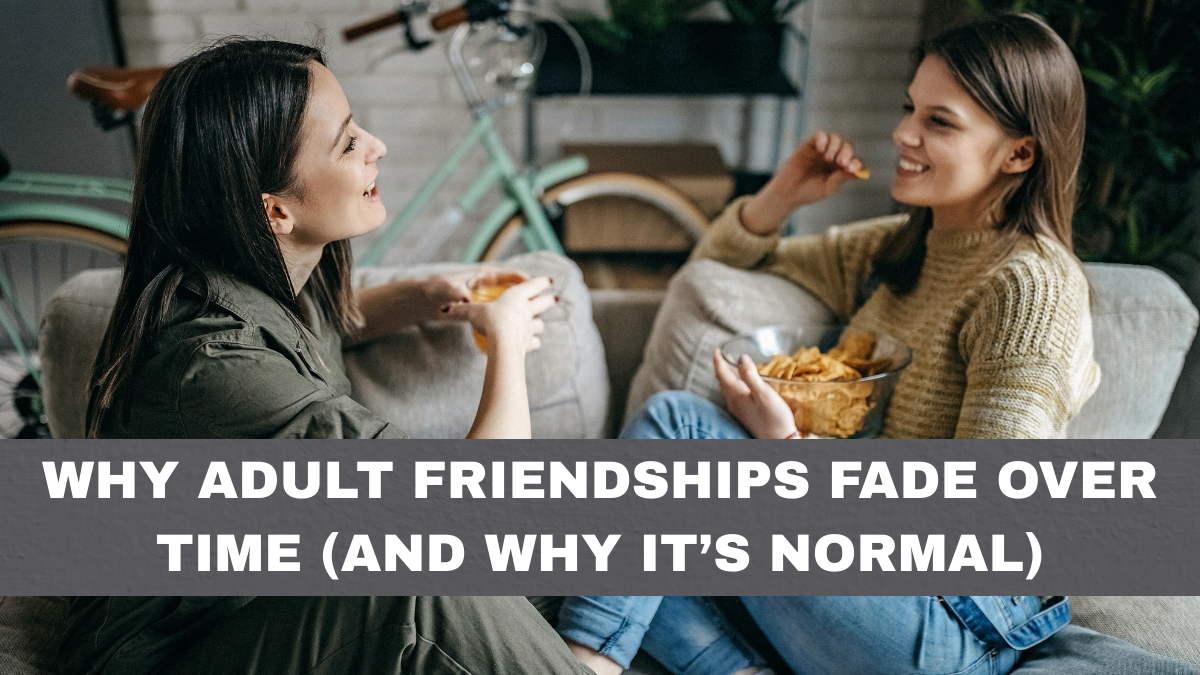
Most people don’t lose friends because of arguments or betrayals. They lose them quietly. Messages take longer. Plans get postponed. Life fills up. Over time, the friendship simply… thins out. This experience is so common that it feels personal—but it’s not. Modern friendships fade for structural reasons, not moral failure.
What makes adult friendships painful is the confusion around them. People assume closeness should persist automatically, like it did in school or early adulthood. But the conditions that once made friendships effortless no longer exist. Understanding why adult friendships change helps remove guilt—and makes it easier to protect the ones that still matter.

Why Adult Friendships Are Structurally Different
Friendships in childhood and early adulthood are built into daily life. School, college, shared routines, and proximity do the heavy lifting.
In adulthood:
• Schedules diverge
• Priorities multiply
• Time becomes fragmented
• Energy is limited
Without shared structure, friendships require intention—and intention is harder to sustain than proximity.
The Role of Life Transitions
Major life changes quietly reshape social circles.
Common transitions include:
• Career shifts
• Marriage or long-term relationships
• Parenthood
• Relocation
• Health or caregiving responsibilities
Each transition changes availability. Over time, social drift replaces shared rhythm.
Why Time Is the Biggest Constraint
Adult friendships don’t usually fade from lack of care—they fade from lack of overlapping time.
Time pressure shows up as:
• Cancelled plans without rescheduling
• Shorter conversations
• Reduced spontaneity
When time becomes scarce, friendships that once felt easy begin to feel “heavy,” even when affection remains.
Emotional Bandwidth Shrinks With Responsibility
As responsibilities increase, emotional capacity narrows.
Adults often reserve emotional energy for:
• Work demands
• Family needs
• Personal recovery
This doesn’t mean friends matter less. It means emotional bandwidth is rationed—and adult friendships often feel the squeeze.
Why Silence Feels More Awkward Now
In earlier life stages, silence didn’t signal distance. In adulthood, it often does.
Silence feels heavier because:
• There’s no shared daily context
• Guilt accumulates over time
• Reaching out feels overdue
This creates avoidance loops that accelerate social drift.
The Shift From Quantity to Compatibility
As people age, tolerance for misaligned relationships decreases.
Adults often prioritize:
• Emotional safety
• Shared values
• Low-maintenance connection
Friendships that don’t fit these criteria may fade—not because they’re bad, but because they no longer align.
Why Some Friendships Survive
Despite all this, some adult friendships endure.
They tend to share:
• Flexibility without resentment
• Acceptance of long gaps
• Depth over frequency
• Non-transactional care
These friendships adapt to modern life instead of resisting it.
The Myth That Friendship Requires Constant Contact
One damaging belief is that closeness requires constant communication.
In reality:
• Depth matters more than frequency
• Trust survives silence
• Reconnection is possible
Letting go of this myth reduces pressure and preserves connection.
How Social Media Changes Friendship Expectations
Social media keeps people visible but not necessarily connected.
This creates:
• The illusion of closeness
• Reduced incentive to reach out
• Passive awareness instead of interaction
Modern friendships suffer when visibility replaces engagement.
Why People Blame Themselves
Many adults internalize fading friendships as personal failure.
They think:
• “I didn’t try hard enough”
• “I changed too much”
• “They replaced me”
In most cases, the cause is structural—not personal.
What Letting Go Actually Means
Letting a friendship fade doesn’t mean it wasn’t real.
It means:
• It served its season
• Circumstances changed
• Care can exist without closeness
Recognizing this reduces resentment and grief.
How to Maintain Adult Friendships That Matter
Sustainable adult friendships require realism.
Helpful approaches include:
• Lowering frequency expectations
• Normalizing long gaps
• Scheduling intentionally
• Valuing quality over consistency
Effort matters—but so does compassion.
Conclusion
Modern friendships fade not because people stop caring, but because life stops aligning. Adult friendships exist within real constraints—time, energy, responsibility, and change. Social drift is not a personal failure. It’s a structural reality of modern life.
The friendships that survive do so because they adapt. They allow space without punishment and reconnect without accounting. Understanding this doesn’t make loss disappear—but it makes peace possible.
FAQs
Why do adult friendships fade so often?
Because shared structure disappears and time, energy, and priorities change.
Is it normal to lose friends as you get older?
Yes. Social circles naturally shrink and reshape in adulthood.
Does fading friendship mean it wasn’t real?
No. It means the context changed, not the connection.
How can adult friendships survive long gaps?
Through flexibility, trust, and acceptance without guilt.
Should you force yourself to maintain all friendships?
No. Focus on relationships that feel mutual and sustainable.
Click here to know more.