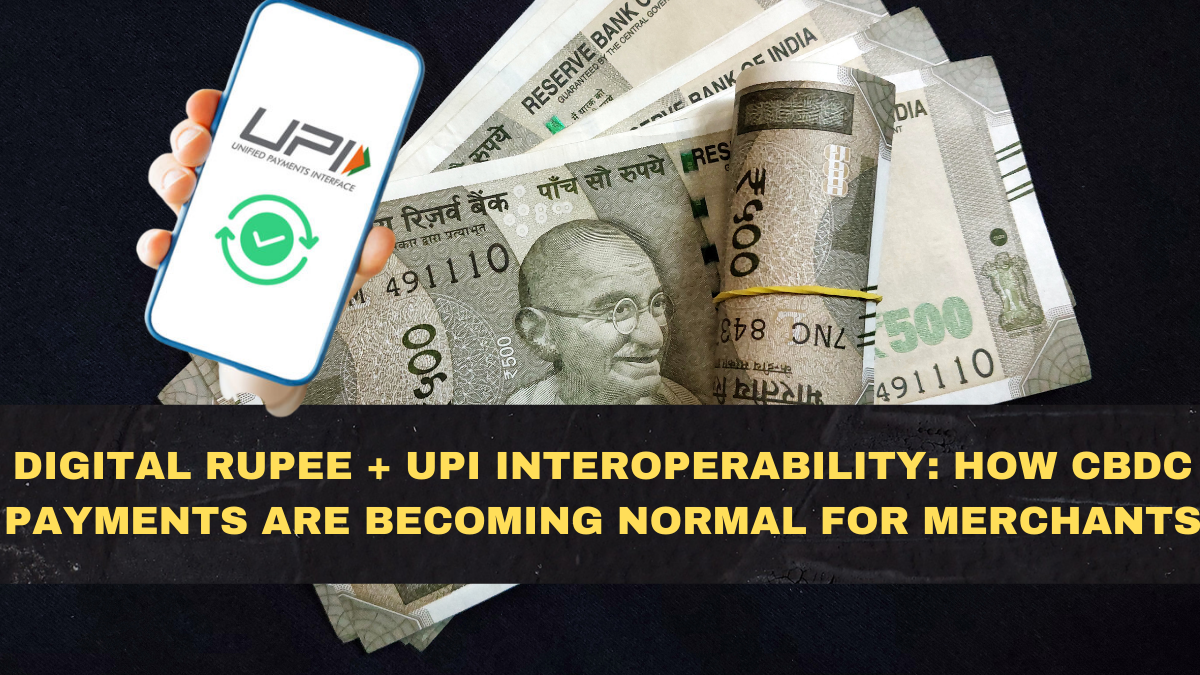
Digital rupee interoperability is quietly turning India’s central bank digital currency from an experiment into a daily payment tool. When the digital rupee was first launched, adoption was limited, usage was cautious, and acceptance points were rare. In 2026, that phase is ending.
The integration of the digital rupee with UPI infrastructure is changing everything.
Instead of separate apps, special terminals, or unfamiliar workflows, merchants and consumers can now use the same QR codes, same apps, and same habits — while the money moving underneath is no longer bank deposits, but CBDC payments issued directly by the Reserve Bank.
This is one of the most ambitious payment integrations in the world: merging a sovereign digital currency into the busiest real-time payment system on the planet.
What Digital Rupee Interoperability Actually Means
Digital rupee interoperability means that the central bank digital currency can flow through existing UPI rails without requiring new acceptance infrastructure.
In practice:
• The same UPI QR can accept e₹ payments
• Existing merchant terminals remain unchanged
• Payment apps show digital rupee as an option
• Settlement happens in CBDC instead of bank balances
To the user, nothing looks different.
To the banking system, everything is different.
Money now moves as central bank liabilities, not commercial bank deposits.
Why UPI Is the Perfect Bridge for CBDC Adoption
UPI processes billions of transactions monthly. It already connects:
• Consumers
• Merchants
• Banks
• Wallets
• Government platforms
Launching a digital rupee on a separate network would have failed.
Embedding it into UPI makes adoption natural.
Key advantages include:
• No new hardware for merchants
• No new learning curve for users
• Instant nationwide coverage
• Familiar QR-based acceptance
• Existing fraud controls
This is why India’s CBDC strategy focuses on interoperability first, not wallet replacement.
How e₹ Payments Work at Merchant Checkout
At checkout, the flow now includes both deposit money and digital currency.
The process looks like this:
• Customer scans a standard UPI QR
• Selects digital rupee as payment source
• Wallet sends CBDC transfer request
• Central bank ledger validates funds
• Merchant receives settlement instantly
From the merchant’s view:
• Same QR
• Same confirmation screen
• Same reconciliation format
Behind the scenes:
• Funds settle in central bank money
• No interbank credit risk
• No float delays
• No settlement uncertainty
This makes CBDC payments operationally invisible — and that is the key to adoption.
Why Merchants Are Being Encouraged to Accept CBDC
For merchants, digital rupee interoperability offers subtle but important benefits.
Potential advantages include:
• Instant final settlement
• No settlement risk
• Reduced chargeback exposure
• Lower reconciliation complexity
• Better traceability for compliance
Over time, merchants may also benefit from:
• Lower MDR structures
• Faster working capital cycles
• Improved tax reporting automation
• Direct central bank settlement
This turns CBDC acceptance into an infrastructure upgrade, not just a policy experiment.
How This Changes the Role of Banks
Digital rupee payments change the banking model quietly.
Instead of:
• Deposits moving between banks
• Settlement through clearing accounts
• End-of-day netting
Now:
• CBDC moves directly on central bank ledgers
• Finality is immediate
• Interbank exposure shrinks
• Liquidity management changes
Banks remain distribution and service layers — but money itself now moves outside their balance sheets.
This is a profound structural shift.
Why This Matters for Government and Policy Goals
For policymakers, digital rupee interoperability solves multiple challenges.
It enables:
• Better tracking of money flows
• Reduced cash dependence
• Lower shadow economy leakage
• Faster benefit disbursement
• Improved subsidy targeting
It also strengthens:
• Monetary transmission
• Settlement resilience
• Financial system transparency
• Sovereign control over digital money
This is why CBDC adoption is tied closely to public infrastructure, not private wallets.
How Consumers Are Experiencing CBDC Payments
For consumers, the change is intentionally subtle.
Users now see:
• Digital rupee balance inside payment apps
• Option to pay via UPI QR
• Instant settlement confirmation
• No card or wallet fees
• No behavioral change
The biggest difference is invisible:
• Money is risk-free central bank currency
• Not dependent on bank solvency
• Not subject to deposit limits
• Not part of lending pools
This improves systemic safety — without requiring consumer education.
What Happens to Wallets and Payment Apps
Wallets and apps become CBDC access points.
They now manage:
• Deposit balances
• Digital rupee balances
• Interchange between both
• Conversion rules
• Spending controls
Instead of replacing wallets, CBDC strengthens them.
Apps that integrate digital rupee early gain:
• Regulatory trust
• Government partnerships
• Enterprise acceptance
• Long-term relevance
Late adopters risk being marginalized in the next payment phase.
Why Interoperability Is Crucial for Scale
CBDCs fail when they live in silos.
Interoperability ensures:
• Universal acceptance
• Seamless user experience
• No network fragmentation
• Low merchant friction
• Rapid coverage expansion
India’s approach avoids the biggest global CBDC mistake:
building a parallel system nobody uses.
By riding on UPI, the digital rupee inherits the largest active payment network instantly.
What This Means for the Future of Payments in India
Over time, digital rupee interoperability enables:
• Direct government payments in CBDC
• Real-time tax collection
• Programmable subsidies
• Smart contract payments
• Automated compliance
UPI becomes:
• Not just a payment rail
• But a sovereign digital money distribution network
This positions India as a global leader in retail CBDC deployment.
Conclusion
Digital rupee interoperability is turning CBDC from a policy concept into daily payment infrastructure. By merging central bank money into UPI rails, India achieves something no other large economy has done at scale: making digital currency boring, invisible, and universally usable.
In 2026, the biggest payment revolution in India is not flashy apps or new wallets.
It is the quiet fact that central bank money now moves through the same QR codes as everything else.
The future of payments is not private money versus public money.
It is both flowing through the same rails.
FAQs
What is digital rupee interoperability?
It allows the digital rupee to be used through UPI infrastructure using existing QR codes and payment apps.
Do merchants need new hardware for CBDC payments?
No. Existing UPI QR codes and terminals support digital rupee payments.
How are CBDC payments different from normal UPI payments?
They settle in central bank money instead of bank deposits, giving instant finality and lower systemic risk.
Can consumers hold both bank balance and digital rupee?
Yes. Payment apps now support both balances and allow choosing the source at checkout.
Will digital rupee replace UPI?
No. It runs on top of UPI, strengthening the system rather than replacing it.
Click here to know more.