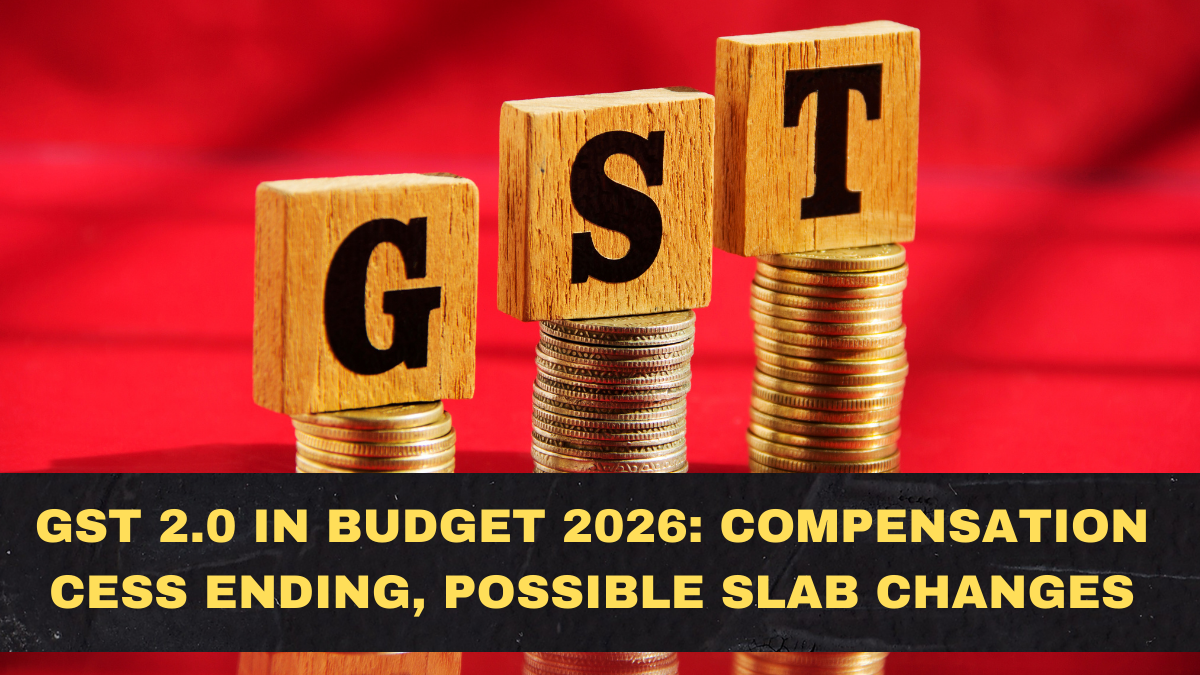
GST 2.0 is not a branding exercise. It is a structural tax reset that quietly changes how prices, compliance, and government revenue work in India. Most people think GST reform means “some slabs will change.” That’s dangerously simplistic. What is actually happening in 2026 is far more consequential: the compensation cess era is ending, and the original political compromise that held GST together is expiring.
This matters to you even if you never file a GST return in your life. Because every slab tweak, exemption removal, or compliance shift eventually shows up in the prices you pay for groceries, phones, flights, insurance, and daily services.
This GST 2.0 update explains what really changes when compensation cess ends, why slab rationalisation is now unavoidable, what this means for inflation and pricing behavior, and how businesses should prepare for the new tax reality instead of getting blindsided later.
Why GST 2.0 Exists in the First Place
GST was never meant to stay frozen.
It was a politically negotiated truce between the Centre and states.
States agreed to give up VAT and entry taxes in exchange for guaranteed revenue growth through compensation cess.
That guarantee period is now over.
Which creates three unavoidable problems:
-
States no longer have revenue protection
-
GST collections are uneven across regions
-
The current slab structure is too complex to sustain
GST 2.0 is not optional.
It is mathematically inevitable.
What the Compensation Cess Ending Actually Means
This is the core trigger.
Compensation cess was a temporary tax slapped on “sin” and luxury goods like:
-
Cars
-
Tobacco
-
Aerated drinks
-
Coal
That money was used to compensate states for revenue shortfalls.
Now that this cess pipeline is ending:
-
States lose guaranteed revenue
-
The Centre loses a shock absorber
-
GST Council must rebalance slabs to plug gaps
Which means slab rationalisation is no longer theoretical.
Why Slab Rationalisation Is No Longer Avoidable
India’s GST has too many slabs.
That creates:
-
Classification disputes
-
Litigation
-
Compliance friction
-
Revenue leakage
Most countries operate with one or two slabs.
India operates with multiple.
That was politically necessary at launch.
It is economically dysfunctional now.
Which is why GST 2.0 inevitably moves toward:
-
Fewer slabs
-
Fewer exemptions
-
Broader tax base
This will not be popular.
It will be fiscally necessary.
What Possible Slab Changes Could Look Like in 2026
Nobody should expect dramatic overnight reform.
But directional shifts are visible.
Likely rationalisation patterns:
-
Merging of lower slabs into a single moderate slab
-
Merging of upper slabs into a single higher slab
-
Reduction of exemption categories
-
Movement of some goods into higher slabs
This does not mean everything becomes expensive.
It means relative prices will rebalance.
Some goods get cheaper.
Some get costlier.
How GST 2.0 Can Quietly Increase Prices Without Headlines
This is where consumers get fooled.
Price impact will not come from one big hike.
It will come from:
-
Removal of exemptions
-
Upward reclassification
-
Input tax credit rule changes
-
Compliance cost pass-through
A product that was zero-rated becoming 5 percent is a price hike.
A service moving from 12 percent to 18 percent is a price hike.
No headline will announce this pain.
You will feel it gradually.
What GST 2.0 Means for Inflation and Household Budgets
This is not panic material.
But it is real.
Short-term inflation pressure is likely from:
-
Slab rationalisation
-
Cess removal adjustments
-
Compliance cost recovery by businesses
Over time, inflation stabilises as pricing resets.
But households should not expect GST reform to feel “neutral.”
There will be winners and losers.
What Businesses Should Be Doing Right Now
Most businesses are asleep.
That’s dangerous.
Preparation checklist:
-
Audit current GST slab classification
-
Identify exemption dependencies
-
Model pricing impact under slab changes
-
Prepare ERP and invoicing systems
-
Train accounting teams
Businesses that wait for official notifications will be too late.
Why Small Businesses Are More Exposed Than Big Corporates
Large firms absorb tax shocks.
Small firms pass them on badly.
Why small businesses suffer more:
-
Thinner margins
-
Weak pricing power
-
Fragile compliance systems
-
Manual accounting
GST 2.0 will reward organised players.
It will punish informal ones.
What Consumers Should Understand About GST 2.0
Consumers should stop expecting political kindness.
GST reform is a fiscal survival move.
Which means:
-
Some things will get costlier
-
Some exemptions will vanish
-
Price stability will wobble briefly
This is not ideological.
It is arithmetic.
Why the GST Council’s Decisions Will Become More Politically Risky
Earlier, compensation cess softened political fallout.
Now it doesn’t exist.
Every slab hike becomes a visible tax increase.
This will make GST Council meetings:
-
More contentious
-
More delayed
-
More incremental
Big-bang reform is unlikely.
Slow grinding reform is inevitable.
What Happens If Slab Rationalisation Is Delayed Again
This is the worst-case scenario.
Delaying reform means:
-
Rising fiscal stress
-
Higher hidden taxes
-
More compliance chaos
-
More litigation
GST 2.0 can be delayed.
It cannot be avoided.
Conclusion: GST 2.0 Is a Structural Tax Reset, Not a Cosmetic Change
GST 2.0 is not about cosmetic tweaks.
It is about repairing a politically compromised tax system.
The end of compensation cess removes the last cushion.
Slab rationalisation will happen.
Exemptions will shrink.
Prices will adjust.
Whether politicians like it or not.
The only real question is whether this reform happens cleanly or messily.
FAQs
What is GST 2.0?
GST 2.0 refers to the next phase of GST reform involving slab rationalisation, exemption reduction, and post-compensation cess restructuring.
Why is compensation cess ending important?
Because it funded state revenue protection. Its end forces GST slab changes to fill fiscal gaps.
Will GST 2.0 increase prices?
Some goods and services may become costlier due to slab changes or exemption removal. Others may become cheaper.
What should businesses do to prepare for GST 2.0?
Audit slab classifications, model pricing changes, upgrade compliance systems, and train staff.
Is slab rationalisation guaranteed in 2026?
It is fiscally unavoidable. The timing may shift, but the reform direction is locked.
Click here to know more.