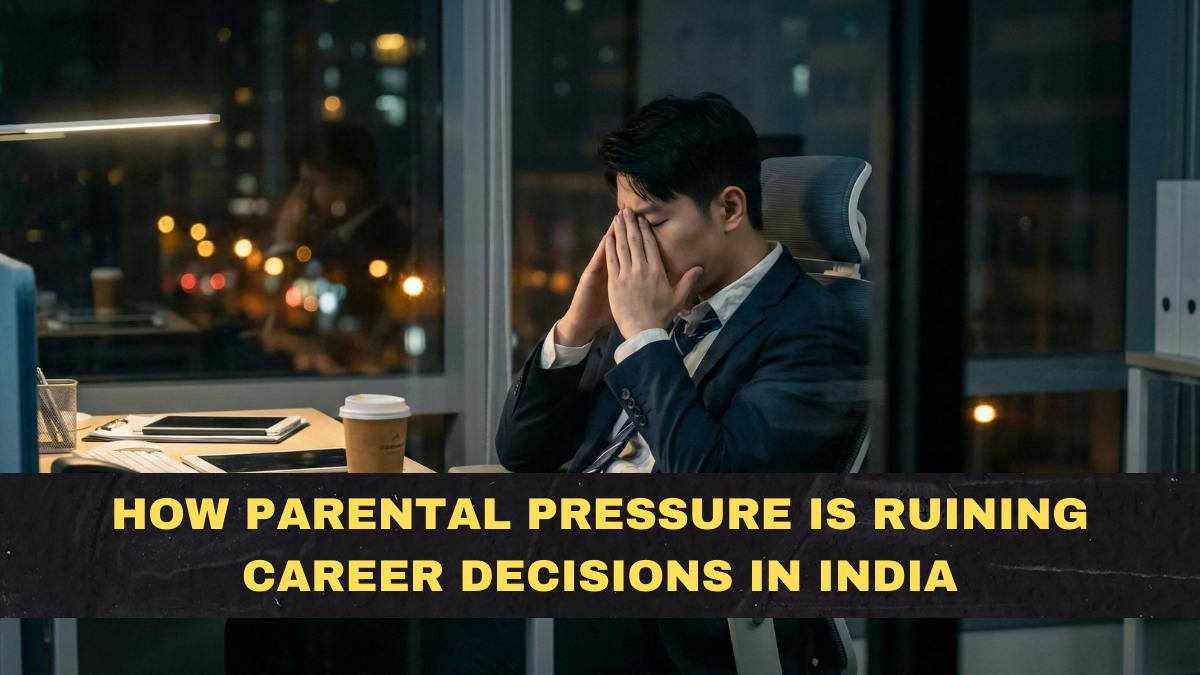
In India, career decisions are rarely made by students alone. Family expectations, social comparison, and fear of judgment play a powerful role in shaping choices from a very young age. By 2026, the impact of parental pressure on careers has become impossible to ignore, as growing numbers of students feel trapped in paths they never truly chose.
What makes this pressure damaging is that it often comes from love and concern, not malice. Parents want stability, respect, and security for their children. However, when protection turns into control, the long-term consequences can include regret, burnout, and years of professional dissatisfaction.
Why Parents Feel the Need to Control Career Choices
Most parents base advice on their own life experiences. In earlier decades, limited options meant that choosing “safe” careers worked reasonably well.
Economic uncertainty reinforces this mindset. Parents fear that unconventional choices will lead to instability, social embarrassment, or financial struggle.
In 2026, rapid industry change has made this advice outdated, but the fear behind it remains deeply ingrained.
The Weight of Social Comparison in Indian Families
Career pressure is rarely private. Relatives, neighbors, and family friends constantly compare children’s achievements.
Parents feel judged based on their child’s profession, salary, and college name. This social pressure is passed directly to students.
As a result, career decisions often aim to impress others rather than align with personal strengths or interests.
How Early Decisions Lock Students Into the Wrong Path
Stream selection after school is often driven by parental preference rather than aptitude. Many students enter science, engineering, or medicine despite weak interest.
Once committed, changing paths becomes emotionally and financially difficult. Students continue even when dissatisfaction grows.
By 2026, many young adults realize too late that their career was decided before they understood themselves.
The Emotional Cost of Living Someone Else’s Dream
Students under parental pressure often suppress doubts to avoid conflict. Over time, this leads to internal frustration and loss of motivation.
They perform tasks without emotional investment, leading to average outcomes despite high effort.
This silent struggle damages confidence and creates a sense of failure, even when external markers look successful.
Why “Stable Careers” No Longer Guarantee Stability
Parents often push toward careers perceived as stable. However, automation, saturation, and industry shifts have reduced predictability.
Roles once considered secure now face layoffs, stagnation, or low growth. Stability without interest often collapses under stress.
In 2026, forced stability is proving less reliable than adaptable skill-based careers.
When Parental Pressure Leads to Burnout
Sustained pressure to meet expectations accelerates burnout. Students feel they must succeed to justify sacrifices made on their behalf.
Failure feels catastrophic rather than instructional. This mindset increases anxiety and fear of experimentation.
Burnout becomes not just academic, but emotional, affecting long-term mental health.
Why Parents Often Don’t See the Damage
From a parent’s perspective, obedience looks like responsibility. Silence is mistaken for agreement.
Many parents only see outcomes, not internal conflict. When children struggle later, it feels sudden and confusing.
In reality, dissatisfaction builds quietly over years before reaching a breaking point.
How Career Regret Manifests in Adulthood
Adults who followed imposed paths often experience regret in their late twenties or thirties. They question wasted time and missed opportunities.
Career switches feel risky due to age, responsibilities, and sunk costs. Many remain stuck despite unhappiness.
By 2026, this delayed regret is driving mid-career transitions across industries.
What Healthier Career Conversations Look Like
Healthy guidance involves exploration, not enforcement. Parents who listen rather than dictate reduce long-term risk.
Exposure to multiple career paths helps students make informed decisions. Failure should be treated as learning, not disgrace.
When parents support autonomy, students take responsibility more seriously.
How Students Can Navigate Parental Pressure
Open communication is difficult but necessary. Explaining interests with logic and planning reduces resistance.
Small experiments, side projects, or internships can demonstrate seriousness and potential.
In 2026, negotiation and clarity work better than rebellion or silent compliance.
Conclusion: Career Pressure Breaks Trust Before It Builds Security
Parental pressure in India often comes from care, but its impact can be deeply harmful. Forcing careers may produce short-term compliance, but long-term dissatisfaction.
In 2026, success depends more on alignment than obedience. Careers built on interest and adaptability last longer than those built on fear.
Parents and students must evolve together. When trust replaces control, careers become journeys of growth rather than endurance tests.