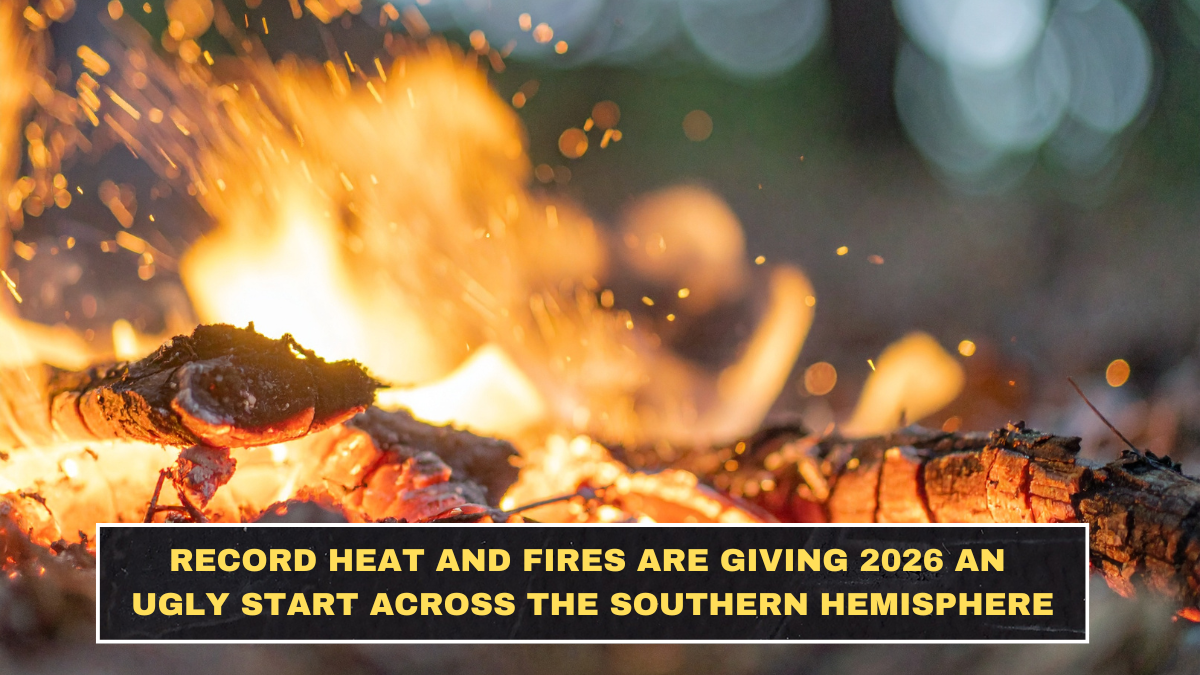
The Southern Hemisphere started 2026 in brutal fashion. Reuters reported in February that record heat and wildfires were hitting countries from Argentina and Chile to Australia and South Africa, with scientists warning that even more extreme temperatures could still lie ahead later in the year. This matters because it is not one isolated heatwave. It is a pattern of simultaneous heat and fire stress across multiple continents.
What happened in the first months of 2026
Reuters reported that Australia was hit by a historic heat dome, with temperatures reaching nearly 50°C, while extreme fire conditions spread in several areas. In Chile, fires caused 21 deaths, and in South Africa, Reuters described the country as facing its worst fire season in a decade. In Patagonia, fires threatened old-growth forest and spread under dangerous heat and wind conditions. This is the part people keep softening: these were not “hot summer days.” These were extreme events with deaths, ecological damage, and cross-border climate consequences.
Why scientists are taking this seriously
The uncomfortable point is that this happened even with La Niña, which usually has a slight cooling influence on global average temperatures. Reuters reported that scientists said human-caused warming is now overwhelming that natural variability, and some warned that a later shift toward El Niño conditions could add even more heat. The World Meteorological Organization also said in January that record-breaking Southern Hemisphere heat had already helped fuel wildfires in Australia, Chile, and Patagonia.
Australia shows how unstable the pattern has become
Australia gives a good example of why this story is bigger than one week of bad weather. Reuters reported on January 7, 2026 that southern Australia was sweltering through a severe heatwave with temperatures above 40°C, straining power grids and increasing bushfire danger. Later seasonal reporting said Australia’s 2025–26 summer was its wettest since 2016–17 and its eighth-hottest on record, with 62 weather stations setting highest-ever daily maximums during the late-January heatwave. That mix of extreme heat followed by major rain is not reassuring. It shows volatility, not stability.
Why the fire risk is so dangerous
Extreme heat does not stay a temperature story for long. It dries fuels, stresses water systems, worsens drought in some areas, and makes fires more likely to spread fast. Reuters reported that in Patagonia, fires were burning through areas that included very old trees, while AP reported wildfires in southern Argentina scorched nearly 12,000 hectares and threatened communities, a power plant, and a school. That is the practical cost: climate extremes do not just break records, they break local resilience.
The key facts at a glance
| Region | Reported 2026 impact | Why it matters |
|---|---|---|
| Australia | Heat dome nearing 50°C; 40°C+ heatwave; fire danger warnings | Shows extreme heat and infrastructure stress |
| Chile | 21 deaths linked to fires | Confirms deadly human cost |
| South Africa | Worst fire season in a decade, per Reuters | Signals regional climate pressure beyond one country |
| Argentina/Patagonia | Fires threatened forests; nearly 12,000 hectares burned in south Argentina | Shows ecological and community risk |
| Global context | Warming around 1.46°C above pre-industrial levels, per Reuters | Explains why extremes are intensifying |
Why 2026 could stay brutal
There are three reasons scientists are uneasy:
- extreme heat arrived early across several Southern Hemisphere regions
- climate change is amplifying heat even during a nominally cooling La Niña background
- a shift toward El Niño later could intensify global heat further, according to scientists cited by Reuters
That does not guarantee every month of 2026 will be record-breaking. But it does mean the year started from a dangerous climate baseline.
What readers should watch next
The useful indicators are simple:
- whether Australia, Argentina, and South Africa keep posting fire emergencies into autumn
- whether global climate monitors report another El Niño transition
- whether insured losses and agricultural damage keep climbing after the early-season fires
Reuters noted that insured wildfire losses had already reached $42 billion in 2025, which shows how expensive this trend is becoming even before 2026 is finished.
Conclusion
Record heat and fires are giving 2026 an ugly start across the Southern Hemisphere because the climate system is now producing overlapping extremes, not neat, isolated disasters. Australia, Chile, Argentina, and South Africa are all showing different versions of the same problem: hotter conditions, faster-spreading fires, and weaker room for recovery. Anyone still treating this as random bad luck is ignoring the evidence.
FAQs
Which countries were highlighted in the Southern Hemisphere heat and fire story?
Reuters highlighted Australia, Argentina, Chile, and South Africa as major examples of early-2026 heat and wildfire stress.
How hot did Australia get?
Reuters reported temperatures nearing 50°C during the Australian heat dome, while earlier January heatwaves pushed many areas above 40°C.
Why are scientists especially worried this year?
Because these extremes happened despite La Niña conditions, suggesting human-driven warming is overpowering natural cooling influences.
Does this mean 2026 will definitely be another record-hot year?
Not definitely, but Reuters reported scientists warning that another global annual high is possible if extreme heat continues and El Niño develops later.