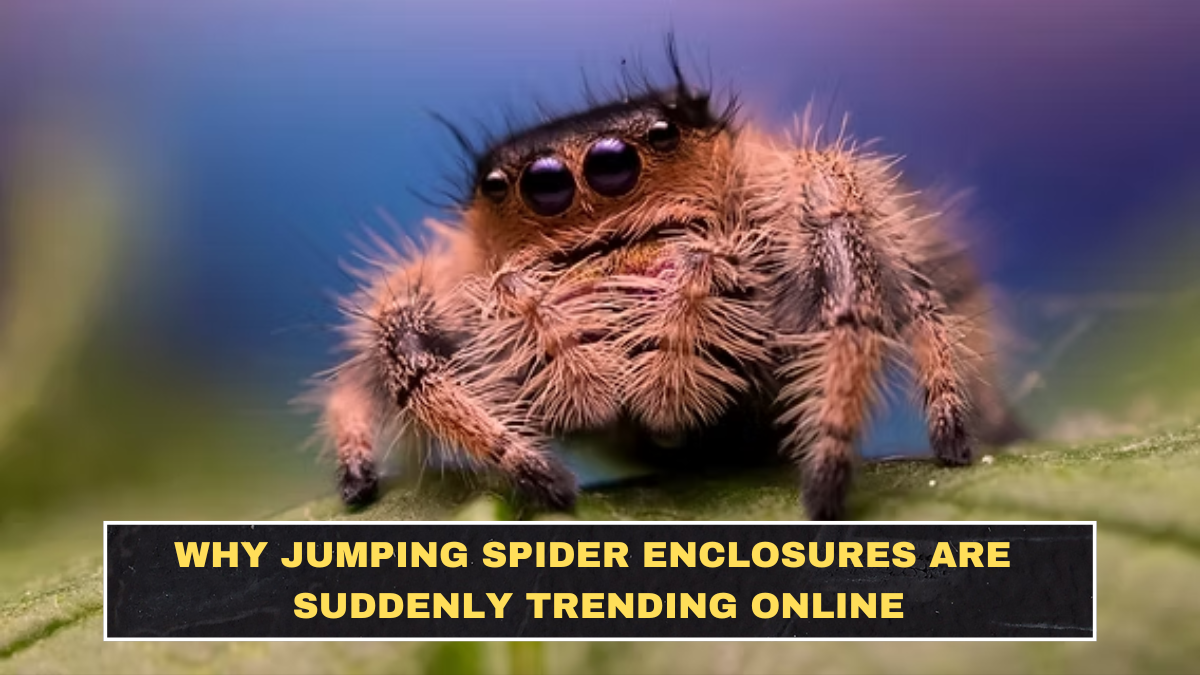
Jumping spider enclosures are trending because they sit in a very specific sweet spot: they are visually interesting, compact, cheaper than most traditional pets, and highly shareable online. The wider exotic pet market is also growing, with Research and Markets valuing it at $1.70 billion in 2024 and projecting it to reach $2.62 billion by 2030, which shows that niche pets are no longer a tiny fringe hobby. In plain terms, more people are looking beyond dogs, cats, and fish, and small invertebrates benefit from that shift.
There is also a simple content reason this trend spreads fast. Jumping spiders are easier for beginners to watch than many other invertebrates because they are active, visually distinctive, and known for their large forward-facing eyes and strong vision. Smithsonian describes jumping spiders as members of the Salticidae family, noted for their large eyes, excellent vision, and pouncing behavior. That makes them easier to turn into cute, curiosity-driven content than animals people find harder to read or relate to.
What makes jumping spider enclosures appealing to beginners?
The biggest appeal is scale. A beginner does not need a huge tank, expensive stand, or an entire room setup to keep one. Retail products aimed at this niche prove the point. Petco sells a Zoo Med Jumping Spider Kit as a starter setup and also sells small arboreal micro habitats sized for invertebrates and other tiny animals. That tells you this is becoming retail-friendly, not just hobbyist improvisation.
Another reason beginners are drawn in is that these setups feel manageable. Petco’s broader invertebrate guidance says compact housing is one reason unusual pets appeal to niche enthusiasts, especially in small living spaces. That is exactly why jumping spider enclosures keep showing up online: they look approachable. A tiny enclosure with moss, branches, and a spider that actively explores is easier for many beginners to imagine than a demanding reptile or a larger exotic animal.
What does a good jumping spider enclosure actually need?
This is where a lot of people get sloppy. The enclosure should not just look cute in photos. It needs to match the spider’s behavior. Jumping spiders are climbers, so vertical space matters more than a wide floor area. Petco’s jumping spider care sheet and starter kit pages both reinforce that these spiders need a proper habitat rather than a random plastic box. Products sold for them emphasize vented habitats and arboreal-style layouts, which is the correct direction because the animal naturally uses height.
Ventilation and humidity also matter more than beginners often realize. Petco’s spider-supplies category specifically points to the need for a proper terrarium and a way to measure humidity. That matters because people often copy aesthetic terrarium builds online and ignore airflow, moisture control, and basic maintenance. A bad enclosure is not fixed by looking natural. If it traps stale air or becomes too damp, the setup becomes a problem instead of a habitat.
What mistakes do beginners make with jumping spider habitats?
The most common mistake is buying for looks instead of function. People see decorative enclosures online and start thinking the hobby is about miniature interior design. It is not. A jumping spider enclosure should first provide security, airflow, and space to climb. Clear acrylic display boxes can work, and Petco sells several micro habitats for small invertebrates, but the wrong shape or poor ventilation can make a setup look impressive while being bad for the animal.
The second mistake is assuming “small pet” means “no real care.” Petco’s general new-pet guidance makes the opposite point: even compact exotic pets still require time, habitat upkeep, and species-appropriate care. That is the uncomfortable truth people avoid when a micro-trend turns cute. Low space does not mean low responsibility. A tiny enclosure still needs cleaning, environmental monitoring, and live food planning.
How should beginners think about enclosure setup before buying?
| Question | Smart answer |
|---|---|
| Is the enclosure tall enough for a climbing spider? | It should favor vertical use, not just floor space |
| Does it have proper ventilation? | Essential, not optional |
| Can humidity be monitored and controlled? | Yes, especially in small enclosed habitats |
| Is it built for observation only or long-term housing? | Long-term housing needs more thought than a display box |
| Are you buying the spider because it is trendy? | Bad reason if you are not ready for routine care |
That is the practical lens buyers need. A good setup is not the prettiest one. It is the one that matches the spider’s actual needs and the owner’s consistency. Retail pages and care guidance around spider habitats keep circling the same basics: habitat choice, airflow, humidity, and enough room for natural movement. People who ignore that because the pet is tiny are exactly the ones who should not buy one.
Is this just a temporary social-media pet trend?
Partly yes, but not entirely. The spike in attention clearly benefits from the internet’s love for unusual-but-cute animals. At the same time, the trend fits a bigger market pattern: exotic pets are gaining visibility, retailers are building accessible product lines around niche species, and beginners increasingly want pets that fit smaller homes and lower daily interaction levels. That means jumping spider enclosures are not just a random fluke. They are part of a broader shift toward compact, observation-based pets.
Still, a trend is not the same as a good buying reason. A lot of people will get interested because the enclosure looks cool on a feed. Fewer will think through feeding, maintenance, lifespan, and whether they actually want a spider in the house once the novelty wears off. That is where most micro-trends fall apart. The content makes the pet look simpler than the responsibility really is.
Conclusion
Jumping spider enclosures are trending because they combine novelty, compact size, visual appeal, and beginner-friendly retail packaging. The broader exotic pet market is growing, and retailers already sell starter kits and micro habitats aimed directly at this kind of owner. That makes the trend real, not imaginary.
But the smarter takeaway is not that everyone should rush to buy one. It is that these enclosures only make sense when the buyer respects the husbandry, not just the aesthetic. A jumping spider may be tiny, but bad care is still bad care. If someone wants the look more than the responsibility, they do not want a pet. They want decor with legs.
FAQs
Are jumping spider enclosures good for beginners?
They can be, mainly because they are compact and easier to fit into small spaces, but they are only beginner-friendly when the owner takes enclosure setup, feeding, and maintenance seriously.
What kind of enclosure is best for a jumping spider?
A vented enclosure with enough vertical climbing space is the safer starting point. Retail starter kits and arboreal-style micro habitats reflect that need.
Why are jumping spiders so popular online?
Their large eyes, active behavior, and distinctive look make them easier for people to find interesting or even cute compared with many other spiders.
Is a jumping spider enclosure just a decoration trend?
No, but plenty of people treat it that way. The trend is real, yet the enclosure still has to work as a habitat first, not just as something attractive for photos.