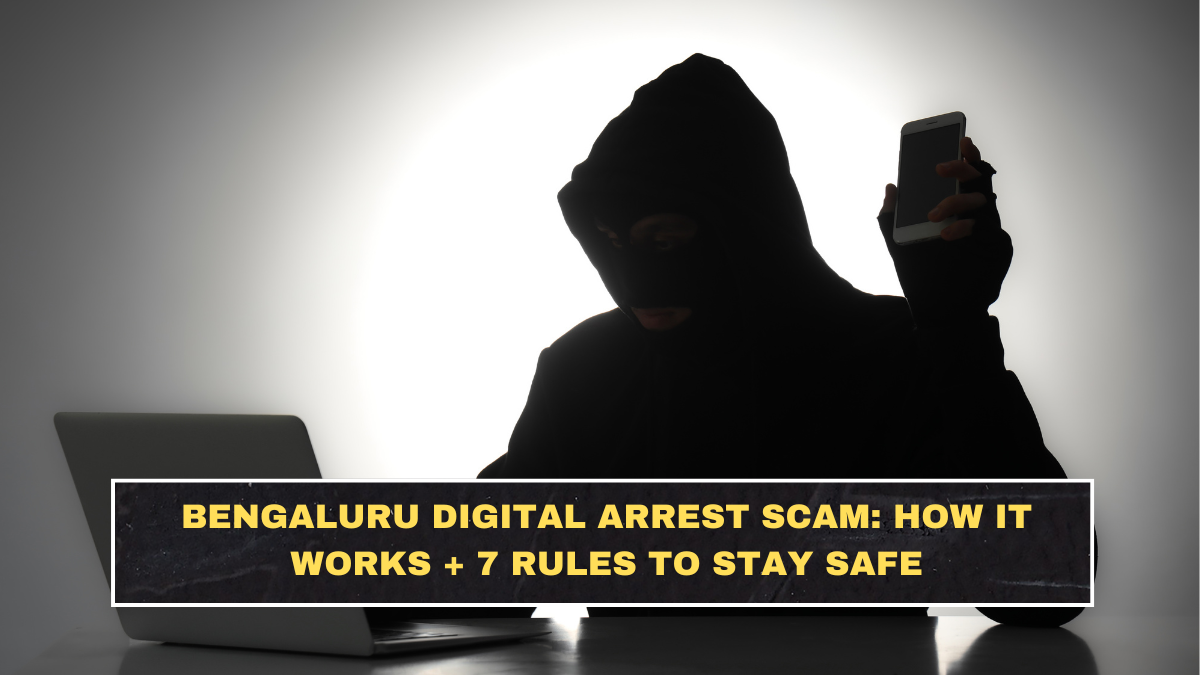
A recent wave of “digital arrest” scams reported in Bengaluru has exposed how cybercriminals are using fear, authority impersonation, and real-time video manipulation to extort money from victims. These scams typically involve fraudsters posing as police or central agencies and falsely accusing individuals of serious crimes.
Victims are then psychologically pressured into staying on calls for hours while transferring money to avoid “arrest,” making this one of the most aggressive forms of cyber fraud currently spreading across India.
How the Bengaluru Digital Arrest Scam Actually Works
| Step | Scam Activity |
|---|---|
| Step 1 | Victim receives call from fake police/agency |
| Step 2 | Accused of crime (money laundering, parcel scam, etc.) |
| Step 3 | Forced onto video call for “verification” |
| Step 4 | Threatened with arrest or legal action |
| Step 5 | Asked to transfer money for “clearance” |
This structured manipulation is designed to overwhelm the victim and eliminate rational thinking.
Real Case Patterns Observed in Bengaluru
| Pattern | Explanation |
|---|---|
| Long-duration calls | Victims kept engaged for hours |
| Fake documents shown | ID cards, FIR copies (digitally created) |
| Isolation tactic | Victim told not to contact anyone |
| Multiple scammers | Different “officers” join call |
These tactics create a controlled environment where the victim feels trapped.
Why This Scam Is So Effective
| Factor | Impact |
|---|---|
| Fear of legal trouble | Immediate panic response |
| Authority impersonation | High trust factor |
| Continuous monitoring | No time to think |
| Real-time interaction | Feels authentic |
The scam works not because of technical complexity, but because of psychological pressure.
7 Rules to Stay Safe (Non-Negotiable)
| Rule | Action |
|---|---|
| 1 | Never trust arrest threats over phone/video |
| 2 | Disconnect immediately from unknown authority calls |
| 3 | Never transfer money under pressure |
| 4 | Verify through official police numbers |
| 5 | Do not share personal or banking details |
| 6 | Avoid engaging in long calls with unknown callers |
| 7 | Inform family members about such scams |
If you follow these rules strictly, your chances of being scammed drop significantly.
What To Do If You Are Targeted
| Action | Reason |
|---|---|
| Hang up immediately | Breaks scam flow |
| Block the number | Prevent repeat calls |
| Report to 1930 helpline | Official cybercrime reporting |
| Inform local police | Creates official record |
Quick reaction is the most effective defense.
First 30 Minutes After Payment (Critical Window)
| Step | Action |
|---|---|
| Step 1 | Call cyber helpline 1930 |
| Step 2 | Report at cybercrime.gov.in |
| Step 3 | Inform bank to freeze transaction |
| Step 4 | Collect transaction proof |
Immediate reporting increases chances of fund recovery.
What People Still Don’t Understand
Here’s the harsh truth:
Scammers are not hacking you.
They are controlling your decisions.
-
No legal authority demands money over calls
-
No arrest happens digitally
-
Urgency = manipulation
If you don’t question authority blindly, this scam fails instantly.
Who Is Most at Risk
| Group | Risk Level |
|---|---|
| Elderly individuals | High |
| First-time digital users | High |
| Professionals unaware of scams | Medium |
| Students | Medium |
Awareness directly reduces risk.
Conclusion
The Bengaluru digital arrest scam highlights how cybercriminals are evolving their tactics using fear and real-time communication. By understanding how the scam works and following strict safety rules, individuals can protect themselves and their families from financial loss.
FAQs
What is a digital arrest scam?
It is a fraud where scammers impersonate authorities and threaten victims to transfer money.
Can police arrest someone via video call?
No, this is completely fake.
What should I do if I receive such a call?
Disconnect immediately and report it to 1930.
Can money be recovered after scam?
Recovery is possible if reported quickly.
Why is this scam spreading rapidly?
Due to high digital usage and lack of awareness.
Click here to know more.