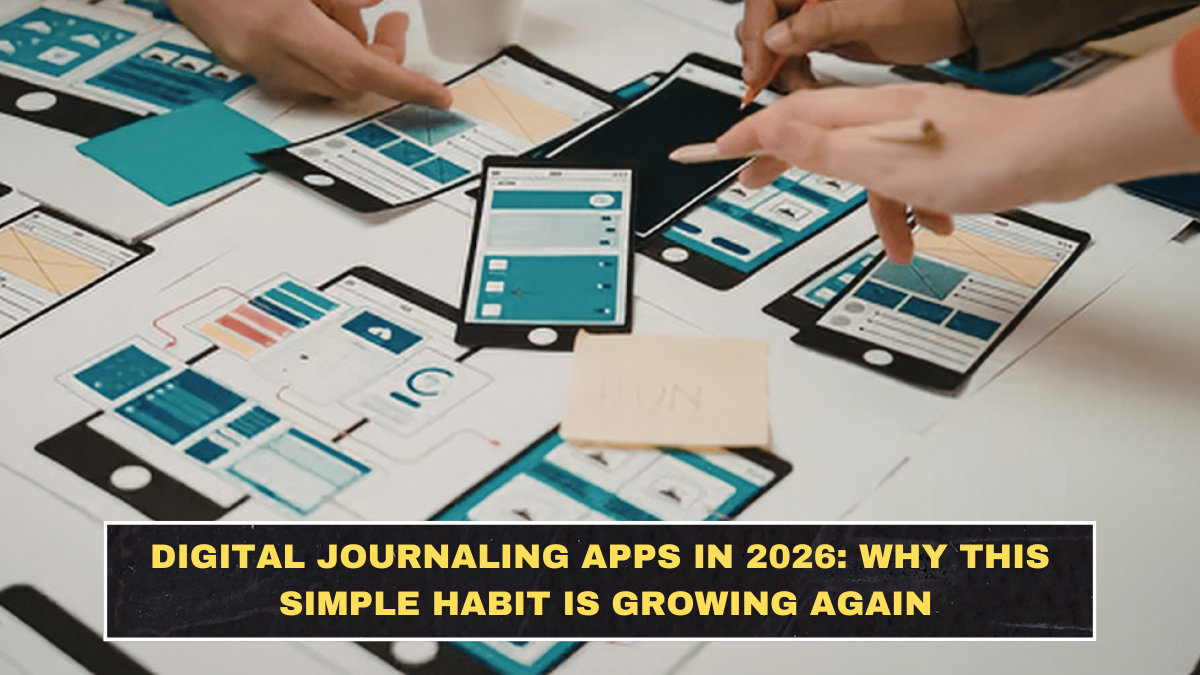
Digital journaling apps are growing because they sit in the overlap between productivity, self-reflection, and low-effort mental wellness. Market research from 2026 values the digital journal apps market at about $6.34 billion and projects continued double-digit growth through 2030, which tells you this is no longer a tiny niche for diary lovers.
The other reason is brutally simple: people want habits that feel useful without feeling heavy. Journaling fits that. It does not require a subscription to a therapist, a full workout, or a complete life reset. It asks for a few minutes and gives people a sense of clarity, memory, and emotional release. That is why the category is rising again instead of fading out after the first app wave.
Does journaling actually help mental wellness?
The evidence is not magic, but it is real. A 2022 review in Family Medicine and Community Health concluded that journaling can be a low-cost, low-side-effect support tool for common mental health symptoms, though results vary by population and method. Another study on online positive affect journaling found improvements in mental distress and wellbeing measures in certain participants, while broader expressive-writing research generally suggests modest rather than dramatic benefits.
That matters because a lot of wellness content lies by exaggeration. Journaling is not a cure-all. It is a useful reflective practice that can help some people process stress, track emotions, and notice patterns. The honest reason it is growing is not because it transforms everyone. It is because it is one of the few self-care habits people can actually maintain without blowing up their schedule.
What features are making journaling apps more usable now?
The apps getting attention are not just blank digital notebooks anymore. Apple’s Journal app now pushes guided reflection prompts, on-device suggestions, photos, videos, audio, places, and even state-of-mind entries, which lowers the friction of starting. That matters because many people do not struggle with writing once they begin. They struggle with the blank page.
Other established apps are leaning into routine support and richer memory capture. Day One highlights reminders, photos, videos, audio, drawing, templates, and cross-platform syncing, while also advertising more than 15 million downloads and over 200,000 five-star ratings globally on its App Store listing. In plain terms, the category is growing because apps are trying to remove the two biggest barriers: forgetting to journal and not knowing what to write.
Which journaling app features do people actually use?
The most useful features are usually the least glamorous ones: reminders, prompts, easy media capture, and search or review tools. Apple’s Journal app emphasizes suggestion-based prompts and media-rich entries, while Day One leans on reminders, templates, audio, and photos. These are practical features, not hype features, because they help people build a habit instead of admire the idea of one.
AI journaling is getting more attention too, but that trend is messier. A recent Guardian piece on AI journaling described how responsive feedback can make journaling feel more engaging, while also raising concerns about emotional dependency, gamified feelings, and privacy. That means AI can reduce friction, but it can also distort what journaling is supposed to be. Reflection is useful. Manufactured emotional dependency is not.
What are the most important differences between journaling apps?
| Feature | Why it matters | Example in current apps |
|---|---|---|
| Prompts | Helps users start instead of stalling | Apple Journal reflection prompts |
| Reminders | Supports consistency | Day One reminders |
| Media support | Makes entries easier and richer | Apple Journal and Day One both support photos, audio, and more |
| Cross-device access | Keeps the habit alive across devices | Day One offers multi-platform access |
| Privacy approach | Critical for sensitive entries | Apple emphasizes on-device suggestions |
That is the real comparison. Not “which app looks prettiest,” but “which app reduces friction enough that I will still use it after ten days.” Most people overestimate how much they need fancy design and underestimate how much they need reminders and structure.
Why is this habit working for more people now?
Because digital journaling fits modern behavior better than traditional journaling does for many users. People already store photos, locations, voice notes, and moods on their phones. Journaling apps now turn those fragments into entries instead of asking users to begin from scratch every time. Apple explicitly builds Journal around photos, videos, audio, places, and personalized suggestions, which is a better fit for how people already live with their devices.
There is also a simple habit truth here: convenience beats purity. A paper journal may feel more romantic, but many people will never keep up with it. A phone-based journal that nudges them, stores memories, and makes review easy has a better shot at surviving real life. That is why digital journaling is growing again. Not because it is deeper, but because it is easier to repeat.
What are people getting wrong about the trend?
The biggest mistake is pretending that downloading a journaling app means they now have a reflective practice. No, they have an icon. The benefit comes from repetition, not intention. Another mistake is expecting journaling to solve every emotional problem. The research does not say that. It points to modest benefits and useful support, not miracle outcomes.
The third mistake is ignoring privacy. Journaling apps can hold extremely personal material. AI-guided journaling adds another layer of concern because reflection may become entangled with data handling and emotionally manipulative design. That does not make the whole category bad. It means users should stop acting like all journaling apps are harmless by default.
Conclusion
Digital journaling apps are growing in 2026 because they offer a rare combination: low effort, personal value, and a believable mental-wellness angle. The market is expanding, the evidence for journaling remains modest but credible, and the app design is getting better at reducing friction through prompts, reminders, media capture, and review features.
The smarter takeaway is simple. This trend is not growing because journaling suddenly became new. It is growing because apps are finally making it easier for ordinary people to stick with an old habit. That is the real story. Not transformation. Not therapy replacement. Just a simple practice becoming more usable.
FAQs
Are digital journaling apps actually good for mental health?
They can help, especially as low-cost support for reflection and emotional processing, but the evidence points to modest benefits rather than dramatic transformation.
What features matter most in a journaling app?
Prompts, reminders, media support, review tools, and privacy are usually more important than visual design. Those are the features most likely to support an actual habit.
Why are journaling apps rising again in 2026?
Because they match how people already use phones and because the wider market for digital journal apps is still growing strongly.
Are AI journaling apps better than regular journaling apps?
Not automatically. They may feel more engaging, but they also raise privacy and dependency concerns that ordinary journaling apps may avoid.
Click here to know more