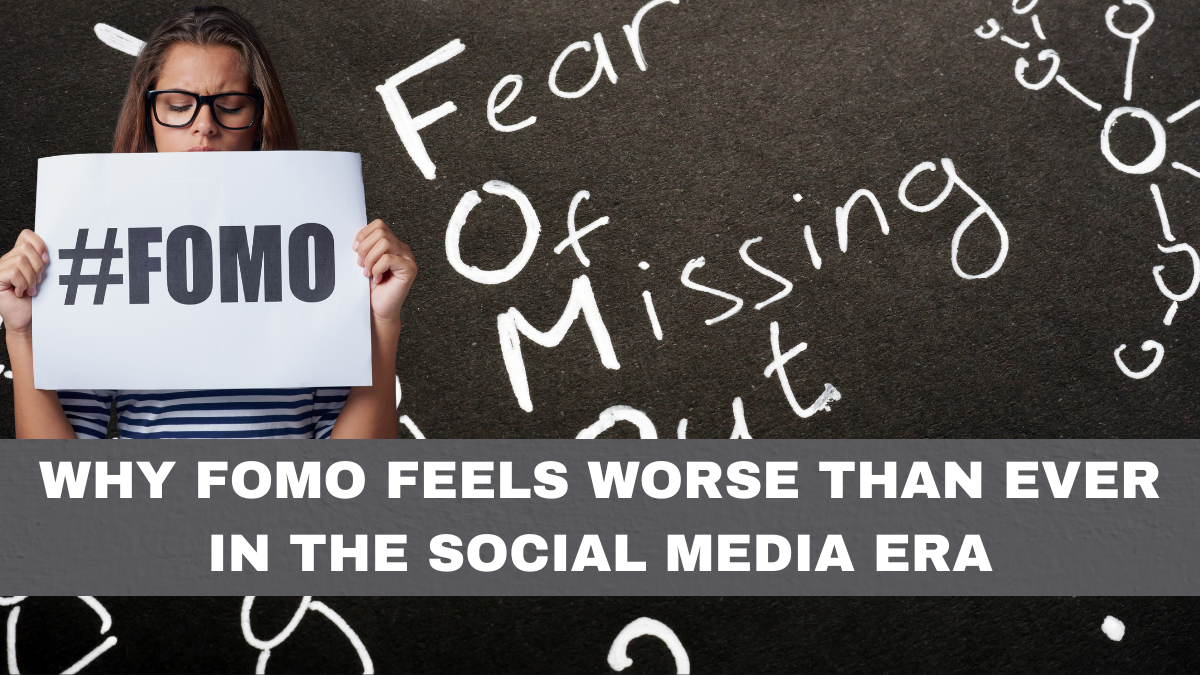
The fear of missing out isn’t new—but it has never been this intense. In the past, people compared themselves to friends and neighbors. Today, they compare themselves to thousands of curated lives scrolling past every day. The modern fear of missing out doesn’t just whisper that something better exists—it shows it to you constantly. And that visibility changes everything.
What makes FOMO so exhausting is that it rarely comes from real loss. It comes from perceived exclusion, imagined alternatives, and endless comparison fueled by social media. Understanding FOMO psychology explains why this feeling feels unavoidable—and why it’s so mentally draining.
What FOMO Really Is (Psychologically)
FOMO is not just envy or curiosity. It’s a combination of anxiety, comparison, and uncertainty.
Psychologically, it comes from:
• Fear of social exclusion
• Desire for belonging
• Regret anticipation
• Scarcity perception
The brain interprets missed experiences as threats to identity and connection—even when they’re not.
Why Social Media Intensifies FOMO
Social media doesn’t show life—it shows highlights. The brain doesn’t fully adjust for that distortion.
Social media amplifies FOMO by:
• Showing constant social activity
• Hiding boredom and struggle
• Rewarding visibility over reality
• Creating endless alternatives
The result is a feeling that everyone else is living more fully.
The Illusion of Infinite Options
One reason fear of missing out feels worse is the belief that there’s always something better happening elsewhere.
This illusion creates:
• Decision paralysis
• Chronic dissatisfaction
• Inability to commit
When every choice feels like a sacrifice, enjoyment collapses.
FOMO and Identity Comparison
People don’t just compare experiences—they compare identities.
Common thoughts include:
• “I should be doing that by now”
• “My life looks smaller”
• “I’m falling behind”
FOMO psychology reveals that the fear is often about self-worth, not events.
Why Even Good Choices Feel Unsatisfying
FOMO poisons satisfaction. Even when something is enjoyable, comparison erodes it.
This happens because:
• Attention is split
• Alternatives stay mentally active
• Commitment feels risky
Enjoyment requires presence—FOMO pulls attention elsewhere.
The Role of Algorithms in FOMO
Algorithms don’t optimize for well-being. They optimize for engagement.
They promote:
• Exciting content
• Emotional triggers
• Social comparison
This constant stimulation keeps the fear of missing out alive and profitable.
Why FOMO Is Stronger During Uncertainty
During uncertain periods, people cling to visible signals of meaning and success.
FOMO increases when:
• Life feels unstable
• Direction feels unclear
• Identity feels unsettled
Social media becomes a measuring stick during internal doubt.
The Difference Between Missing Out and Missing Meaning
Not all missed experiences matter—but FOMO treats them equally.
The brain struggles to distinguish between:
• Meaningful loss
• Irrelevant alternatives
This creates constant background anxiety without clear cause.
How FOMO Affects Mental Health
Chronic FOMO contributes to:
• Anxiety
• Reduced self-esteem
• Restlessness
• Difficulty committing
It keeps the mind in a state of perpetual comparison.
Why Awareness Weakens FOMO
FOMO thrives on unconscious comparison. Awareness interrupts the loop.
When people recognize:
• Curated reality
• Algorithmic amplification
• Emotional triggers
The fear loses intensity.
How to Reduce FOMO Without Disconnecting
Eliminating FOMO doesn’t require quitting social media—it requires changing how it’s used.
Helpful strategies include:
• Limiting comparison-heavy platforms
• Curating feeds intentionally
• Practicing full presence
• Redefining what “enough” means
FOMO shrinks when values replace visibility.
Choosing Depth Over Possibility
The antidote to fear of missing out isn’t doing more—it’s committing more deeply.
Depth comes from:
• Fewer choices
• Stronger presence
• Aligned values
When commitment strengthens, comparison weakens.
Conclusion
The fear of missing out feels worse than ever because modern environments constantly display alternatives. FOMO psychology shows that this fear is less about missing events and more about identity, belonging, and comparison amplified by social media.
Freedom doesn’t come from experiencing everything. It comes from choosing deliberately—and letting go of the rest without regret.
FAQs
What is the fear of missing out?
It’s anxiety driven by the belief that others are having better or more meaningful experiences.
Why does social media increase FOMO?
Because it constantly shows curated highlights, triggering comparison and perceived exclusion.
Is FOMO linked to anxiety?
Yes. Chronic FOMO is associated with higher anxiety and lower life satisfaction.
Can FOMO be reduced without quitting social media?
Yes. Awareness, curation, and intentional use significantly reduce its impact.
What’s the best way to overcome FOMO?
Commit to values and presence instead of chasing endless alternatives.
Click here to know more.