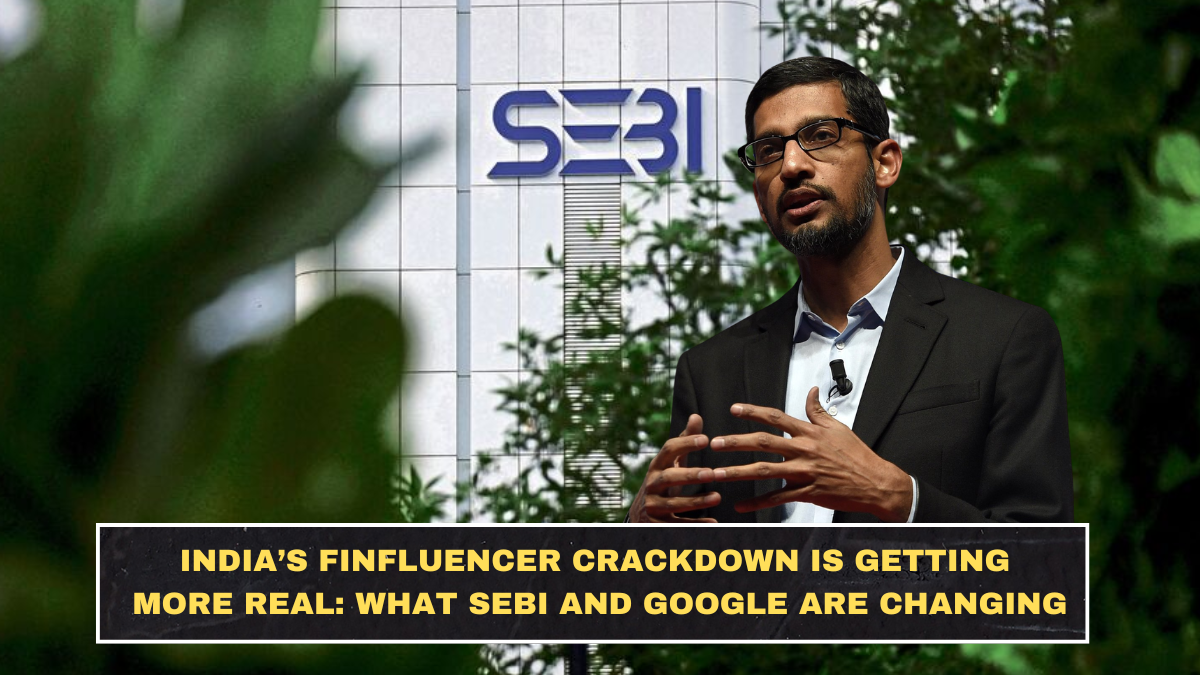
For a long time, India’s finfluencer problem was treated like background noise. Flashy stock tips, “education” channels, fake trading apps, and half-legal advisory content kept spreading while platforms looked the other way. That phase is ending. In March 2026, SEBI said it had partnered with Google on two fronts: a verified label for registered investment and trading apps on Google Play, and AI-based monitoring support to help track finfluencers who are violating rules.
That matters because this is not just another warning speech from a regulator. It is a practical platform-level move. SEBI chairman Tuhin Kanta Pandey said fake apps are a serious threat, and recent reporting says SEBI has already escalated more than 1.3 lakh instances of misleading investment-related content and flagged 66 fake trading apps for takedown.

What SEBI and Google Actually Changed
The most visible change is the Verified App Label Initiative on Google Play. According to Economic Times and Business Standard, only stock-trading and investment apps from SEBI-registered intermediaries can receive the verified badge. The point is to help investors distinguish real apps from fake ones that imitate brokers, advisers, or market platforms.
The second change is less visible but probably more important over time. SEBI has asked Google to use AI tools to identify finfluencers and misleading content that slip past normal enforcement. Business Standard reported that SEBI is working with Google to strengthen AI monitoring of influencers violating norms, while Economic Times said SEBI wants Google to help track unregistered finfluencers who sidestep rules.
In simple terms, the crackdown now has two layers:
- make genuine apps easier to identify
- make bad actors easier to detect and remove
Why This Matters More Than It Looks
A lot of finance fraud in India no longer begins with an obvious scam call. It starts with content. A reel, a Telegram channel, a YouTube clip, or an app ad creates trust first. Then the money trap follows. That is why app verification and finfluencer monitoring belong in the same conversation. SEBI is clearly treating fake apps and misleading finance content as part of the same retail-investor risk pipeline.
This is also a sign that platform regulation is getting more serious. Earlier efforts focused mostly on advisories, warnings, or enforcement after the fact. Now the strategy is shifting toward distribution control: who gets to advertise, who gets labelled as legitimate, and how suspicious content gets surfaced and acted on earlier. Economic Times reported that an API-based framework is already in place so that only verified, registered intermediaries can run ads on platforms like Google and Meta.
What It Means for Finance Apps
If you are a retail investor, the verified badge matters because fake apps have become a real fraud channel. Google’s Play Store label is meant to reduce confusion by showing which apps belong to SEBI-registered entities. That does not make every verified app automatically “good,” but it does make obvious impersonation harder.
The bigger implication is commercial. Platforms that relied on aggressive finance ads without clean registration trails will face more friction. The market is moving toward tighter gatekeeping, where verified status becomes part of discoverability and ad eligibility, not just regulatory paperwork. That is exactly why Zerodha’s Nithin Kamath publicly called the verified-app move a proactive step.
| Change | What is happening now | Why it matters |
|---|---|---|
| Verified app label | Google Play now labels apps from SEBI-registered intermediaries | Helps users identify legitimate investment apps. |
| AI monitoring support | Google is working with SEBI on AI-based tracking of violative finfluencer activity | Makes enforcement more scalable. |
| Ad verification framework | Registered intermediaries can be verified before running ads on major platforms | Reduces abuse of paid distribution. |
| Fake-app focus | SEBI has flagged dozens of fake trading apps for action | Shows the threat is not theoretical. |
What It Means for Finfluencers
This is where the fantasy ends. The era of hiding behind the word “education” while pushing effectively advisory-style content is getting narrower. SEBI has already spent months tightening scrutiny on unregistered financial influencers, and 2026’s Google tie-up shows that enforcement is moving beyond circulars into platform action.
That does not mean every finance creator is now in danger. It means the gap between legitimate education and disguised recommendation is being watched more closely. If someone is pushing trading ideas, performance claims, app installs, or investment products without proper registration or disclosure discipline, the risk of being flagged is getting higher.
The harder truth is this: many finfluencers built audiences in a weak-enforcement environment. Some of them will not survive a cleaner system because their business model depends on ambiguity. That is exactly why this crackdown matters.
What Retail Investors Should Learn From This
Do not read this as “SEBI fixed the internet.” It did not. A verified label lowers risk; it does not remove it. AI detection can help; it will not catch everything. Fraud adapts. Hype adapts. People looking for easy money adapt fastest of all.
What investors should do now is brutally simple:
- prefer verified apps from registered entities
- distrust guaranteed-return language
- be suspicious of creators who blur education and direct advice
- assume that popularity is not proof of legitimacy
That sounds obvious, but obvious advice is still necessary because retail investors keep falling for the same cycle: confidence first, evidence later.
Conclusion
India’s finfluencer crackdown is getting more real because SEBI is no longer relying only on warnings and post-facto enforcement. With Google, it has moved toward app verification, AI-based monitoring, and tighter control over how finance content and platforms reach users. That is a meaningful escalation.
The blunt reality is this: the crackdown will hurt some shady operators, but it will not save careless investors from their own greed. Verified labels help. Platform monitoring helps. But the real shift is that finance content in India is now entering a phase where legitimacy, registration, and distribution controls matter more than follower count. That is overdue.
FAQs
What is SEBI’s new verified app label initiative?
It is a Google Play initiative launched with SEBI to mark trading and investment apps offered by SEBI-registered intermediaries, so users can more easily identify legitimate apps.
Is Google helping SEBI track finfluencers?
Yes. Recent reporting says SEBI has asked Google to use AI tools to help identify finfluencers who violate regulations and spread misleading investment content.
Does a verified label mean an app is completely safe?
No. It means the app belongs to a SEBI-registered intermediary, which reduces impersonation risk, but users still need to judge products and claims carefully.
Why is this crackdown important for retail investors?
Because misleading finance content and fake trading apps have become major fraud channels, and SEBI is now trying to reduce that risk through platform-level verification and monitoring.