In 2026, the confusion between prompt engineers and generative AI engineers is costing people time, money, and career momentum. Job descriptions blur the lines, social media amplifies half-truths, and many candidates apply for roles they are not actually qualified for. The result is frustration on both sides of the hiring table.
These two roles are not interchangeable. They exist at different depths of the AI stack and are valued for very different reasons. Understanding the real difference between a prompt engineer and a generative AI engineer is essential if you want to choose the right learning path, build the right portfolio, and aim for roles that actually match your skills.

Why These Two Roles Are Often Confused
The confusion started when prompting became visible before engineering did. Early AI adoption focused on demos, chatbots, and content generation, where prompt quality had an outsized impact on results.
This created the impression that prompting itself was the core skill behind generative AI success. As AI systems matured, deeper engineering work moved behind the scenes, but the public narrative did not update as fast.
In 2026, many still assume these roles differ only in title. In reality, they differ in responsibility, risk, and long-term value.
What a Prompt Engineer Actually Does
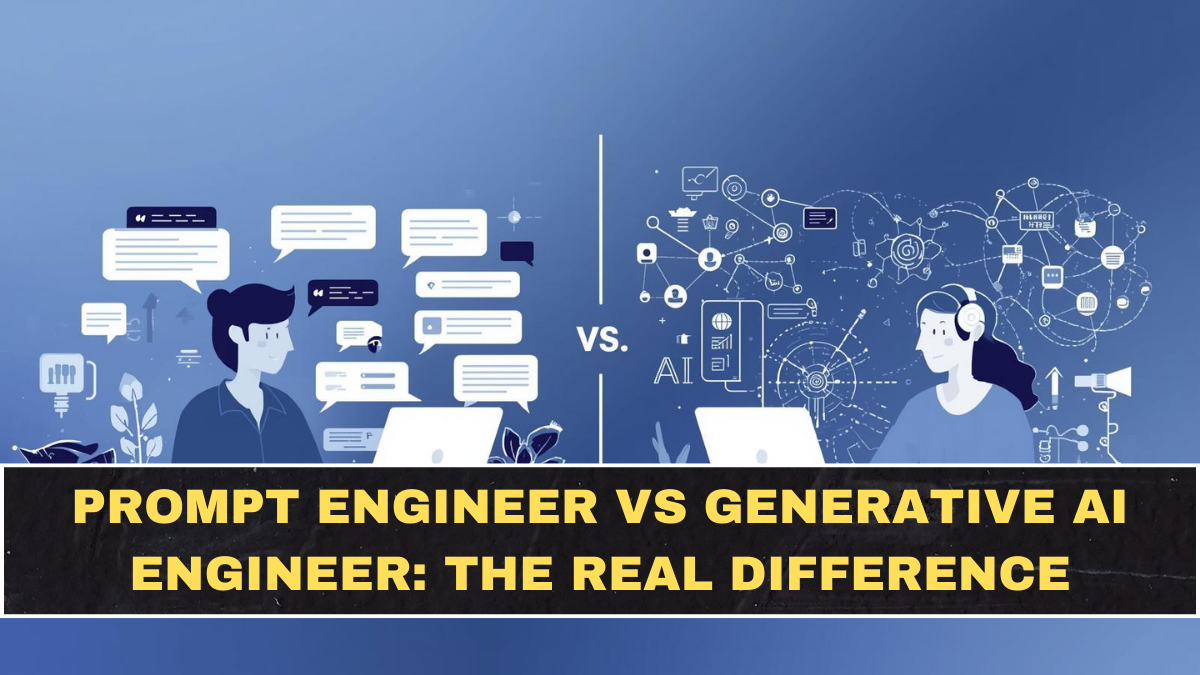
A prompt engineer focuses on interaction design between humans and AI models. Their job is to shape inputs so models produce consistent, useful outputs within known constraints.
This includes crafting prompts, templates, and system messages, testing variations, and documenting best practices for teams. Prompt engineers often work closely with product, content, or operations teams rather than core infrastructure.
The role is highly iterative and user-facing. It requires clarity of thinking, strong language skills, and an understanding of how models respond to different instructions.
What a Generative AI Engineer Actually Does
A generative AI engineer works deeper in the system. Their responsibility extends beyond inputs to the full lifecycle of AI-powered features.
This includes model selection, architecture decisions, retrieval integration, evaluation pipelines, monitoring, cost control, and failure handling. They design systems that must work reliably under real-world conditions.
In 2026, this role carries production responsibility. When something breaks, degrades, or causes risk, generative AI engineers are expected to diagnose and fix it.
Skill Depth: Where the Real Gap Lies
The biggest difference between these roles is not tools, but depth. Prompt engineers typically operate at the interface layer. Generative AI engineers operate across multiple layers.
Prompt engineering requires understanding model behavior. Generative AI engineering requires understanding systems, data flow, trade-offs, and constraints.
This difference in depth directly affects how companies assess risk. Deeper responsibility usually translates to higher compensation.
Ownership and Accountability in Each Role
Prompt engineers are usually not accountable for system uptime, latency, or cost overruns. Their success is measured by output quality and usability.
Generative AI engineers are accountable for system performance, reliability, and safety. They are expected to make decisions that affect users, budgets, and compliance.
In 2026, accountability is one of the strongest drivers of role valuation.
Which Role Pays Better in 2026
Generative AI engineers generally earn more than prompt engineers, especially in product companies and AI-native teams. This is because their work reduces operational risk and enables scale.
Prompt engineering can still pay well in specific contexts, particularly in content-heavy or workflow-focused environments. However, salary ceilings tend to be lower.
The pay gap reflects responsibility, not importance. Both roles matter, but they matter in different ways.
What Hiring Teams Look for in Portfolios
Prompt engineer portfolios focus on clarity and outcomes. Hiring teams want to see examples of improved outputs, reduced error rates, or better user experiences through prompting.
Generative AI engineer portfolios focus on systems. Teams look for architecture diagrams, evaluation methods, monitoring strategies, and explanations of trade-offs.
In 2026, portfolios that show thinking and decision-making outperform those that list tools or buzzwords.
Career Longevity and Growth Paths
Prompt engineering roles may plateau if they remain isolated from system understanding. Growth often requires moving into broader AI product or platform roles.
Generative AI engineering roles offer longer growth paths because they connect naturally to architecture, leadership, and strategy positions.
This does not mean one role is “better.” It means each role suits different strengths and ambitions.
How to Choose the Right Path for You
Choosing between these roles requires honesty about your interests. If you enjoy language, iteration, and user interaction, prompt engineering may fit well.
If you enjoy systems, debugging, and ownership under uncertainty, generative AI engineering is likely a better match.
In 2026, the fastest progress comes from alignment, not trend-chasing.
Conclusion: Titles Matter Less Than Responsibility
The real difference between prompt engineers and generative AI engineers is not the name of the role. It is the level of responsibility carried when things go wrong.
Prompt engineers shape interaction. Generative AI engineers shape systems. Both contribute to successful AI products, but in different ways.
Understanding this distinction helps you learn with intention, apply with confidence, and build a career that actually fits where the industry is heading.
FAQs
Is prompt engineering still a real job in 2026?
Yes, but it is most valuable when tied to specific workflows or products rather than as a standalone skill.
Do generative AI engineers need to know prompting?
Yes, but prompting is just one small part of their overall responsibility.
Which role is easier to enter?
Prompt engineering generally has a lower barrier to entry than generative AI engineering.
Can a prompt engineer transition into a GenAI engineer role?
Yes, by gradually building system-level skills and taking ownership of broader AI workflows.
Which role has better long-term growth?
Generative AI engineering typically offers broader and longer growth paths due to deeper system involvement.
Should freshers target one role over the other?
Freshers should choose based on interest and aptitude, not salary alone, and build skills accordingly.