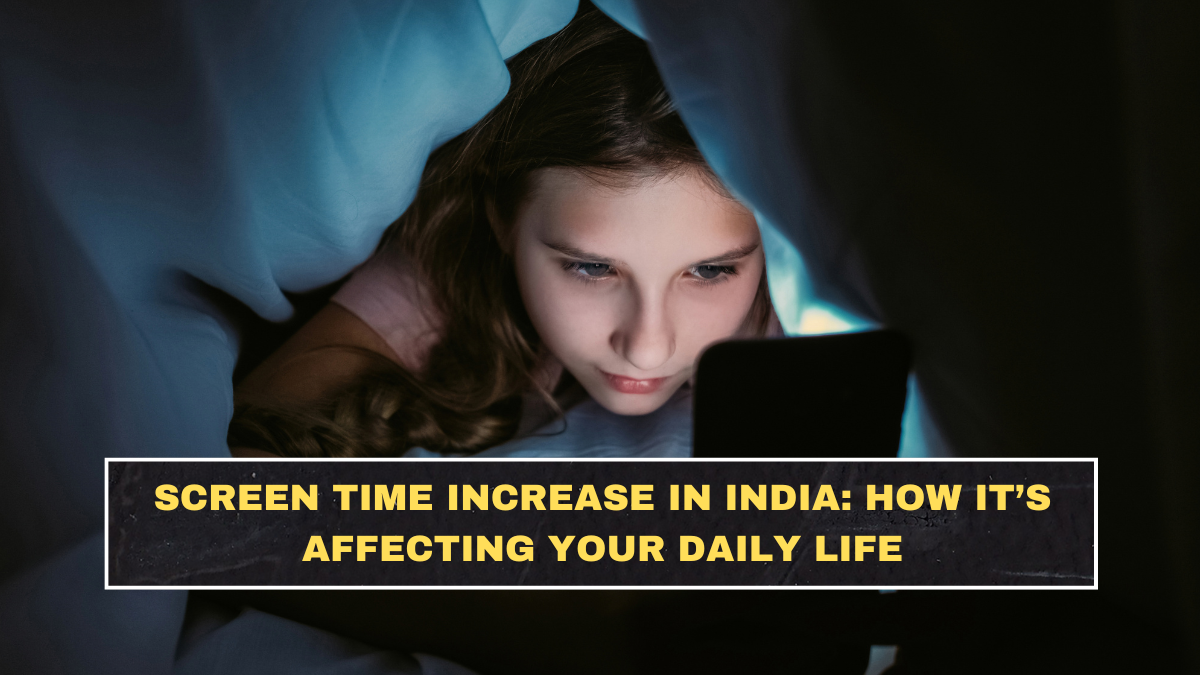
You check your phone for a minute, and suddenly 30 minutes are gone. This is not just your habit — it’s happening across India. Screen time is increasing sharply because almost everything now happens through a screen, whether it’s work, entertainment, or communication.
With smartphones, OTT platforms, social media, and online work becoming part of daily life, people are spending more hours looking at screens without even realizing how much time is actually passing.

Why Does This Matter More Than You Think?
This is not just about “using your phone too much.” High screen time is directly affecting sleep, focus, productivity, and even mental health.
When screen usage crosses 5–7 hours daily, it starts interfering with natural routines. People sleep later, wake up tired, lose concentration, and feel mentally exhausted without understanding the real cause.
What Is Driving This Sudden Rise in Screen Time?
There are clear reasons behind this increase:
- Work-from-home and digital jobs increasing screen dependency
- Social media platforms designed to keep users engaged longer
- Video content consumption through reels and OTT platforms
- Online gaming and entertainment
- Constant notifications and app usage
For example, many users now spend 3–5 hours daily just on social media and video content alone.
How Much Screen Time Are People Actually Spending?
Screen time has increased significantly across age groups.
Average Daily Screen Time Breakdown
| Activity Type | Time Spent (Approx) |
|---|---|
| Social Media | 2–4 hours |
| Video Streaming | 1–3 hours |
| Work/Study | 3–8 hours |
| Gaming | 1–2 hours |
This shows that total daily screen time can easily cross 6–10 hours for many users.
What’s Happening in India Right Now?
With growing internet access and smartphone usage, screen time is increasing in both urban and rural areas. Younger users are especially spending more time online due to entertainment and social media.
At the same time, digital work culture is making it difficult to reduce screen exposure, as many people depend on screens for their livelihood.
What Should You Do to Reduce Screen Time?
You don’t need to eliminate screens — you need to control them.
- Set daily screen time limits on your phone
- Take regular breaks every 30–60 minutes
- Avoid screens before sleeping
- Turn off unnecessary notifications
- Spend time on offline activities
Small changes can reduce screen fatigue significantly.
What Mistakes Are Increasing Your Screen Time?
Most people don’t realize how their habits are increasing usage.
Common mistakes include:
- Checking phone repeatedly without purpose
- Watching short videos continuously
- Using phone before sleep
- Not tracking screen time
These habits slowly increase dependency.
What Should You Watch Next?
With new content formats and faster internet, screen time is likely to increase further. Managing usage will become more important as digital dependency grows.
Reality Check: Is High Screen Time Normal Now?
Yes — but that doesn’t mean it’s healthy.
Just because everyone is doing it doesn’t mean it’s not affecting you. High screen time has real consequences on both physical and mental health.
Conclusion: What Should You Take Seriously Right Now?
Stop ignoring how much time you spend on screens.
The impact is not immediate, but it builds over time. If you don’t control it now, it will start affecting your health, productivity, and daily routine.
FAQs
How much screen time is considered high?
More than 5–7 hours daily is generally considered high.
Does screen time affect sleep?
Yes, especially using screens before bedtime can disrupt sleep patterns.
How can I reduce screen time?
Set limits, take breaks, and avoid unnecessary usage.
Is screen time increasing in India?
Yes, due to digital lifestyle and internet access.
Does screen time affect mental health?
Yes, excessive usage can lead to stress, anxiety, and reduced focus.
Click here to know more.