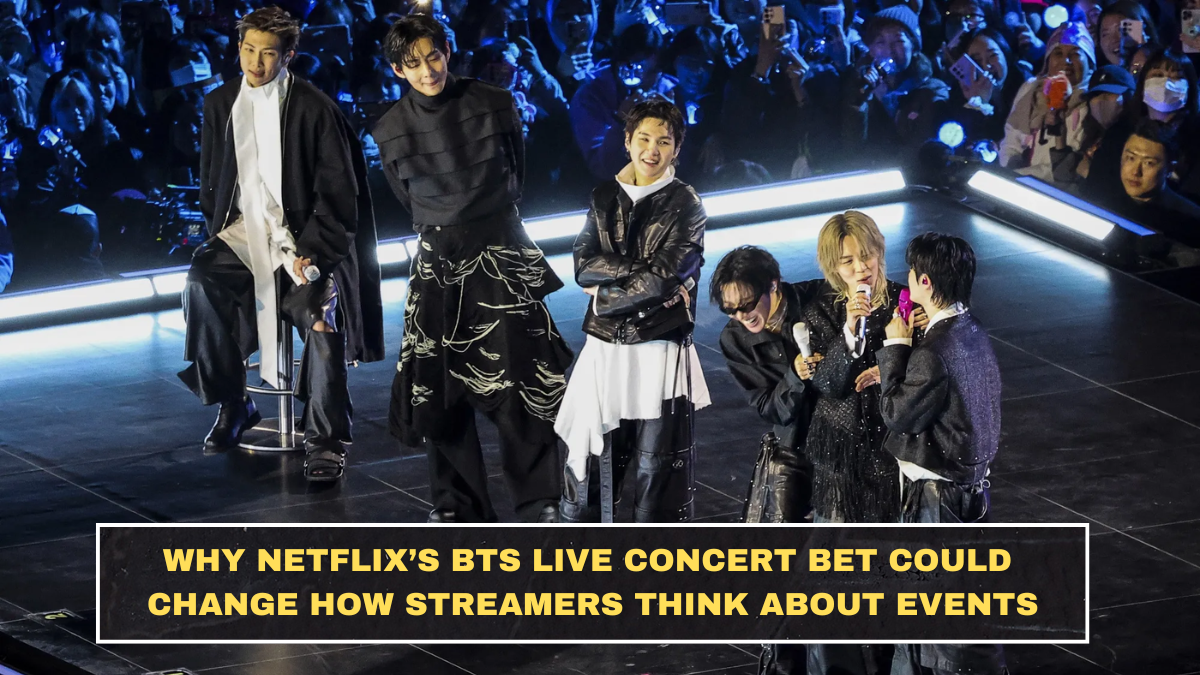
Netflix’s BTS concert bet matters because it was not just another music special. Reuters reported that the March 21 Seoul show was Netflix’s first global live broadcast of a music concert, streamed to 190 countries as BTS returned from a three-year group hiatus and launched its comeback era. That makes the event a strategy signal, not just fan service.
Why this event was bigger than a normal concert stream
The scale alone explains why the industry noticed. Reuters reported that the livestream drew 18.4 million viewers worldwide, ranked in Netflix’s weekly Top 10 in 80 countries, and hit No. 1 in 24 countries. BTS was not just filling a venue. It was proving that a fandom-driven live event can travel globally in real time through a mainstream subscription platform.
Why Netflix chose BTS for this move
This was the safest high-risk bet Netflix could make. BTS already had global demand, a major comeback album, and a world tour starting in April. Reuters reported that the event marked the release of the group’s first new album in more than three years and the start of the ARIRANG world tour. If Netflix wanted to test whether live music could work at global scale, BTS was the obvious stress test.
Why this matters for streaming strategy
Live programming is valuable because it gives platforms something on-demand libraries cannot: urgency. A hit drama can wait until tomorrow. A live BTS comeback cannot. Reuters reported that Netflix sees more prospects for live events in South Korea, and the company’s vice president of nonfiction series and sports described the BTS show as something it hoped would be “a spectacle unlike anything we’ve seen before.” That tells you Netflix is thinking beyond one concert.
What the BTS event proved
The results matter more than the hype:
- live music can pull huge simultaneous audiences on a subscription platform
- fandoms can turn a concert into a global appointment event
- South Korea is now central to Netflix’s live-events experiment
- successful live entertainment can support documentaries, tours, and repeat viewing afterward
This is where the business logic gets obvious. Netflix was not just streaming a concert. It was testing whether live culture can deepen subscriber engagement the way sports and major specials do. That final sentence is an inference supported by Reuters’ reporting on Netflix’s broader live-events interest.
The numbers behind the story
| Metric | Reported figure | Why it matters |
|---|---|---|
| Countries reached | 190 | Shows true global distribution |
| Global livestream audience | 18.4 million | Proves large-scale demand |
| Netflix Top 10 countries | 80 | Indicates broad international appeal |
| No. 1 markets | 24 | Shows the event cut through strongly |
| BTS world tour | 34 cities, 82 concerts | Expands the event into a larger commercial cycle |
These figures matter because they show a concert stream can function as both a media product and a launch platform for a much bigger revenue machine.
Why fandom economics are central here
BTS fans do not behave like passive viewers. They create appointment viewing, social amplification, repeat engagement, and downstream demand for tours, merch, and related content. Reuters reported that BTS’s comeback world tour could generate about 2.7 trillion won ($1.8 billion), which shows how live streaming can sit inside a much broader commercial ecosystem. Netflix benefits if live events become the top of that funnel.
What this could mean for competitors
If Netflix can make global live music work, other platforms will be pushed to think harder about event programming that is not sports. The line between streamer, broadcaster, and live-events distributor gets thinner when a concert can pull millions in real time. This does not mean every artist can do what BTS did. It means premium fandoms now look even more valuable to platforms chasing attention in a crowded market. This is an inference based on the Reuters-reported scale and platform reach of the event.
Conclusion
Netflix’s BTS live concert bet could change how streamers think about events because it showed that live music, handled at the right scale, can behave like prestige television, sports-lite, and global fan culture all at once. The company did not just get a successful concert. It got proof that live entertainment can create urgency, reach, and platform relevance in a way ordinary catalog content often cannot.
FAQs
Was this really Netflix’s first global live music concert stream?
Yes. Reuters reported that the BTS Seoul event was Netflix’s first worldwide live broadcast of a music concert.
How many people watched the BTS livestream?
Reuters reported that Netflix said the concert drew 18.4 million viewers worldwide.
Why is this important for Netflix?
Because it shows live music can drive global appointment viewing and strengthen Netflix’s broader live-events strategy. That conclusion is supported by Reuters’ reporting on the platform’s expansion into live programming.
Does this connect to BTS’s wider comeback plan?
Yes. Reuters reported that the livestream coincided with BTS’s comeback album release and the start of a world tour covering 34 cities and 82 concerts.