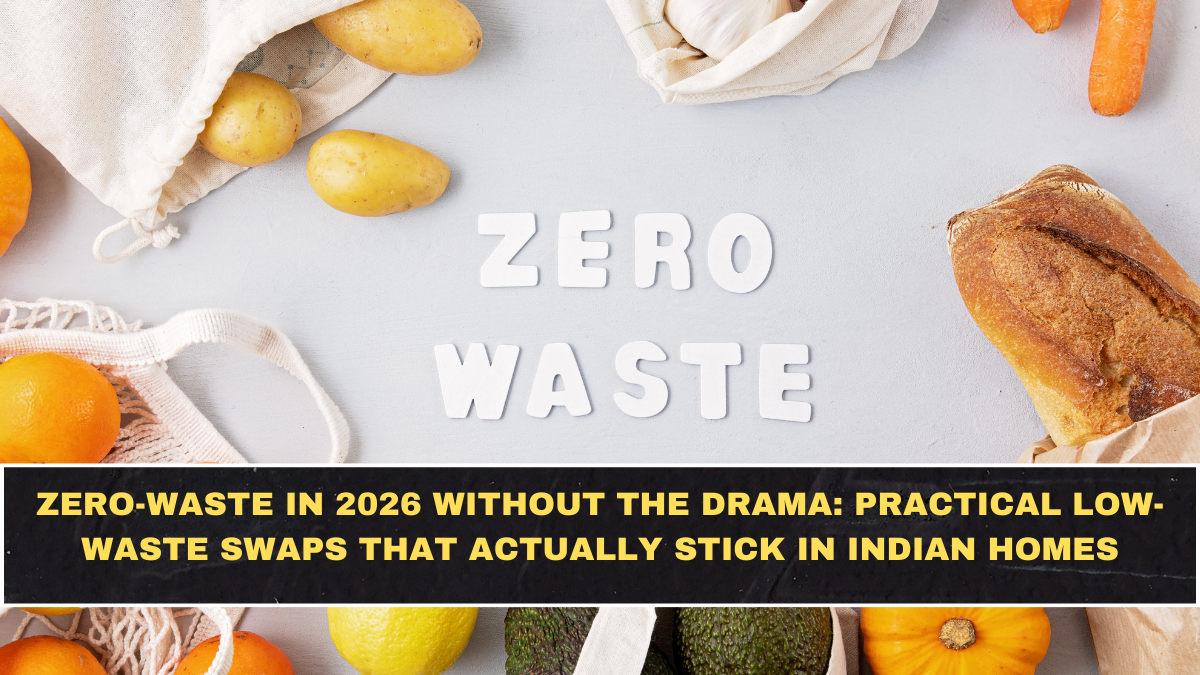
Zero-waste in 2026 looks very different from the aesthetic, all-or-nothing lifestyle shown online. In Indian homes, sustainability is no longer about glass jars, perfect kitchens, or throwing away everything plastic overnight. It is about reducing waste gradually without increasing stress, cost, or daily effort. People want changes that fit real routines, not idealized versions of life.
What has driven this shift is fatigue. Many households tried extreme zero-waste ideas and quietly abandoned them because they were inconvenient or expensive. In 2026, zero-waste in India is becoming practical, incremental, and rooted in habits that already exist. The goal is not perfection. The goal is consistency that actually lasts.
Why Zero-Waste Advice Often Fails in Real Indian Homes
Most zero-waste advice fails because it ignores Indian living realities. Shared households, limited storage, busy schedules, and mixed buying habits make rigid systems unrealistic.
Advice that demands replacing everything at once creates friction. When changes feel like sacrifices rather than upgrades, they rarely stick beyond a few weeks.
In 2026, successful low-waste habits respect how Indian households already function. They adapt to behavior instead of trying to overwrite it completely.
What Zero-Waste Actually Means in 2026
Zero-waste in 2026 does not mean producing zero trash. It means producing less waste intentionally and avoiding unnecessary disposal wherever possible.
The focus has shifted from elimination to reduction. Reducing food waste, packaging waste, and disposable usage has a far bigger impact than chasing niche swaps.
In Indian homes, zero-waste is now about doing better than before, not achieving an impossible standard.
Low-Waste Swaps That Actually Work Daily
Some swaps succeed because they integrate smoothly into routines. Cloth bags replacing plastic carry bags work because they are reusable and familiar.
Refilling household cleaners or buying concentrates reduces plastic without changing how products are used. Switching from disposable kitchen wipes to washable cloths works because washing is already routine.
These swaps stick because they feel logical, not forced, and save money over time rather than increasing expenses.
Food Waste: The Biggest Opportunity Most People Miss
Food waste is one of the largest contributors to household waste, yet it is often ignored. Planning meals loosely, storing food properly, and reusing leftovers make a visible difference.
Indian cooking already supports low waste through reuse of ingredients across meals. The issue is overbuying, not cooking habits.
In 2026, households focusing on reducing food waste see bigger impact than those obsessing over packaging alone.
Why Composting Isn’t Always the First Step
Composting is often promoted as essential, but it is not suitable for every home. Space, odor concerns, and maintenance discourage many people.
For some households, reducing food waste is more practical than composting it. For others, community composting or municipal options work better than home setups.
Zero-waste in 2026 recognizes that composting is a tool, not a requirement.
The Cost Myth Around Sustainable Living
One persistent myth is that low-waste living is expensive. In reality, many sustainable habits reduce costs when practiced consistently.
Buying less, wasting less, and reusing more naturally lowers expenses. The cost increases only when sustainability becomes a shopping trend instead of a behavior change.
In Indian homes, zero-waste works best when it aligns with savings rather than status.
How Indian Cultural Habits Already Support Low Waste
Indian households already practice many low-waste habits without labeling them as sustainable. Reusing containers, repairing items, and cooking from scratch are common traditions.
The challenge is not learning new habits, but preserving old ones in modern lifestyles.
In 2026, zero-waste feels familiar because it reconnects with practices that existed long before sustainability became a trend.
How to Build a Low-Waste Routine That Lasts
Start with one area, not the entire house. Kitchen waste, shopping habits, or cleaning products are good entry points.
Make changes visible but simple. When a habit feels effortless, it becomes automatic.
Consistency matters more than ambition. Small reductions repeated daily create long-term impact.
Why Guilt-Free Sustainability Matters
Guilt-driven sustainability rarely lasts. Feeling bad about waste often leads to avoidance rather than improvement.
In 2026, the tone around zero-waste is softer and more realistic. Progress is celebrated, not policed.
Sustainable habits stick when they feel empowering instead of restrictive.
Conclusion: Zero-Waste Works When It Feels Normal
Zero-waste in 2026 succeeds because it fits real Indian homes, not because it chases perfection. Practical swaps, reduced food waste, and mindful buying make a measurable difference without disrupting daily life.
The most effective low-waste routines feel almost invisible. They blend into habits rather than demanding attention.
Sustainability that sticks is the kind you forget you are doing, because it feels like common sense.
FAQs
What does zero-waste mean in Indian households?
It means reducing waste gradually through practical habits rather than eliminating waste completely.
Is zero-waste expensive to follow?
No, most low-waste habits reduce costs when focused on reuse and waste reduction instead of new purchases.
Do I need to compost to live zero-waste?
No, composting is helpful but not mandatory. Reducing food waste matters more in many homes.
What is the easiest low-waste swap to start with?
Reducing food waste and carrying reusable bags are among the easiest and most effective first steps.
Why do many people quit zero-waste habits?
Unrealistic expectations and guilt-based approaches make habits hard to maintain long-term.
Can small changes really make a difference?
Yes, small consistent changes across many households create significant impact over time.