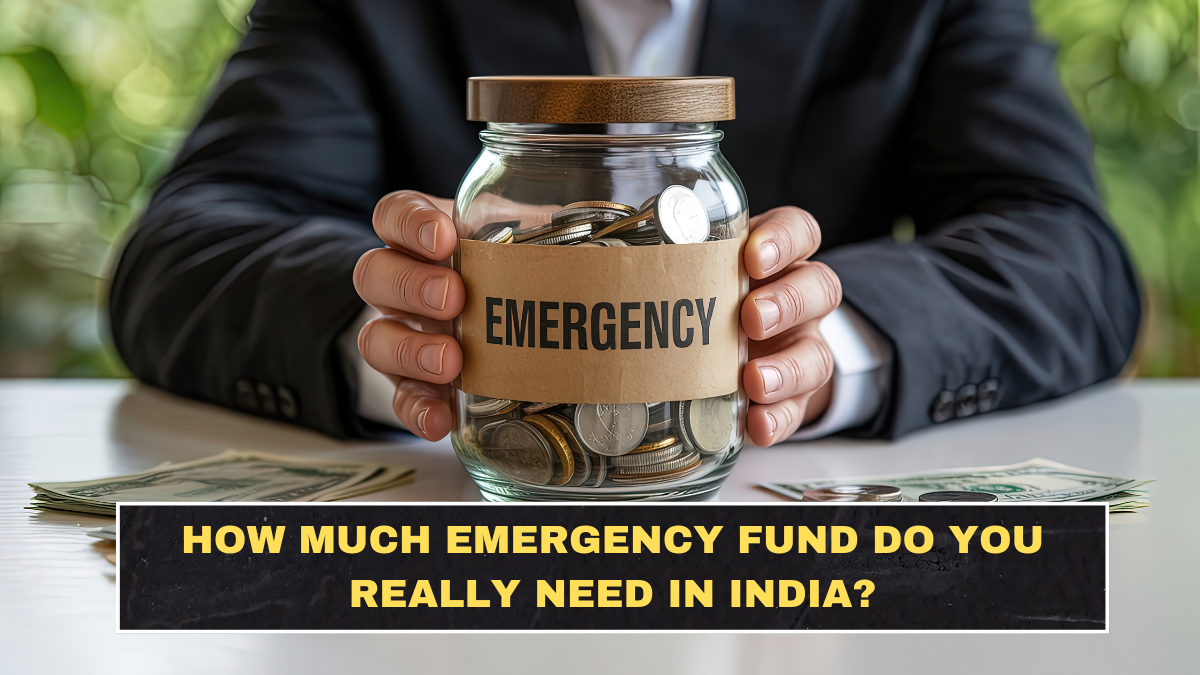
If you are building an emergency fund in India, the useful answer is not one fixed number for everyone. For most beginners, the practical target is 3 to 6 months of essential expenses, not 3 to 6 months of your full salary. Indian bank education content commonly uses that 3-to-6-month range for contingency savings, and SEBI’s investor education materials explicitly treat emergency funds as part of basic financial planning. At the same time, where you keep that money matters just as much as how much you save. RBI says bank deposits are insured by DICGC up to ₹5 lakh per depositor per bank, including principal and interest, which is a real safety point for readers deciding where to park emergency cash.
The real mistake beginners make is copying someone else’s target without checking their own risk. A salaried single person with low EMI pressure does not need the same buffer as a freelancer, a family with one income, or someone with unstable work. So the smarter way to build an emergency fund in India is to calculate your essential monthly expenses, set a minimum starting target, and keep the money in a place that is safe and easy to access when life goes wrong.
Quick answer
For most people in India, a reasonable emergency fund target is at least 3 months of essential expenses, with 6 months being safer if your income is unstable, you support family members, or your fixed obligations are high. If your essentials are ₹30,000 a month, your emergency fund target is usually ₹90,000 to ₹1.8 lakh. You do not need to wait until you can save the full amount at once. Build it in stages. Start with a small buffer, then grow it steadily.
For storage, the safest base option is a savings account or another highly liquid low-risk option, especially for the first layer of the fund. RBI’s DICGC insurance cap of ₹5 lakh per depositor per bank is one of the few hard proof-based facts that matters here because it tells you what bank-deposit protection actually looks like in India.
Quick emergency fund table
| Situation | Suggested emergency fund target | Why |
|---|---|---|
| Stable salaried person, low obligations | 3 months of essential expenses | lower income uncertainty |
| Salaried person with family or EMIs | 4 to 6 months | higher fixed pressure |
| Freelancer or variable income worker | 6 months or more | income can drop unevenly |
| Single-income household | 6 months or more | one disruption affects everyone |
| Beginner with no savings yet | first ₹25,000 to ₹50,000 buffer | gives immediate protection while building full target |
1) Calculate essential expenses first, not your full lifestyle
An emergency fund is meant to protect survival-level spending, not your ideal month. So calculate your essentials first: rent, groceries, medicines, school fees if unavoidable, electricity, phone, insurance premiums, transport, and minimum EMI payments. That number matters more than your salary figure. A person earning ₹80,000 but needing only ₹35,000 for essentials should not blindly build an emergency fund off the full ₹80,000. That is lazy math.
This is also why readers get confused when they hear “save 6 months.” Six months of what? The right answer is usually six months of necessary expenses. That makes the target more realistic and more useful.
2) Start with 3 months, aim for 6 if your life is less stable
The 3-to-6-month guidance is common because it balances realism and protection. HDFC Bank’s savings guidance explicitly mentions using a separate account for 3 to 6 months’ contingency funds, which aligns with the standard emergency-fund rule most readers are already hearing.
But not everyone should stop at 3 months. If your income is irregular, your job security is weak, or your family depends mainly on you, then 6 months is the safer target. And if you are self-employed or freelance, pretending 3 months is always enough is usually false confidence.
3) Build the fund in stages so it actually happens
Many beginners fail because they turn emergency savings into a giant abstract goal. A better structure is staged. First build a quick buffer, then grow it into a proper fund. For example, your stages could look like this:
| Stage | Target | Purpose |
|---|---|---|
| Stage 1 | ₹25,000 to ₹50,000 | sudden medical, travel, or repair shock |
| Stage 2 | 1 month of essentials | stops one bad month from becoming debt |
| Stage 3 | 3 months of essentials | basic emergency protection |
| Stage 4 | 6 months of essentials | stronger financial safety |
This works because progress feels real. People save better when the next target is close enough to matter, not when the full number feels impossible from day one.
4) Where should you keep an emergency fund in India?
For most beginners, the first layer should stay in a savings account or another highly liquid low-risk option. RBI’s DICGC framework says deposits are insured up to ₹5 lakh per depositor per bank, which is one reason bank deposits remain a practical base for emergency money. SBI’s current savings deposit page also shows a savings interest rate of 2.50% p.a. effective from 15 June 2025, which reminds readers of the trade-off: savings accounts are liquid and simple, but returns are modest.
Some people also use products linked to short-term deposits or highly liquid debt products for part of the fund, but this is where readers need to stop pretending every “slightly better return” option is automatically equal to cash safety. SEBI and scheme documents repeatedly warn that mutual funds involve investment risks, including possible loss of principal. So if you use any market-linked product for part of an emergency fund, that is not the same as keeping money in a plain insured bank deposit.
5) Do not put your full emergency fund into risky assets
This should be obvious, but people still do it. An emergency fund is not long-term growth capital. It is protection money. If you put it fully into equities, long-duration funds, or anything that can force you to sell at the wrong time, you are defeating the purpose. SEBI-linked scheme documents clearly state that mutual fund investments carry market, credit, liquidity, and default risks, including possible loss of principal.
That means your emergency fund should prioritize liquidity and reliability first, return second. Chasing higher yield with emergency money is usually greed pretending to be smart planning.
6) A split structure can work better than one account
A practical beginner setup is often:
- one part in a plain savings account for immediate access
- another part in a very liquid low-risk bucket if you want some separation
- automatic monthly transfers so the fund keeps growing
Banks themselves market goal-based savings or linked savings-plus structures for this kind of behavior. For example, SBI’s Savings Plus account automatically transfers surplus above ₹50,000 into linked term deposits in multiples of ₹5,000, and ICICI’s iWish goal-based savings product allows targets from ₹5,000 to ₹5 lakh with auto-debit options. Those are product examples, not one universal answer, but they show that structured saving is often more practical than relying on motivation alone.
7) How much should you save each month?
This depends on your deadline. If your target is ₹1.2 lakh and you want to build it in 12 months, you need roughly ₹10,000 a month. If that is too much, extend the timeline or start with the first-stage buffer. The point is not perfection. The point is direction.
A beginner who saves ₹3,000 to ₹5,000 consistently is financially stronger than someone who keeps talking about wealth creation while having no emergency protection at all. Investment without backup cash is often just overconfidence.
8) When should you use the emergency fund?
Use it for things like sudden medical costs, urgent travel, job loss, emergency repairs, or unavoidable family financial shocks. Do not use it for festival shopping, impulsive gadgets, vacation deals, or because your regular monthly budget was sloppy. If every inconvenience becomes an “emergency,” then you do not have an emergency fund. You have a badly managed current account.
This distinction matters because people often destroy the fund through casual leakage, then act surprised when a real crisis arrives.
FAQs
How much emergency fund should a beginner have in India?
A beginner should usually aim for 3 to 6 months of essential expenses, not 3 to 6 months of total salary or full lifestyle spending. A small first buffer such as ₹25,000 to ₹50,000 is also a sensible starting milestone.
Where should I keep my emergency fund in India?
For most beginners, a savings account is the safest first layer because of liquidity and simplicity. RBI says bank deposits are insured up to ₹5 lakh per depositor per bank through DICGC, which is a useful safety benchmark.
Can I keep my emergency fund in mutual funds?
You can keep part of it in highly liquid low-risk options only if you understand the trade-offs, but mutual funds still carry risks. SEBI-linked scheme documents explicitly warn about market, liquidity, credit, and possible principal loss risks.
Is 6 months of expenses always necessary?
No. For some stable salaried people, 3 months of essentials may be enough as a first target. But people with variable income, family dependence, or higher fixed obligations usually need a bigger cushion.
Final takeaway
If you are a beginner in India, the smartest emergency fund target is the one based on your essential monthly expenses, income stability, and real obligations. Start small, build in stages, and keep the money somewhere safe and accessible. The point of an emergency fund is not impressive returns. The point is that when life gets ugly, you do not collapse immediately.