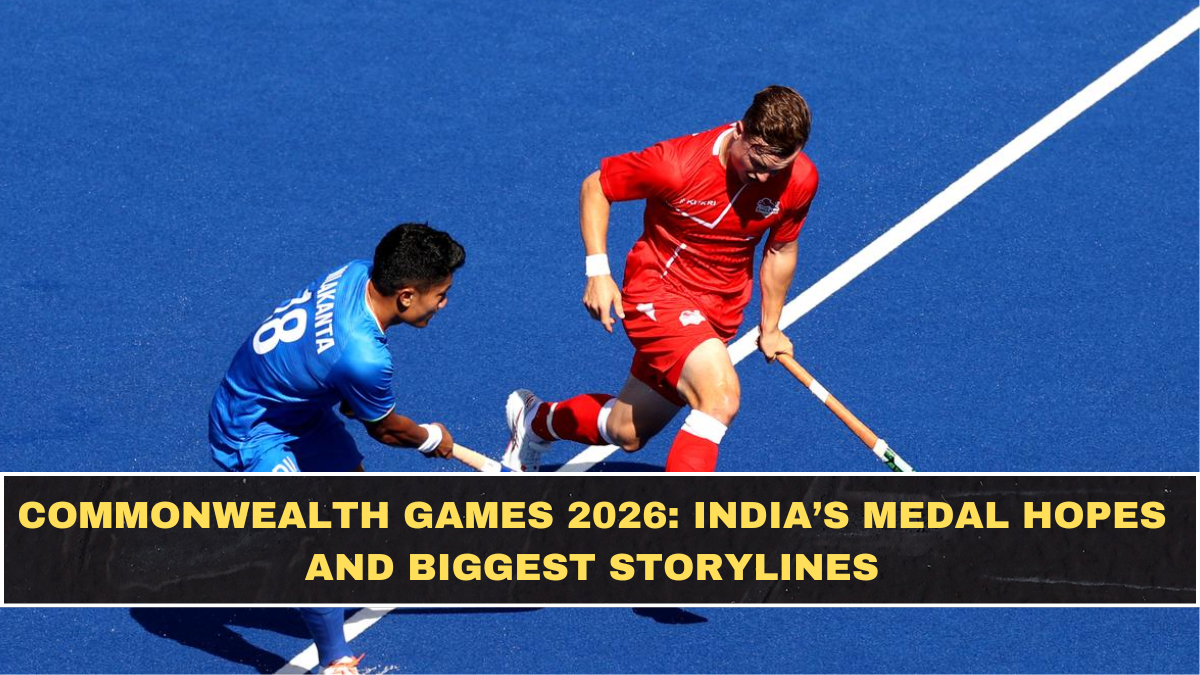
Commonwealth Games 2026 will take place in Glasgow from July 23 to August 2, 2026, but this edition will feel very different for Indian fans. The official Glasgow 2026 programme has been cut down to 10 sports, with a compact model built around fewer venues and a smaller event footprint. That makes the Games easier to host, but it also hurts India because several medal-rich sports are missing.
India won 61 medals at Birmingham 2022, including 22 gold, 16 silver and 23 bronze. That performance came from a broad mix of sports, but Glasgow 2026 removes many events where India has traditionally been strong. So the blunt truth is this: India can still win medals, but expecting a Birmingham-style tally without India’s strongest events would be unrealistic.

What Is Different In Glasgow 2026?
Glasgow 2026 is being designed as a “lighter and leaner” Commonwealth Games after Victoria, Australia, withdrew from hosting due to cost concerns. Reuters reported that Glasgow stepped in with a reduced programme of 10 sports across four venues, with the aim of controlling cost and operational risk. This format may save the Games from collapse, but it also changes the competitive balance sharply.
| Key Detail | Commonwealth Games 2026 |
|---|---|
| Host City | Glasgow, Scotland |
| Dates | July 23 to August 2, 2026 |
| Sports Programme | 10 sports |
| Venues | Compact four-venue model |
| India’s 2022 Medal Total | 61 medals |
| Biggest Concern | Key Indian medal sports removed |
| Main Indian Hope Areas | Weightlifting, boxing, athletics, para sports |
Which Sports Are Included And Removed?
The official Glasgow 2026 sports list includes athletics and para athletics, swimming and para swimming, artistic gymnastics, track cycling and para track cycling, weightlifting and para powerlifting, boxing, judo, bowls and para bowls, netball, and 3×3 basketball with wheelchair basketball. This still gives India some medal chances, especially in weightlifting, boxing, athletics and para powerlifting.
The problem is the exclusion list. Badminton, cricket, hockey, wrestling, table tennis and squash have been omitted from the 2026 programme, while shooting is also absent. These are not minor losses for India; they are medal engines. Reuters reported that India strongly objected because the leaner Glasgow format removed several sports where Indian athletes usually perform well.
Where Can India Still Win Medals?
India’s best hopes now shift toward sports that survived the cut. Weightlifting remains important because India won 10 medals in the sport at Birmingham 2022. Boxing also stays in the programme and has been one of India’s consistent Commonwealth strengths. Athletics has improved in recent years, and para events can add meaningful medal opportunities if selection and preparation are handled properly.
India should focus hardest on:
- Weightlifting: still one of India’s strongest medal areas.
- Boxing: useful because the sport remains in Glasgow.
- Athletics: growing potential, especially in field events and race walking.
- Para powerlifting: serious opportunity if athletes peak at the right time.
- Judo and bowls: outside chances, but not impossible medal routes.
What Are India’s Biggest Storylines?
The first storyline is whether India can stay near the top five despite losing many favourite events. The second is whether Indian federations can manage preparation cleanly, because administrative mess can kill medal chances before athletes even enter the arena. Times of India recently reported a selection dispute affecting 40 boxers ahead of major events including CWG and Asian Games, which is exactly the kind of avoidable chaos India cannot afford.
The third storyline is political and symbolic. India is expected to host the 2030 Commonwealth Games in Ahmedabad, and Reuters has noted that India is also building toward a broader global-sports hosting push. That means Glasgow 2026 is not only about medals; it is also a rehearsal for how India presents itself before taking centre stage in 2030.
Conclusion: Can India Still Shine In Glasgow 2026?
India can still produce strong individual performances at Commonwealth Games 2026, but the medal tally will face serious pressure. The absence of badminton, wrestling, hockey, cricket, table tennis, squash and shooting removes many of India’s most reliable medal routes. Anyone expecting the same medal pattern as Birmingham 2022 is ignoring the new reality.
The smarter expectation is a sharper, more focused Indian campaign led by weightlifting, boxing, athletics and para sports. Glasgow 2026 may not be India’s biggest medal festival, but it can still reveal which athletes and federations are ready for the next cycle. For India, the real challenge is not only winning medals; it is proving that the country can adapt when the easiest medal paths disappear.
FAQs
When Will Commonwealth Games 2026 Start?
Commonwealth Games 2026 will start on July 23, 2026, and end on August 2, 2026 in Glasgow, Scotland. The official Glasgow 2026 website confirms the dates and the 10-sport programme. The Games will be much smaller than Birmingham 2022, but still important for Indian athletes.
Which Sports Are Included In CWG 2026?
The Glasgow 2026 programme includes athletics, swimming, artistic gymnastics, track cycling, weightlifting, boxing, judo, bowls, netball and 3×3 basketball, along with integrated para events in selected sports. India’s strongest chances may come from weightlifting, boxing, athletics and para powerlifting. The final medal hopes will depend on team selection and athlete form.
Why Are India’s Medal Chances Hit In 2026?
India’s medal chances are hit because several strong sports have been removed from the Glasgow programme. Badminton, cricket, hockey, wrestling, table tennis, squash and shooting are not part of the Games. These sports contributed heavily to India’s past Commonwealth success, so their absence will directly affect the medal ceiling.
How Many Medals Did India Win At CWG 2022?
India won 61 medals at Commonwealth Games 2022 in Birmingham, including 22 gold, 16 silver and 23 bronze. That result placed India among the leading nations at the event. Matching that total in Glasgow 2026 will be difficult because the sports programme has changed heavily.