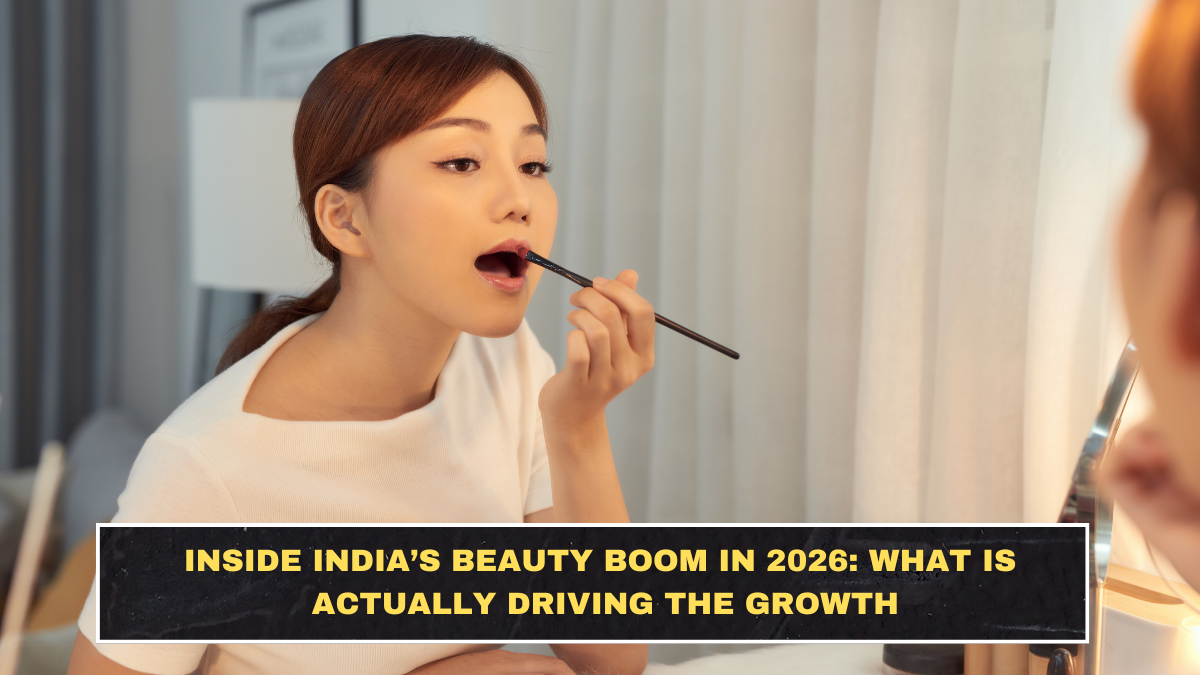
India’s beauty boom is not just about people buying more lipstick and serum. That is the shallow version of the story. The real shift is that beauty in India is turning into a bigger consumer category powered by digital discovery, premiumisation, younger buyers, and a more confident local brand ecosystem.
The market data backs that up. Economic Times reported in March 2026 that India’s beauty and personal care market is expected to grow from $27 billion in FY25 to $39 billion by FY30, based on a 1Lattice report. Other market estimates also show strong momentum, with IMARC placing the broader market at $31.19 billion in 2025 and projecting continued growth through the next decade.
That matters because beauty in India is no longer behaving like a slow, basic essentials market. It is becoming more layered, more digital, and more value-driven.

The Market Is Growing, but Not in the Old Way
The lazy explanation is “rising incomes.” Yes, that helps, but it is not enough. Plenty of markets get richer without becoming this beauty-obsessed. India’s current beauty growth is happening because consumers are not only buying more, they are buying differently.
Vogue reported this week that India is now the seventh-largest beauty market in the world and that both mass and premium, or “masstige,” segments are expanding. Euromonitor also says premiumisation was one of the strongest beauty trends in India in 2024, especially across skin care, fragrances, and colour cosmetics.
That is the real clue. The boom is not just volume growth. It is value growth.
Premiumisation Is One of the Biggest Drivers
Indian beauty buyers are moving up the ladder. They are not all jumping to ultra-luxury, but many are trading up from basic products to higher-quality, more specialized, better-packaged options. That is what premiumisation actually means in practice.
Euromonitor says this trend has been especially visible in skin care, fragrances, and colour cosmetics, helped by wider access to prestige and international brands through both modern retail and online platforms. Vogue’s reporting also points to strong interest in holistic wellness, ayurvedic formulations, and more elevated product experiences.
What is pushing that shift?
- more exposure to global beauty trends
- rising willingness to spend on self-care
- better access through e-commerce and modern retail
- stronger product education around ingredients and routines
This is why the market feels different now. Buyers are not just looking for “something affordable.” Many are looking for “something better.”
Gen Z and Digital Commerce Are Changing the Game
Another big driver is younger consumers, especially Gen Z. Economic Times reported that the online beauty and personal care segment is being fueled heavily by Gen Z, rising accessibility, and content-driven commerce. That is a huge shift because younger buyers are not discovering beauty mainly through old-fashioned advertising. They are discovering it through creators, reviews, routines, short-form video, and community-driven recommendation loops.
This is where many brands either get it right or completely fail. A product is no longer enough. Beauty brands now have to win on:
- content and education
- creator-led discovery
- fast digital availability
- trust and repeat purchase behavior
That also explains why online beauty is growing faster than many legacy players expected. Consumers are not just shopping online for convenience. They are learning online first, then buying.
Local Brands Are No Longer Playing Small
One of the biggest reasons India’s beauty boom feels more serious in 2026 is that local brands are not behaving like weak alternatives anymore. They are shaping the market themselves. Vogue highlighted the growing pull of Indian brands rooted in Ayurveda and local beauty traditions, while also noting that global brands are having to localize much more carefully for Indian skin, climate, and preferences.
This is important because India’s beauty growth is not being driven only by imported aspiration. It is being driven by brands that understand:
- Indian weather and skin concerns
- regional buying behavior
- local cultural trust
- the mix of tradition and science that Indian consumers respond to
That combination is hard for lazy brands to copy.
| Growth driver | What is happening | Why it matters |
|---|---|---|
| Market expansion | India BPC market projected to grow from $27B in FY25 to $39B by FY30 | Shows strong category momentum. |
| Premiumisation | Premium beauty demand rising in skin care, fragrances, and cosmetics | Buyers are moving up in value, not just volume. |
| Digital commerce | Online BPC growth is being driven by Gen Z and content-led shopping | Discovery and buying behavior are changing fast. |
| Local brand strength | Indian brands are gaining traction with Ayurveda, wellness, and localization | Domestic players are shaping demand, not just following it. |
Skincare Is Still at the Center of the Boom
If there is one category sitting at the heart of the beauty surge, it is skincare. Multiple market reports point to stronger demand for facial care, specialized routines, natural products, and premium formulations. IMARC says the broader beauty market is expanding steadily, while other 2026 market estimates point to sustained skincare growth driven by digital influence and rising interest in premium and natural products.
That makes sense because skincare sits at the intersection of beauty, wellness, and personal identity. It also benefits from repeat use, content explainers, and higher consumer experimentation than many older beauty categories.
The Boom Has Limits Too
Now for the part most beauty articles avoid: growth does not mean everything is perfect. Reuters reported yesterday that India’s luxury market still faces infrastructure bottlenecks, especially a shortage of true luxury retail spaces. That does not kill the beauty boom, but it does show that premium demand can outpace offline retail quality.
There is another issue. Beauty is becoming more crowded. More brands, more launches, more creators, and more noise also mean higher customer-acquisition costs and more pressure to stand out. So yes, the market is growing, but not every brand riding the trend will win.
Conclusion
India’s beauty boom in 2026 is real, but it is not being driven by one simple factor. The growth is coming from premiumisation, Gen Z-led digital discovery, stronger skincare demand, and a local brand ecosystem that is finally acting with more confidence and scale. That is why the market feels more dynamic now than it did even a few years ago.
The blunt truth is this: India’s beauty market is growing because buyers are becoming more informed, more experimental, and more willing to spend on products that feel relevant to their lives. The brands that win will not be the loudest. They will be the ones that understand this shift better than the rest.
FAQs
How big is India’s beauty market in 2026?
Recent reporting says India’s beauty and personal care market was about $27 billion in FY25 and is projected to reach $39 billion by FY30. Another estimate placed the market at $31.19 billion in 2025.
What is driving India’s beauty boom?
The biggest drivers include premiumisation, Gen Z-led online shopping, content-driven discovery, stronger skincare demand, and rising traction for Indian beauty brands.
Is premium beauty really growing in India?
Yes. Euromonitor says premiumisation was one of the strongest trends in 2024, especially in skin care, fragrances, and colour cosmetics.
Why are Indian beauty brands doing better now?
Because many local brands are combining cultural familiarity, climate relevance, wellness positioning, and stronger digital storytelling in ways that match Indian consumer needs better.