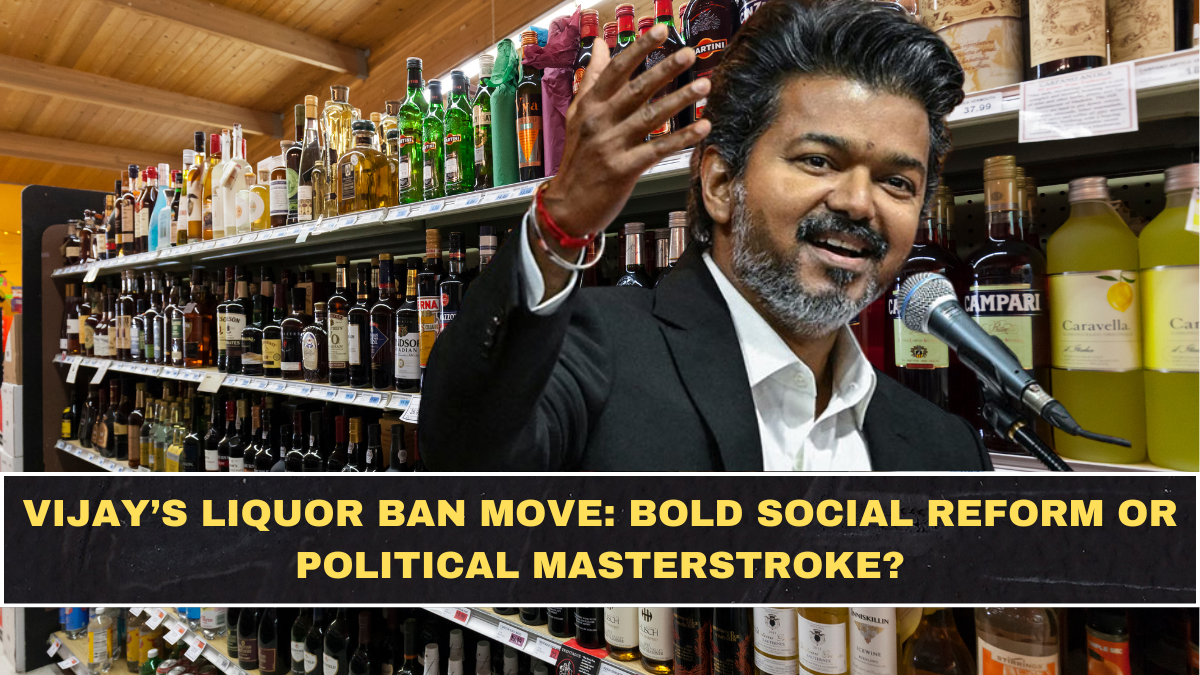
Tamil Nadu Chief Minister C. Joseph Vijay has ordered the closure of 717 TASMAC liquor shops located near schools, colleges, places of worship and bus stands. This is being widely called a “liquor ban” online, but that wording is slightly misleading. It is not a full statewide alcohol ban; it is a targeted shutdown of outlets operating close to sensitive public spaces.
The decision has still become politically explosive because TASMAC is deeply tied to Tamil Nadu’s revenue, public health debate and local safety concerns. NDTV reported that the move is being seen as the first step in Vijay’s promise for an “addiction-free” Tamil Nadu, while also noting that TASMAC revenue crossed ₹48,000 crore in 2025. That is why this decision is not just emotional; it has real financial and political weight.
What Exactly Has Vijay Ordered?
| Key Detail | Current Update | Why It Matters |
|---|---|---|
| Shops affected | 717 TASMAC outlets | Large targeted closure |
| Main locations | Near schools, colleges, temples and bus stands | Sensitive public zones |
| Distance rule | Reported within 500 metres | Stronger public-space buffer |
| Timeline | Closure within two weeks | Fast implementation pressure |
| Political framing | Addiction-free Tamil Nadu promise | Social reform messaging |
| Revenue risk | TASMAC revenue is a major state income source | Fiscal impact debate |
The Indian Express reported that Vijay ordered the closure within two weeks and cited public welfare behind the decision. The Economic Times also reported that the shops are near public spaces including temples, schools, colleges and bus stands. So the real focus is not prohibition everywhere, but reducing alcohol visibility and access around places used by students, commuters and families.
Why Are People Praising This Move?
Actor Vishal publicly praised Vijay’s decision and said many girl children had faced harassment because of TASMAC stores around schools. NDTV reported that Vishal called the move “what a move” and thanked Vijay for announcing the closure of 717 wine shops, especially those near schools. The reaction gave the policy a strong entertainment-world boost, not just a political one.
The public praise is understandable because liquor shops near schools and public transport points have long been a sensitive issue. Parents, women, students and local residents often complain about harassment, public drinking, crowding and unsafe surroundings near such outlets. Vijay’s move directly touches that emotional nerve, which is why it is gaining fast support online.
Why Is This Politically Smart?
This is politically smart because it gives Vijay a strong first-image advantage as Chief Minister. Instead of starting with a symbolic speech alone, he has chosen a visible action that ordinary families can immediately understand. Closing liquor shops near schools sounds simple, moral and protective, which makes it easy to communicate to voters.
But let’s not pretend this is only pure social reform. It is also smart politics. Vijay is sending a message that TVK will act fast on public morality and safety issues. In a state where cinema, welfare and social justice politics overlap heavily, this kind of decision can create a powerful emotional connection with women voters, parents and youth.
What Is The Revenue Problem?
The hard part is money. TASMAC is not a small side business for Tamil Nadu; it is a major revenue channel for the state. NDTV reported that TASMAC liquor sales made up a large chunk of state revenue, with total revenue over ₹48,000 crore in 2025. That means any long-term liquor control policy must answer a serious question: where will the replacement revenue come from?
This is where idealism meets governance. Closing problematic shops is easier than redesigning state finances. If Vijay expands this into a larger prohibition-style policy without revenue planning, the government could face budget stress. If he stops only at 717 shops, critics may say it is more optics than structural reform.
What Could Go Wrong?
The biggest risk is that liquor sales may simply shift to other nearby outlets instead of reducing consumption. If enforcement is weak, illegal sales, black-market supply and local political protection networks can grow. A shutdown order looks strong on paper, but its real effect depends on monitoring, relocation prevention and police action.
The government must watch these issues carefully:
- Whether closed shops reopen under different addresses nearby.
- Whether illegal liquor sales increase in affected areas.
- Whether public safety actually improves around schools and bus stands.
- Whether TASMAC workers are redeployed properly.
- Whether revenue loss creates pressure to quietly reverse the policy.
- Whether this becomes a one-time headline instead of long-term reform.
Is This Reform Or Masterstroke?
The honest answer is that it is both. It is reform because liquor shops near schools, colleges, temples and bus stands are a genuine public concern. Reducing alcohol exposure around students and families is a sensible move, especially when harassment and public nuisance complaints are part of the debate.
But it is also a political masterstroke because the timing is perfect. Vijay has just entered real governance, and this decision gives him a clean, emotional, headline-friendly start. The challenge now is proving that this is not just an opening stunt. Good politics gets applause; good governance proves results.
Conclusion: Will This Actually Change Tamil Nadu?
Vijay’s TASMAC closure order is a bold first step, but calling it a complete liquor ban is inaccurate. It targets 717 outlets near sensitive public spaces and sends a strong message on public safety, addiction control and social discipline. The move has already drawn praise from cinema figures like Vishal and created a major political conversation across Tamil Nadu.
The real test begins after the headlines fade. If the government enforces the closures properly, prevents illegal substitutes and builds a broader health-focused policy, this can become meaningful reform. If it stops at optics, it will be remembered as a smart headline, not a serious change.
FAQs?
Did Vijay Announce A Complete Liquor Ban In Tamil Nadu?
No, the current decision is not a full statewide liquor ban. Vijay has ordered the closure of 717 TASMAC shops located near schools, colleges, places of worship and bus stands.
How Many TASMAC Shops Will Be Closed?
A total of 717 TASMAC liquor shops are set to be closed under the order. These outlets are reportedly located near sensitive public spaces and must be shut within the announced timeline.
Why Did Vishal Praise Vijay?
Actor Vishal praised Vijay because the order includes TASMAC shops near schools. He said many girl children had faced harassment due to liquor shops around schools, and he called the decision a strong move.
What Is The Biggest Challenge For This Policy?
The biggest challenge is enforcement. If closed shops are replaced by nearby outlets or illegal liquor sales increase, the policy will lose impact. The government must also manage revenue pressure because TASMAC contributes heavily to Tamil Nadu’s finances.