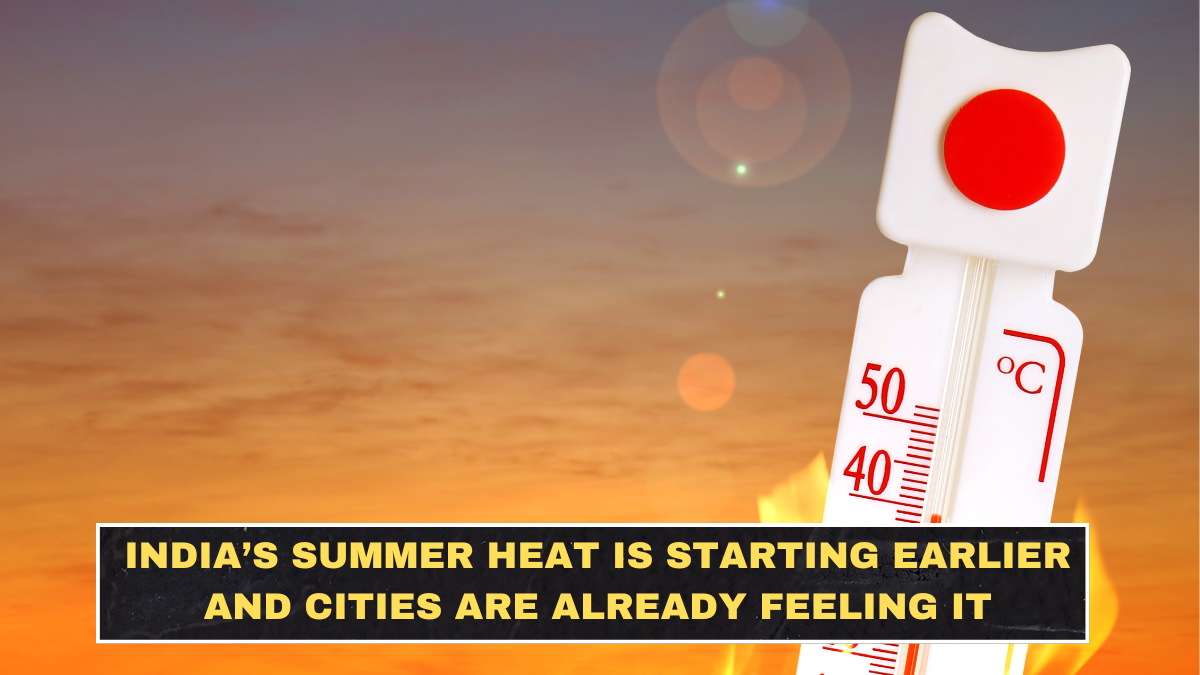
India’s summer heat started early in 2026, and March already gave a warning of what the next few months could look like. The India Meteorological Department said in late February that the country should expect a hotter-than-normal summer, with more heatwave days between March and May. That forecast was not empty. By March 11–13, IMD warned of heatwave to severe heatwave conditions over Saurashtra and Kutch, with heatwave conditions also likely over the wider Gujarat region.
The important point is not just that one state got very hot. It is that serious heat arrived in March itself, before peak summer fully set in. That matters because early heat stretches public-health systems, raises power demand sooner, and catches households behaving as if April or May is when they need to start being careful. That is sloppy thinking, and the data already punished it.
What March 2026 actually showed
Gujarat gave the clearest early signal. IMD’s March 12 bulletin said heatwave to severe heatwave conditions had already prevailed in many places over Saurashtra and Kutch, with heatwave conditions also seen in parts of Gujarat region. Around the same period, Ahmedabad and nearby areas were flagged for rising heat, and Bhuj touched 39°C on March 27 according to local reporting.
Mumbai’s story was slightly different but still important. A March 25 IMD temperature bulletin flagged hot and humid conditions for Thane, Mumbai, Raigad, and Ratnagiri. That is not the same as a formal heatwave, but for dense coastal cities it still matters because humidity makes heat stress feel worse and recovery harder, especially for outdoor workers and vulnerable households.
By the end of March, the pattern had shifted slightly because of weather disturbances. IMD’s extended outlook for March 27 to April 2 said no heatwave conditions were likely during week 1, though some regions were still expected to see appreciably above-normal maximum temperatures. In other words, there was short-term relief, not a clean end to the risk.
What the data says in simple terms
| Indicator | Verified detail | Why it matters |
|---|---|---|
| IMD summer outlook | More heatwave days expected in March–May 2026 | Early heat was officially anticipated |
| Gujarat alert | 11–13 March: heatwave to severe heatwave over Saurashtra & Kutch | Serious heat arrived in March itself |
| Mumbai region warning | 25 March: hot and humid conditions over Mumbai, Thane, Raigad | Coastal cities were also under stress, even without formal heatwave status |
| Late-March IMD outlook | 27 March–2 April: no heatwave in week 1, but above-normal temperatures in some areas | Short-term relief does not cancel the larger seasonal risk |
Why this matters before peak summer
People keep misunderstanding heat risk. They think the danger starts only when cities cross some dramatic temperature number. That is false. Early heat matters because it starts the stress cycle sooner. Reuters noted that February 2026 was already India’s fifth-warmest February since 1901, and IMD linked the season to likely above-normal temperatures in March. That affects crops, electricity demand, and health pressure even before the worst weeks arrive.
This is also why cities should not judge risk only by whether a formal heatwave alert is active today. Late March brought some temporary cooling and thunder activity in parts of west and central India, but that does not erase the earlier March heatwave episode or the broader IMD expectation of a hotter season.
What people should do now
A few practical steps matter more than endless weather chatter:
- Stop waiting for May to start heat precautions.
- Treat hot and humid conditions seriously, not just formal heatwave alerts.
- Reduce exposure during the hottest part of the afternoon.
- Keep hydration, light clothing, and ventilation basic but consistent.
- Watch children, elderly relatives, and outdoor workers earlier in the season, not after they show symptoms.
That last part is where people fool themselves. Heat injury usually builds through neglect, not drama.
Conclusion
India’s summer heat is starting earlier in 2026, and March already proved it. Gujarat saw heatwave to severe heatwave conditions in mid-March, Mumbai and nearby areas faced hot and humid warnings, and IMD had already warned the country to expect a hotter-than-normal season with more heatwave days. Even if the last days of March brought some temporary relief, the larger message is obvious: cities are already feeling summer stress before peak summer has fully arrived.
FAQs
Did India face heatwave conditions in March 2026?
Yes. IMD reported heatwave to severe heatwave conditions over Saurashtra and Kutch on March 11–13, with heatwave conditions also likely over Gujarat region.
Was Mumbai under a heatwave alert too?
Not the same kind of alert. IMD flagged hot and humid conditions for Mumbai, Thane, Raigad, and Ratnagiri on March 25, which still indicates significant heat stress.
Is the heatwave still active right now?
IMD’s extended outlook for March 27 to April 2 said no heatwave conditions were likely in week 1, but some regions were still expected to remain above normal.
Why does early March heat matter so much?
Because it brings health, power, and urban stress forward in the season. It means households and cities have less buffer before peak summer arrives.