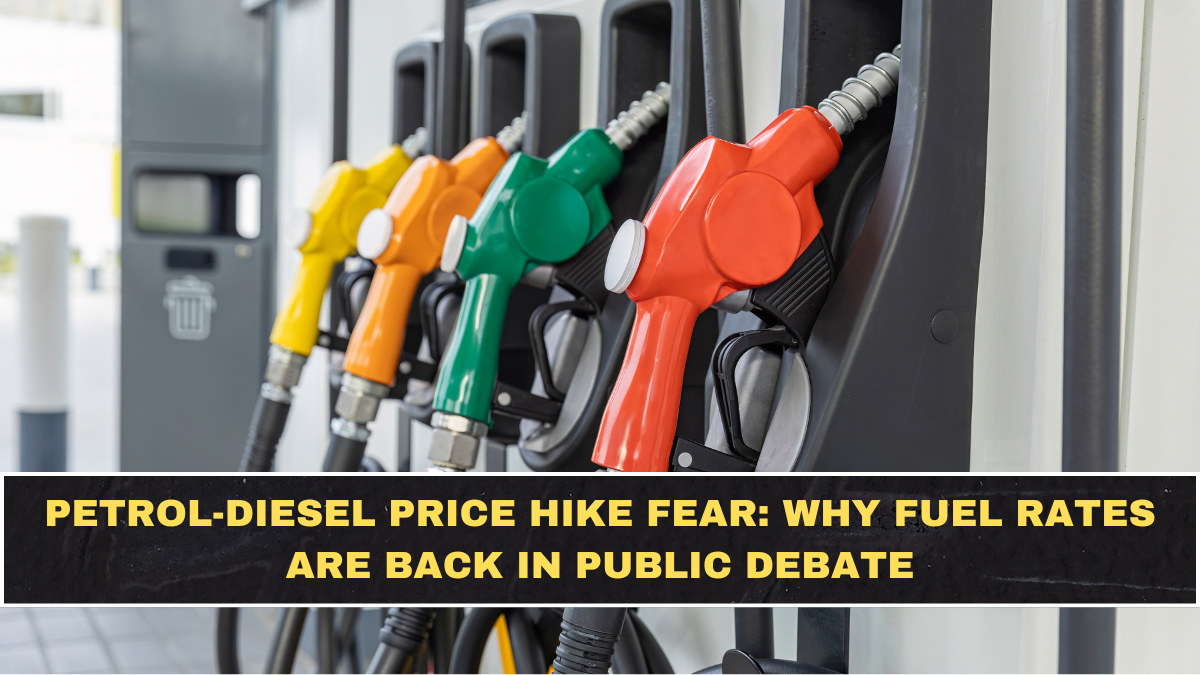
Petrol and diesel price hike fear is back because global oil pressure, West Asia tensions and India’s import dependence are again making fuel a political and household issue. Retail prices have remained stable in several cities for now, but the pressure behind the scenes is clearly rising. RBI Governor Sanjay Malhotra has warned that India may eventually have to raise petrol and diesel prices if the Middle East crisis continues for a prolonged period.
This does not mean a price hike has already been announced. That is where many people are spreading half-truths and panic. The real situation is more complicated: the government is trying to protect consumers from sudden fuel inflation, while oil marketing companies are dealing with higher crude costs, supply uncertainty and shrinking margins.
Why Is The Fear Rising Now?
The fear has grown because crude oil and energy-linked costs are feeding inflation pressure. Reuters reported that India’s wholesale inflation surged to 8.3% in April 2026, a three-and-a-half-year high, mainly because of soaring energy costs linked to the Middle East conflict. Fuel and power prices jumped 24.71% year-on-year, while petroleum and natural gas prices climbed sharply.
That is why the fuel debate is not just about petrol pump prices. When crude and energy costs rise, the pressure spreads to transport, logistics, food delivery, manufacturing, FMCG, packaging and household goods. Even if petrol and diesel rates stay unchanged for some time, the economy can still feel the pain through freight and input costs.
| Factor | Current Impact | Why It Matters |
|---|---|---|
| West Asia crisis | Raises oil supply fear | Can push crude higher |
| OMC losses | Pressure on fuel retailers | May force price action |
| Inflation | Energy costs rising | Hurts household budgets |
| Government control | Retail prices held stable | Delays consumer shock |
| Public fear | Panic buying in some areas | Shows trust problem |
Are People Already Reacting?
Yes, and this is where panic becomes visible. In Pune, petrol and diesel sales reportedly surged by around 20% over two to three days because of price-hike rumours and Prime Minister Narendra Modi’s fuel-saving appeal. Dealers said many consumers were filling full tanks instead of buying smaller quantities, although there was no fuel shortage.
This behaviour is understandable, but not very smart if it turns into panic. Filling a tank early may save a little if prices rise, but hoarding behaviour can create artificial pressure at pumps. India does not need rumour-driven fuel buying; it needs clear communication from authorities and practical fuel-saving behaviour from consumers.
Why Is India So Sensitive To Oil?
India is highly sensitive to crude oil because it imports a major share of its fuel requirement. When global crude rises, India’s import bill increases, the rupee can face pressure, inflation risk grows and government finances become harder to manage. Fuel prices are also politically sensitive because petrol and diesel directly affect daily travel, transport costs and business expenses.
The government usually has three broad choices during oil shocks: allow retail prices to rise, absorb some pressure through oil companies, or adjust taxes and duties. None of these options is painless. If prices rise, consumers suffer. If companies absorb losses, their balance sheets weaken. If taxes are cut, government revenue takes a hit.
What Should Consumers Watch?
Consumers should stop reacting to random WhatsApp forwards and track official price announcements, crude oil trends, RBI comments and government statements. NDTV Profit reported that petrol and diesel prices did not increase on May 14, even though oil marketing companies were facing bigger-than-expected losses while crude stayed elevated.
Useful things to watch include:
- Daily petrol and diesel rates in your city
- Brent crude movement and West Asia tensions
- RBI inflation commentary and fuel-risk remarks
- Government clarification on price-hike reports
- Oil marketing company margin pressure
- State taxes, VAT changes and excise-duty signals
The blunt truth is that fuel prices are not decided only by crude oil. Taxes, currency movement, elections, inflation, government strategy and OMC losses all shape what consumers finally pay at the pump.
Will A Hike Be Large Or Moderate?
A large sudden hike would be politically risky because fuel affects almost every household. Financial Express reported that Antique Stock Broking expects only moderate fuel price increases if crude remains elevated, while officials have not given a direct indication on retail price action. That suggests the government may prefer a controlled adjustment rather than a shock hike.
But this depends on how long the oil pressure lasts. If the Middle East crisis eases and crude cools, the government may avoid a major hike. If crude remains high and OMC losses deepen, the pressure to raise prices will become harder to ignore.
Conclusion
Petrol and diesel price hike fear is back because the oil market, inflation data and geopolitical risks are all flashing warning signs. Retail fuel prices may be stable today, but the pressure behind them is real. The RBI Governor’s warning, higher wholesale inflation and panic fuel buying show that this debate is not just media noise.
The sensible takeaway is simple: do not panic, but do not ignore the risk. India’s fuel prices are stable only as long as the government and oil companies can absorb pressure. If global crude stays high for too long, a controlled price hike may become difficult to avoid.
FAQs
Did Petrol And Diesel Prices Increase Today?
Petrol and diesel prices were reported to be largely unchanged in major cities on May 14, 2026. However, pressure remains because crude oil, energy inflation and oil marketing company losses are creating concern about a possible future hike.
Why Is There Fear Of A Petrol-Diesel Price Hike?
The fear is rising because of the Middle East crisis, higher crude oil pressure, India’s import dependence and losses faced by oil marketing companies. RBI Governor Sanjay Malhotra has also warned that fuel prices may need to rise if the crisis continues.
Can Fuel Prices Increase Suddenly?
A sudden increase is possible but politically sensitive. The government may prefer a moderate or phased increase if crude remains elevated. However, no confirmed nationwide hike should be assumed unless officially announced.
How Can Consumers Reduce Fuel Pressure?
Consumers can reduce fuel pressure by avoiding unnecessary trips, using public transport, carpooling, maintaining tyre pressure, driving smoothly and planning errands together. These small habits matter more during periods of fuel-price uncertainty.