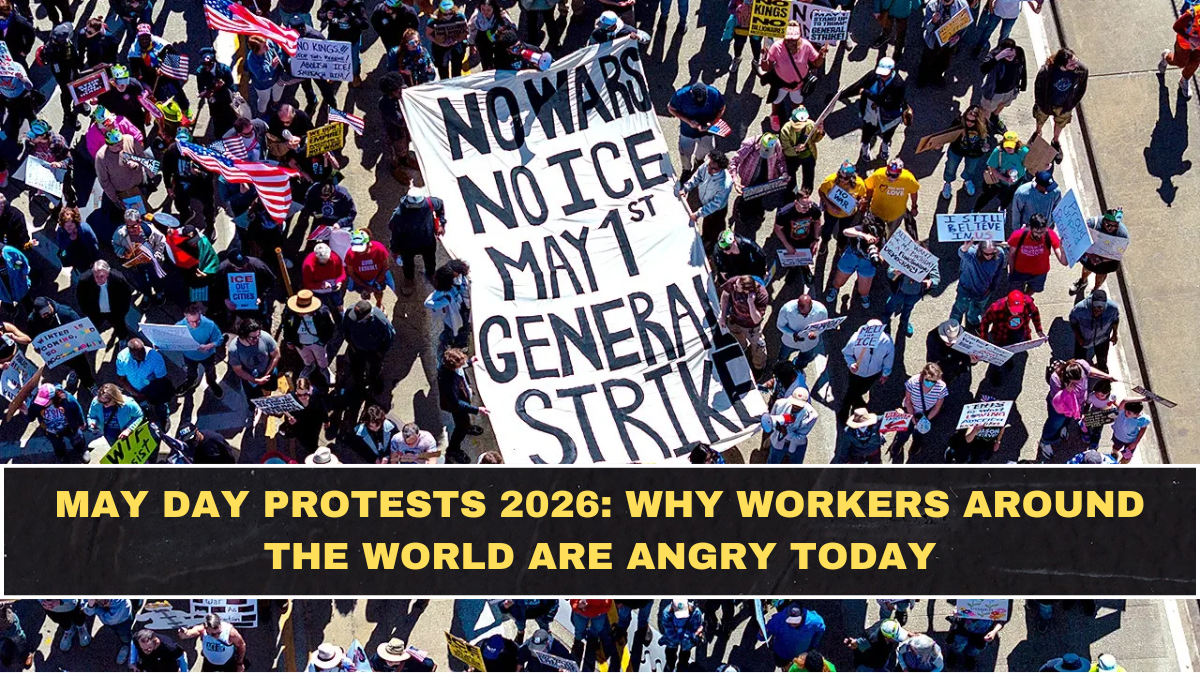
May Day protests in 2026 are getting global attention because workers are not only demanding better wages and working conditions. They are also reacting to rising energy costs, shrinking purchasing power and economic pressure linked to the Iran war. AP reported that activists worldwide gathered on May 1, 2026, calling for peace, higher wages and better working conditions as many workers faced rising energy costs.
This is why the anger feels sharper than a normal Labour Day rally. For many workers, salary increases have not kept pace with rent, food, transport and fuel costs. When people feel they are working harder but still falling behind, May Day becomes more than a symbolic march. It becomes a warning sign for governments and employers.
What Is May Day And Why Does It Still Matter?
May Day, also known as International Workers’ Day, is observed on May 1 in many countries. It has roots in the labour movement and is linked to the fight for shorter working hours, safer workplaces and worker rights. AP noted that its historic roots trace back to the 1886 Haymarket affair in Chicago, which became a powerful symbol of labour struggle.
The reason it still matters is simple: the basic conflict has not disappeared. Workers still want fair wages, secure jobs, safe working conditions and dignity at work. The form has changed from factories to gig work, offices, delivery platforms and service jobs, but the pressure is still there. May Day remains the one day when that pressure becomes visible on the streets.
Where Are Workers Protesting Today?
May Day rallies are being reported across Asia, Europe, North America and other regions. AP reported demonstrations in places including Manila, Jakarta, Istanbul, European capitals and U.S. cities. Protesters are raising demands around wages, taxes, energy prices, immigration policies, war, housing and worker protections.
Al Jazeera also reported that Labour Day marches were underway as the Iran war and rising energy prices threatened the global economy. That connection matters because workers are not only protesting local employers. Many are angry at a wider system where war, inflation and energy markets quickly hit ordinary households first.
| Region / Country | Reported Protest Focus | Why It Matters? |
|---|---|---|
| Philippines | Higher wages, lower taxes, cost pressure | Workers are pushing back against shrinking real income |
| Indonesia | Labour rights and wage concerns | Shows pressure across Asian economies |
| Turkey | Protest access and May Day gatherings | Police detentions show political tension around labour action |
| France | “Bread, peace and freedom” message | Links wages, war and social unrest |
| United States | Economic boycott and anti-Trump policies | Labour anger mixed with immigration and foreign policy issues |
| Canada | Hotel workers and homeless advocates near FIFA Congress | Shows event-driven inequality and housing pressure |
Why Are Energy Prices Making Workers Angry?
Energy prices affect almost everything workers pay for. When fuel, electricity and transport costs rise, food, rent, commuting and business costs also become heavier. Even workers who do not directly buy much fuel still pay indirectly through higher goods and service prices.
This is where governments often underestimate public anger. A worker may not study oil markets, but they understand when monthly expenses keep rising faster than wages. AP reported that many workers are facing rising energy costs and shrinking purchasing power tied to the Iran war. That is the exact combination that turns economic stress into street protest.
Why Are Wages A Central Demand?
Wages are central because inflation becomes unbearable when pay does not move with living costs. Workers are not simply asking for symbolic respect. They are asking for income that can realistically cover food, housing, transport, healthcare, education and family needs.
In countries like the Philippines, Indonesia and Pakistan, workers reportedly demanded higher wages and lower taxes during May Day actions. In wealthier economies too, the frustration is similar: companies may protect profits while workers feel disposable. That gap is exactly why wage protests keep returning every May Day.
Why Are Some Protests Turning Political?
May Day protests often become political because worker issues are never isolated from government decisions. Tax policy, minimum wages, labour laws, immigration rules, war spending, policing and social welfare all shape workers’ lives. When governments fail to control living costs or protect workers, labour anger naturally becomes political anger.
In the United States, AP reported that May Day rallies also included opposition to President Donald Trump’s policies, especially on immigration and foreign affairs. In Turkey, police detained protesters trying to gather at Istanbul’s Taksim Square. These examples show that May Day is not only about salaries. It is also about power, rights and public voice.
What Does This Mean For Governments And Employers?
Governments should not dismiss these protests as routine annual noise. When workers protest across multiple countries on the same day with similar complaints, it signals a deeper economic trust problem. People are questioning whether the system rewards work fairly or simply protects those already at the top.
Employers should also pay attention. If employees feel wages are stagnant while costs rise, loyalty weakens quickly. Companies that ignore pay pressure, unsafe conditions or burnout may face strikes, resignations and public backlash. Labour unrest is expensive, and pretending workers are replaceable is a lazy management mistake.
How Is May Day Different In 2026?
May Day 2026 feels different because the protests are happening during a wider global economic squeeze. Rising energy prices, war-related uncertainty, inflation pressure and political polarisation are all feeding into labour anger. This makes the protests less like isolated union events and more like a global cost-of-living alarm.
The strongest message is that workers are tired of being told to “adjust” while everything gets costlier. If wages remain weak, public services remain stressed and energy costs keep rising, these protests may not end with May Day. They could become part of a longer season of labour unrest.
Conclusion
May Day protests in 2026 are not just ceremonial Labour Day marches. They reflect real frustration over wages, energy prices, inflation, war pressure and shrinking purchasing power. From Asia to Europe and the United States, workers are using May 1 to demand better pay, safer conditions and more economic fairness.
The blunt truth is that workers are angry because many feel they are carrying the cost of crises they did not create. Governments and employers can either treat this as a one-day protest or recognise it as a serious warning. If the cost of living keeps rising while wages lag behind, May Day anger will not stay limited to May Day.
FAQs
Why are May Day protests happening in 2026?
May Day protests are happening because workers worldwide are demanding higher wages, better working conditions and protection from rising living costs. AP reported that the 2026 rallies are also linked to rising energy costs and shrinking purchasing power tied to the Iran war.
Which countries are seeing May Day protests?
Reports mention demonstrations in countries and cities across Asia, Europe and North America, including Manila, Jakarta, Istanbul, European capitals and U.S. cities. Protest issues include wages, taxes, energy costs, immigration policies, war and labour protections.
Why are energy prices part of Labour Day protests?
Energy prices affect transport, electricity, food production and business costs. When energy becomes expensive, workers often face higher daily expenses even if their salaries do not rise. That is why rising fuel and power costs have become a major part of worker anger in 2026.
What are workers demanding on May Day 2026?
Workers are demanding better wages, safer working conditions, stronger labour rights, lower living costs and peace. In several countries, protests are also connected to taxes, immigration policies, housing pressure and opposition to war-related economic instability.