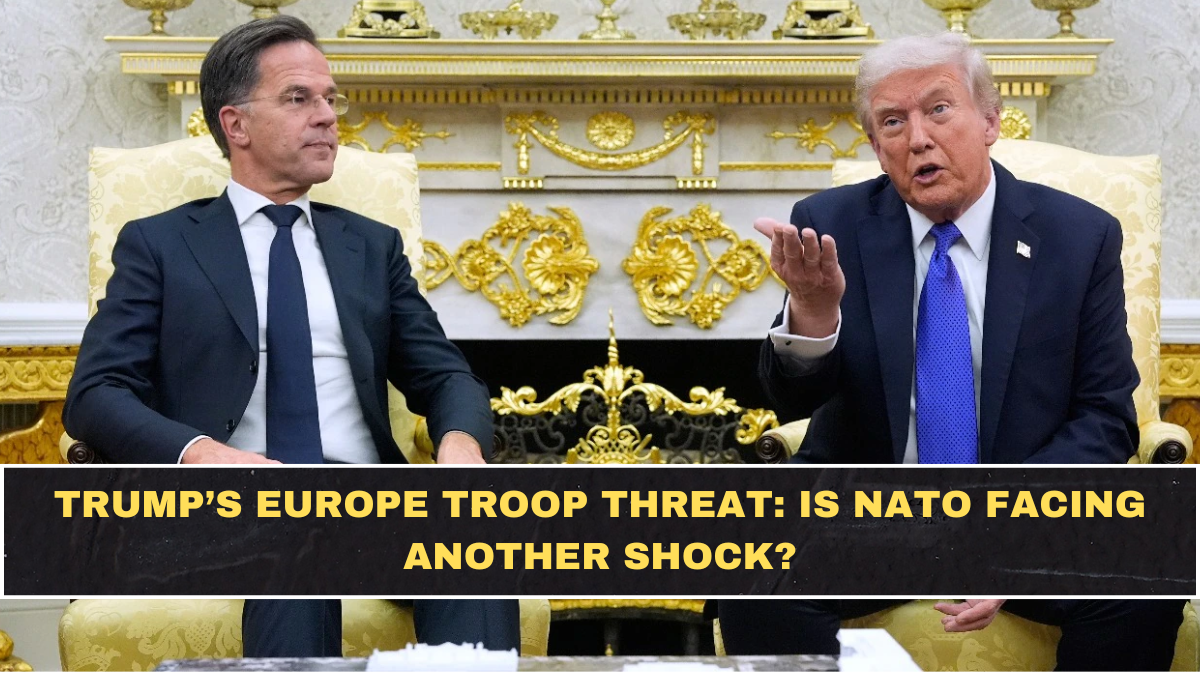
Donald Trump’s latest threat over US troops in Europe is creating anxiety because it touches the core of NATO’s security structure. On April 30, 2026, Trump said “probably” when asked whether he might pull US troops from Italy and Spain. This came just after his administration said it was reviewing a possible reduction of US troops in Germany. Reuters reported that the threat is linked to European criticism and resistance around the US-Israeli war on Iran.
This is not just political drama. US troops in Europe are part of NATO’s deterrence system, especially against Russia and wider instability. When an American president talks about reducing that presence as punishment for allies, European leaders hear a bigger warning: Washington’s security guarantee may no longer be automatic.
What Exactly Did Trump Say About Italy, Spain And Germany?
Trump first said the US was reviewing a possible reduction of troops in Germany. A day later, he suggested that Italy and Spain could also face troop reductions. Reuters reported that Trump criticised NATO allies for not helping reopen the Strait of Hormuz after it was affected by the US-Israeli air war against Iran. He also accused Italy of being unhelpful and Spain of being “absolutely horrible.”
The Guardian reported that Italy and Spain had joined Germany on the list of countries Trump was threatening with possible troop withdrawals as part of a broader review of US military presence in Europe. That is why this story is bigger than one angry comment. It now looks like pressure on multiple NATO allies at the same time.
| Country | What Trump Has Threatened Or Reviewed? | Why It Matters? |
|---|---|---|
| Germany | Possible US troop reduction under review | Germany hosts key US military infrastructure in Europe |
| Italy | Trump said withdrawal was “probably” possible | Italy hosts important US and NATO-linked facilities |
| Spain | Trump also suggested possible troop pullout | Spain reportedly refused some Iran-related US base use |
| NATO overall | Trump mentioned possible withdrawal pressure | Raises doubt about US reliability inside the alliance |
| Europe | More pressure to fund defence independently | Could accelerate Europe’s security shift |
| US strategy | Troops used as political leverage | Turns defence presence into negotiation pressure |
Why Are US Troops In Europe So Important?
US troops in Europe are important because they act as a security guarantee, not just a military headcount. They support NATO operations, logistics, air defence, training, intelligence and rapid response. Reuters reported that as of late 2025, more than 68,000 active-duty US personnel were stationed across Europe, including around 36,400 in Germany.
Germany is especially important because it hosts major US military infrastructure. Ramstein Air Base, for example, is central to US operations across Europe, the Middle East and Africa. So a troop review is not only about soldiers leaving barracks. It could affect planning, supply routes, deterrence and the credibility of America’s role in European security.
Why Is The Iran War Linked To NATO Tensions?
The Iran war is linked to NATO tensions because several European countries have been reluctant to support US-led military action connected to the conflict. Reuters reported that Trump criticised allies for not assisting in efforts to reopen the Strait of Hormuz, which had been closed due to the US-Israeli air war against Iran that began on February 28, 2026.
The Economic Times, citing Reuters reporting, said some European nations, including Spain, refused to allow airbases to be used for the war with Iran. It also reported that a Pentagon memo raised possible punitive measures against Spain, including even discussing suspension-related pressure inside NATO. That shows how quickly a Middle East conflict can spill into Europe’s alliance politics.
Is Trump Really Going To Pull Troops Out?
Nobody should pretend this is guaranteed. Trump has a history of using threats as leverage, and troop reviews are not unusual in US defence planning. The Guardian reported that German officials tried to downplay the issue, saying deployment reviews have happened under several US administrations. German officials also suggested a major withdrawal was not currently the main expectation.
But dismissing this as pure bluff would be foolish. Even if no immediate mass withdrawal happens, the threat itself damages trust. NATO depends heavily on predictability. If allies believe American support can be withdrawn because of political disagreement, they will start planning for a future where Europe must carry more of its own defence burden.
Why Is Germany Reacting Carefully?
Germany is reacting carefully because it cannot afford a public fight with Washington while also needing to reassure Europe. Reuters reported that Chancellor Friedrich Merz stressed Germany’s commitment to the transatlantic alliance after Trump mentioned a possible reduction in US troop presence. Merz did not directly escalate the fight, but he emphasised NATO and strong US-German relations.
That cautious tone is deliberate. Germany knows that the US presence is strategically important, but it also knows Trump responds badly to public criticism. A loud confrontation could make the threat worse. So Berlin’s strategy appears to be: calm the situation publicly, prepare privately and avoid giving Trump a bigger political target.
Could This Force Europe To Build Its Own Defence Faster?
Yes, and frankly, Europe has been avoiding this uncomfortable truth for too long. For decades, many European countries benefited from US protection while spending less than they should on defence. Trump’s threats are crude and destabilising, but they expose a real dependency problem.
The Economic Times report argued that Trump’s volatility may distract European leaders from the long-term task of deterring Russian aggression. That is the danger. Europe needs more defence capability, but permanent crisis management with Washington can drain attention and political energy.
What Would A US Troop Reduction Mean For NATO?
A reduction would not automatically destroy NATO, but it would weaken confidence. NATO’s strength is not just weapons or bases; it is the belief that members will stand together. If the US starts treating troop presence as punishment for policy disagreement, that belief becomes shakier.
Russia and other rivals would watch this closely. Any visible split between the US and Europe creates room for strategic pressure. Even if NATO remains formally intact, uncertainty itself is damaging. Security alliances work best when enemies know the response will be firm. Ambiguity can invite testing.
Conclusion
Trump’s Europe troop threat is not just another political headline. It is a direct challenge to NATO’s sense of stability at a time when Europe is already dealing with war pressure, Russian risk and the wider consequences of the Iran conflict. Germany, Italy and Spain are now part of a tense conversation about whether US military presence could be reduced or used as leverage.
The blunt reality is that Europe has two problems at once. It still depends heavily on the US security umbrella, and the US president is openly questioning the cost and loyalty of that arrangement. Whether Trump follows through or not, the message has landed: Europe can no longer assume American protection will remain politically unconditional.
FAQs
What did Trump say about US troops in Europe?
Trump said the US was reviewing a possible troop reduction in Germany and later said “probably” when asked if he might pull troops from Italy and Spain. Reuters reported that the remarks came amid anger over European reluctance to support US efforts linked to the Iran war and the Strait of Hormuz.
How many US troops are stationed in Europe?
Reuters reported that as of late 2025, more than 68,000 active-duty US personnel were stationed across Europe. Germany hosted around 36,400 of them, making it one of the most important locations for US military infrastructure in Europe.
Why are Italy and Spain being targeted?
Trump criticised Italy and Spain over their stance on the Iran war and related US military efforts. Reuters reported that Spain refused to allow US use of its bases for Iran-related missions, while Trump called Italy unhelpful and Spain “absolutely horrible.”
Is NATO actually at risk?
NATO is not collapsing immediately, but the trust inside the alliance is under pressure. If the US treats troop deployments as political leverage, European allies may doubt the reliability of American protection. That uncertainty could push Europe to spend more on its own defence and reduce dependence on Washington.