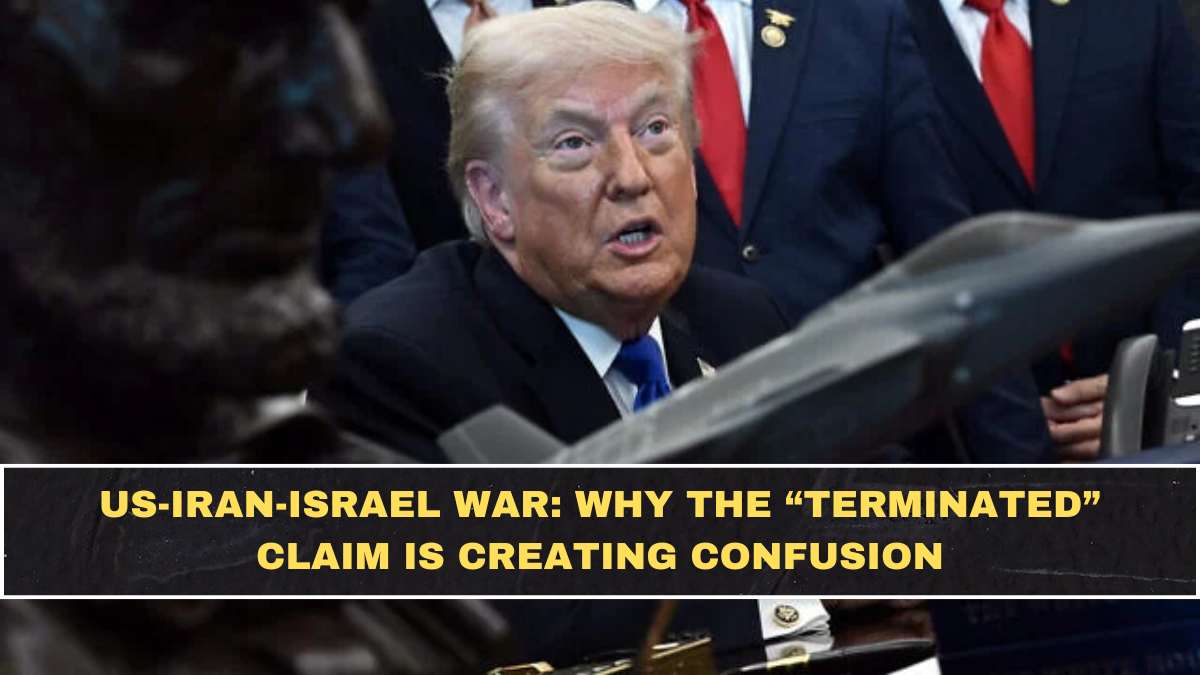
The confusion is growing because the Trump administration is claiming that hostilities with Iran have been “terminated,” even though tensions around the conflict remain active. Reuters reported that a senior US official said the US-Iran ceasefire that began in early April had “terminated” hostilities for the purpose of a congressional war powers deadline. That wording has triggered legal and political debate in Washington.
The issue is not just whether bombs are falling today. The bigger question is whether the US government can say the war is effectively over while military pressure, naval operations and regional tensions continue. That is why the word “terminated” is creating confusion. It sounds final, but the situation on the ground looks far from settled.
What Does The “Terminated” Claim Actually Mean?
The “terminated” claim is linked to America’s War Powers Resolution, not just battlefield reality. Under the 1973 law, a US president generally has 60 days to conduct military operations without congressional authorization, followed by a possible 30-day withdrawal period. The Iran conflict began on February 28, making the May 1 deadline politically and legally important.
The Trump administration’s argument is that the early April ceasefire ended active hostilities and therefore stopped the need for congressional authorization. Critics say that is a convenient interpretation, not a clean legal answer. AP reported that legal experts dispute the idea that a ceasefire can simply pause or reset the War Powers clock.
| Key Issue | What The Administration Says? | Why Critics Disagree? |
|---|---|---|
| War status | Hostilities have been “terminated” | Tensions and military pressure continue |
| Ceasefire | Early April truce ended active fighting | A ceasefire may not legally end the conflict |
| War Powers deadline | Approval may not be needed now | Critics say Congress still has a role |
| Strait of Hormuz | US remains focused on navigation pressure | Iran says port pressure extends operations |
| Congress | Republican-led efforts blocked war limits | Democrats argue oversight is being bypassed |
| Public confusion | “Terminated” sounds like war is over | Reality looks more like a fragile pause |
Is There Really A Ceasefire Between The US And Iran?
There is a reported ceasefire that began in early April, but it should not be confused with a full peace settlement. Reuters reported that the administration is using the ceasefire to argue that hostilities have ended for War Powers purposes. AP also reported that the ceasefire began on April 7, but tensions still remain around Iran, the Strait of Hormuz and US naval activity.
That distinction matters. A ceasefire usually means a pause or halt in active fighting, not necessarily the end of a war. A permanent settlement would require clearer terms, political agreement and reduced military pressure. Right now, the situation looks more like a contested pause than a clean ending.
Why Is Congress Fighting Over This?
Congress is fighting because war powers are supposed to limit how long a president can wage war without legislative approval. The Guardian reported that the Republican-led Senate blocked a Democratic resolution that would have forced an end to the Iran conflict unless Congress authorized further action. The vote was 47-50, showing deep partisan division over the war.
Democrats argue that the administration is using legal wording to avoid accountability. Some critics say the ceasefire does not erase the need for congressional authorization if military operations or threats continue. The administration, however, argues that active hostilities have stopped, so the deadline no longer applies in the same way.
Why Is The Strait Of Hormuz Still Important?
The Strait of Hormuz remains important because it is one of the world’s most critical oil shipping routes. If conflict disrupts the strait, energy prices can rise quickly and affect global inflation. AP reported that Iran still controls the Strait of Hormuz while the US Navy maintains a blockade to restrict Iranian oil exports.
This is why people are confused by the word “terminated.” If the war were truly finished, you would expect major de-escalation around ports, oil routes and naval activity. Instead, Iran has called US pressure on its ports an extension of military operations, according to Al Jazeera’s May 1 live coverage.
What Role Does Israel Play In This Confusion?
Israel matters because the conflict began with joint US-Israeli airstrikes on Iran, followed by Iranian retaliation. Reuters reported that the war began on February 28 with joint US-Israeli strikes, after which Iran launched retaliatory attacks. That makes this more complicated than a simple US-Iran dispute.
If Israel continues military pressure or if Iran believes the ceasefire does not fully cover all fronts, the regional risk remains high. This is why the public sees mixed signals: Washington talks about termination, while Middle East reporting continues to focus on naval pressure, Iran’s response and the possibility of renewed fighting.
Why Are Legal Experts Challenging The Administration?
Legal experts are challenging the administration because the War Powers Resolution does not clearly allow a president to pause the 60-day deadline simply by declaring a ceasefire. AP reported that experts warn against “legal gamesmanship” and argue that continued operations may still require congressional oversight.
This is not a technical argument for lawyers only. If a president can avoid Congress by saying hostilities are paused while military pressure continues, then the limit becomes weaker. That is the real concern. The fight is about whether the law still has teeth when a war becomes politically inconvenient.
Could Fighting Restart Despite The “Terminated” Claim?
Yes, and that is exactly why the claim is controversial. A ceasefire can collapse. Military pressure can escalate. A naval incident can trigger new strikes. Al Jazeera reported on April 30 that Trump did not rule out resuming attacks, even as officials argued that the ceasefire put the war powers deadline on hold.
That is the contradiction readers need to understand. If fighting can restart and military pressure continues, calling the war “terminated” may be more of a legal strategy than a clear description of reality. The administration may be trying to manage the deadline, while critics are warning that the war is not truly over.
Conclusion
The “terminated” claim is creating confusion because it sounds like the US-Iran-Israel war is over, while the facts suggest a fragile and disputed ceasefire. The Trump administration says the early April ceasefire ended hostilities for War Powers purposes, but critics argue Congress is being bypassed. Legal experts also dispute whether the deadline can simply be paused.
For readers, the simplest way to understand this is blunt: “terminated” does not necessarily mean peace. It may mean the administration believes it has met a legal threshold. Until there is a durable settlement, reduced military pressure and clarity around the Strait of Hormuz, the conflict remains politically and strategically dangerous.
FAQs
What does the Trump administration mean by saying the Iran war was “terminated”?
The administration says the early April ceasefire ended active hostilities between the US and Iran for the purpose of the War Powers Resolution deadline. That would allow the White House to argue it does not need fresh congressional authorization at this stage. Critics say the legal basis for that claim is weak.
Is the US-Iran-Israel war actually over?
It is not clear that the conflict is fully over. There is a reported ceasefire, but tensions continue around Iran, the Strait of Hormuz, US naval activity and possible future military action. AP reported that the ceasefire has not removed broader regional pressure or legal controversy.
Why is Congress involved in the Iran war debate?
Congress is involved because the War Powers Resolution limits how long a president can conduct military operations without congressional authorization. The Iran conflict began on February 28, making the May 1 deadline important. Senate Democrats tried to force a vote to end or authorize the war, but the Republican-led Senate blocked the resolution.
Why is the Strait of Hormuz important in this conflict?
The Strait of Hormuz is a key global oil shipping route, so any conflict there can affect energy prices worldwide. Reports say Iran still controls the strait while the US maintains pressure through naval and port-related operations. That is why even a ceasefire has not ended global concern over the conflict.