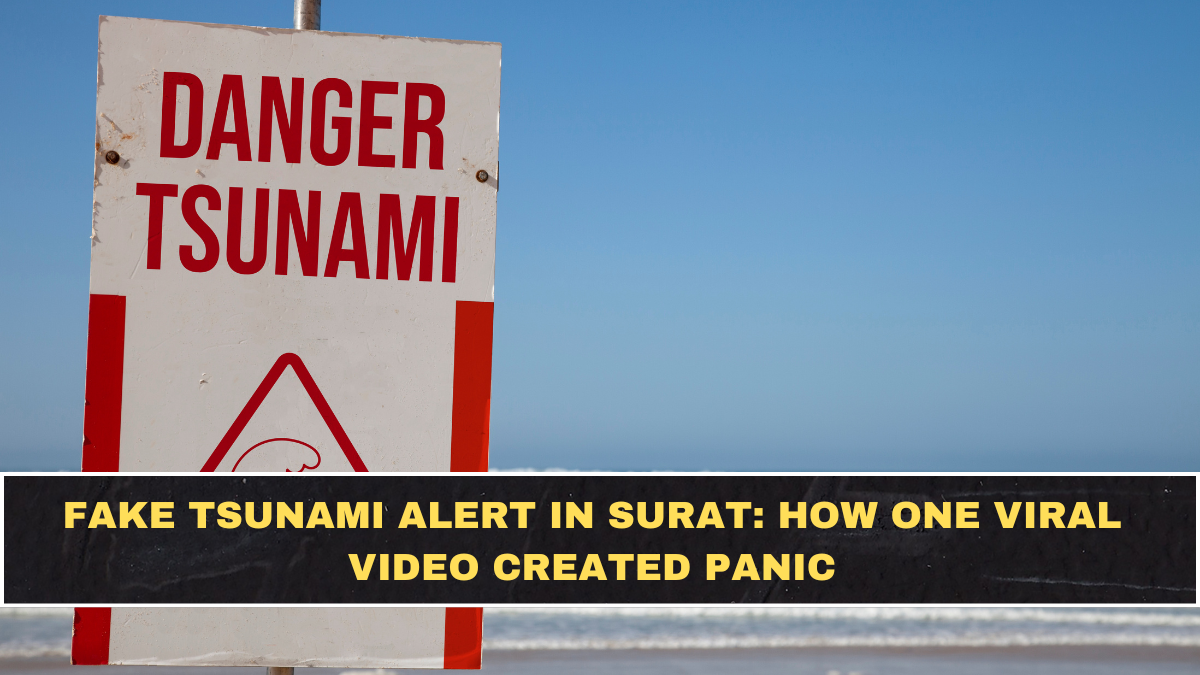
No, Surat did not face a real tsunami alert. The panic started after viral videos claimed that the sea at Dumas Beach had receded unusually and that a tsunami could hit the coast. Surat police later clarified that the videos were misleading and that the receding water was linked to natural low tide, not a tsunami warning.
Police booked a Rajasthan-based social media user, identified as Shubham Jangid, for allegedly spreading false information through Instagram and YouTube videos. The clips warned people to stay away from the sea and falsely suggested that a disaster alert had been issued. That is exactly how one irresponsible post can turn normal coastal behaviour into city-wide fear.
What Actually Happened At Dumas Beach?
| Viral Claim | Reality Checked By Police |
|---|---|
| Tsunami alert issued for Surat | No official tsunami alert existed |
| Sea water moved back dangerously | Police said it was natural low tide |
| People should stay 2–3 km away | Claim was not backed by authorities |
| Rescue teams were being deployed | Police said such claims were fabricated |
| Dumas Beach was unsafe | Police asked people not to believe rumours |
The videos used visuals of low tide at Dumas Beach, where sea water naturally moves back during tidal cycles. Instead of explaining it as a normal coastal process, the videos allegedly framed it as a warning sign of an approaching tsunami. That dramatic framing created panic because people often believe disaster visuals before checking official information.
This is not a small mistake. Disaster rumours can push people into fear, crowding, unnecessary travel, and pressure on police systems. The accused allegedly compared the situation with tsunami signs seen in other countries and claimed rescue teams were being deployed, even though police said those claims were false.
Why Did The Rumour Spread So Fast?
The rumour spread because it had all the ingredients social media rewards: fear, beach visuals, dramatic warning language, and a disaster angle. Most people do not understand the difference between low tide and tsunami withdrawal, so the video looked believable at first glance. That gap between science and panic is where fake news becomes dangerous.
Reasons the video gained traction:
- The beach visuals looked unusual to casual viewers.
- Tsunami warnings naturally trigger fear.
- Short videos spread faster than official clarifications.
- People forwarded the clip without checking sources.
- Disaster content gets more clicks, shares, and reactions.
The blunt truth is that many people share scary videos because they want to feel useful, not because they have verified anything. But good intention does not cancel damage. Forwarding an unverified disaster warning can create panic just as quickly as deliberately spreading fake news.
What Action Did Surat Police Take?
Surat cyber police registered a case against the accused under Section 353(1)(B) of the Bharatiya Nyaya Sanhita for spreading rumours. Police also said they had asked social media platforms to remove 11 videos linked to the false alarm because those clips were creating fear among residents.
Additional Commissioner of Police Balram Meena said police verified the videos and found the tsunami claims false. Authorities also alerted villagers living near coastal areas and asked them not to believe similar rumours. This quick response mattered because fake disaster alerts can escalate fast if official clarification arrives too late.
Why Is Low Tide Being Mistaken For Tsunami?
Low tide is a regular natural process where sea water recedes due to tidal movement. It can look dramatic at some beaches, especially when large wet sand areas become visible. A tsunami withdrawal, however, is linked to massive undersea disturbance and official warning systems, not random viral interpretation by social media users.
This is where misinformation becomes powerful. People see the sea move back and immediately connect it with tsunami videos they have seen online. That emotional shortcut is dangerous because not every receding shoreline is a disaster sign. Without official confirmation from authorities, such claims should be treated as rumours.
What Should People Do During Such Viral Alerts?
People need to stop treating WhatsApp, Instagram, and YouTube videos as disaster-warning systems. Real alerts come from official agencies, local administration, police, IMD-style updates, disaster management authorities, and verified government channels. If a video is making a serious claim but gives no official source, it should not be forwarded.
Simple safety rules:
- Check police or government handles first.
- Do not forward disaster videos without verification.
- Avoid visiting beaches just to “see what happened.”
- Report panic-creating videos to platforms and police.
- Follow only official evacuation or safety instructions.
The uncomfortable truth is that fake alerts often spread because people want to be first, not accurate. That mindset is dangerous. In disasters, being accurate is more important than being fast, because one wrong message can create real-world chaos.
Conclusion: What Did Surat’s Fake Tsunami Alert Teach Us?
The fake tsunami alert in Surat shows how quickly a normal low-tide video can become a public panic story when social media removes context. Dumas Beach was not under a confirmed tsunami threat, and police made it clear that the viral claims were false. The accused was booked, and platforms were asked to remove multiple panic-spreading videos.
The lesson is simple and harsh: unverified disaster content is not harmless. It can scare families, mislead coastal communities, and waste police resources. Before sharing any alert about tsunami, earthquake, flood, or cyclone, people must check official sources first. Viral fear is not public service; verified information is.
FAQs?
Was there a real tsunami alert in Surat?
No, there was no real tsunami alert in Surat. Police clarified that the viral claims about Dumas Beach were false and misleading. The sea water seen receding in the videos was linked to natural low tide, not an official disaster warning.
Who was booked for the fake tsunami video?
Surat police booked a Rajasthan-based social media user identified as Shubham Jangid. He was accused of posting videos on Instagram and YouTube that falsely warned people about a tsunami threat. Police registered a case after verifying the claims and finding them misleading.
Why did the Dumas Beach video create panic?
The video created panic because it showed sea water receding and presented it as a possible tsunami sign. Many people did not realise that low tide can also make the sea appear far away from the shore. The dramatic captions and disaster claims made the rumour spread quickly online.
What should people do when they see disaster alerts online?
People should first check official sources such as police, local administration, disaster management authorities, and verified government channels. They should not forward videos or warnings without confirmation. If a post appears fake or panic-creating, it should be reported instead of shared.