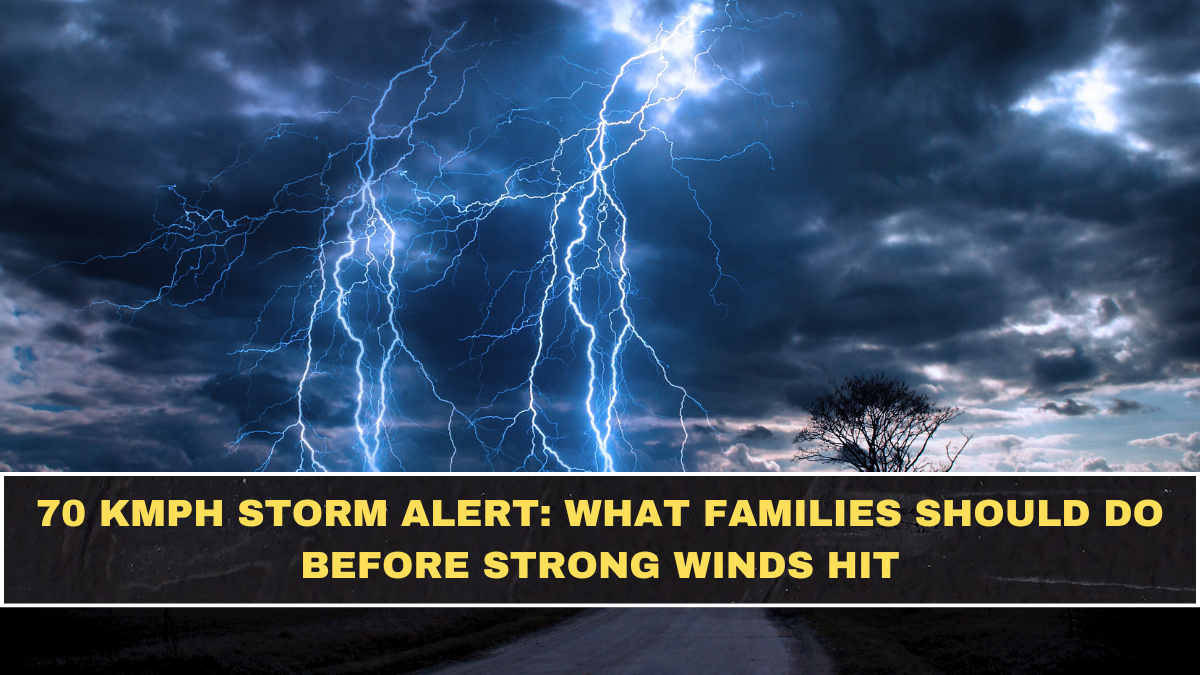
The India Meteorological Department has warned of thundersqualls with wind speeds reaching 50–60 kmph and gusting up to 70 kmph in several regions. As per IMD’s May 15, 2026 press release, such conditions are likely over Punjab, Haryana and Rajasthan on May 15, while Bihar, Andaman & Nicobar Islands, Odisha, Jharkhand and Chhattisgarh are also listed under different dates and warnings. This is not normal “light rain” weather; strong winds can break tree branches, damage weak structures and disrupt power lines quickly.
Families should stop treating storm alerts like background noise. A 70 kmph gust can turn loose objects, tin sheets, weak branches and outdoor items into danger within minutes. The smartest response is not panic, but preparation: stay indoors, close windows, avoid travel during the storm window and keep essential items ready before the weather worsens.
Which Areas Face The Strongest Risk?
IMD’s warning mentions thundersquall conditions over Punjab, Haryana and Rajasthan on May 15, Chhattisgarh on May 15, Andaman & Nicobar Islands during May 15–18, Bihar on May 15, 16, 20 and 21, Odisha on May 15, and Jharkhand on May 17 and 18. These alerts may vary by district, so residents should check local warnings instead of relying only on state-level headlines.
Delhi-NCR is also expected to see very light to light rain with thunderstorm, lightning and strong winds gusting up to 60 kmph during the evening or night of May 15. This means even places not under the 70 kmph category can still face sudden wind, dust, lightning and travel disruption. Ignoring a “lower” wind alert is still careless if you are outdoors, driving or near weak structures.
| Alert Area | IMD Warning Signal | What People Should Do |
|---|---|---|
| Punjab, Haryana, Rajasthan | Thundersquall gusting to 70 kmph | Avoid unnecessary travel and secure loose items |
| Bihar | 70 kmph gust risk on multiple dates | Track district-wise updates and stay indoors |
| Chhattisgarh | 70 kmph gust risk on May 15 | Protect crops, livestock and weak shelters |
| Andaman & Nicobar | 70 kmph gust risk during May 15–18 | Avoid risky coastal and water activity |
| Delhi-NCR | Winds gusting up to 60 kmph | Stay alert during evening and night storm window |
What Damage Can Strong Winds Cause?
IMD has warned that such storm activity can break tree branches, uproot large avenue trees, damage standing crops and affect power and communication lines. Vulnerable structures, kutcha houses, walls and huts may face partial damage, while loose objects can fly during strong winds. These warnings are not written for formality; they describe exactly what can happen when people stay outside or ignore basic safety.
Farmers should take this especially seriously because banana, papaya, plantation crops, horticulture crops and standing crops can suffer minor to major damage. If livestock are kept in open spaces, they should be moved to safer shelter before the storm begins. Waiting until winds become violent is poor planning because visibility, movement and communication can become difficult very quickly.
What Should Families Do Before The Storm?
The first step is to secure the house and surroundings. Close windows and doors, remove loose items from balconies, keep vehicles away from trees if possible and charge phones before power disruption. IMD has advised people to stay indoors, avoid travel if possible, take safe shelter and avoid standing under trees during such weather.
Families should also keep basic emergency items ready, especially in areas that often face power cuts or waterlogging. This does not need overthinking; it needs discipline. Most storm injuries happen because people underestimate the first warning, step outside to “check the weather,” or stand near dangerous structures when winds suddenly intensify.
Useful safety checklist:
- Keep phones charged and save emergency numbers.
- Move children, elderly people and pets indoors early.
- Keep away from trees, electric poles and weak walls.
- Unplug electrical and electronic appliances during lightning.
- Avoid flooded roads, underpasses and low-lying areas.
- Do not go near water bodies during thunderstorm activity.
What Should You Never Do During Lightning?
The most dangerous mistake is taking shelter under a tree. IMD specifically advises people not to shelter under trees and to keep away from objects that conduct electricity. It also advises people not to lie on concrete floors or lean against concrete walls, to unplug electrical appliances and to immediately get out of water bodies.
Do not behave like filming the storm is bravery. Standing on rooftops, balconies, open fields or near metal gates during lightning is not exciting; it is reckless. If you are outside and the sky turns dark with thunder, move to a proper building or enclosed vehicle, not a tree, shed, pole or open platform.
Conclusion?
A 70 kmph storm alert is serious enough to demand quick preparation, especially in areas named by IMD for thundersquall, lightning and gusty winds. The biggest risks are falling branches, flying objects, damaged power lines, weak structures, crop damage and lightning-related accidents. Families should secure homes, avoid unnecessary travel and follow district-wise warnings instead of relying on random social media updates.
The blunt truth is simple: most storm damage becomes worse because people react late. Do not wait for the wind to become violent before moving indoors. Prepare early, protect children and elderly family members, keep away from trees and electrical objects, and treat every thunderstorm warning with basic respect.
FAQs?
Which States Have A 70 Kmph Storm Alert?
IMD’s May 15 warning mentions thundersquall gusting up to 70 kmph over Punjab, Haryana, Rajasthan, Chhattisgarh, Bihar, Odisha, Jharkhand and Andaman & Nicobar Islands on different dates. Residents should check district-wise alerts because weather impact can vary sharply within the same state.
What Should Families Do During Strong Winds?
Families should stay indoors, close doors and windows, avoid travel, secure loose outdoor items and keep away from trees, electric poles and weak structures. Phones should be charged, emergency numbers should be saved and children or elderly people should be moved indoors before the storm begins.
Is It Safe To Stand Under A Tree During Thunderstorm?
No, standing under a tree during a thunderstorm is unsafe. IMD advises people not to take shelter under trees and to stay away from objects that conduct electricity. A proper building or enclosed vehicle is safer than trees, open sheds, metal gates or exposed fields.
Can 70 Kmph Winds Damage Houses?
Yes, 70 kmph gusts can damage vulnerable structures, kutcha houses, huts, weak walls, power lines and trees. IMD has warned about flying loose objects, branch breaking, crop damage and partial damage to weak structures during such storm activity.