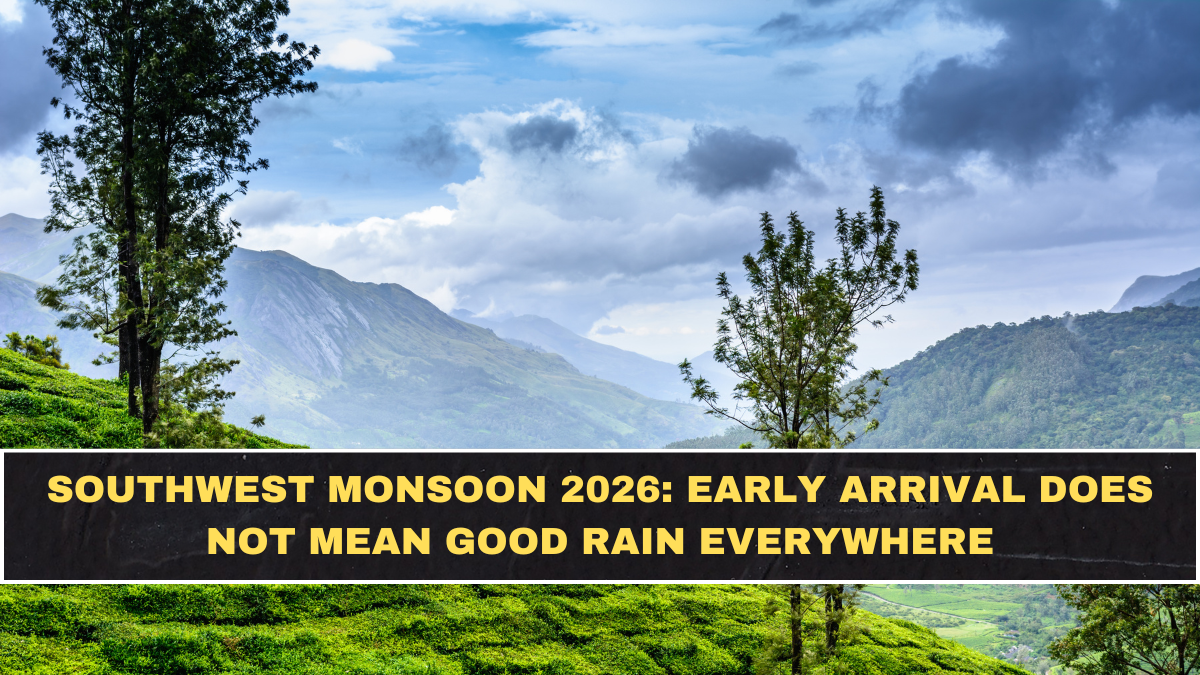
Southwest Monsoon 2026 has advanced early, and that has naturally created excitement among farmers, travellers and weather watchers. IMD has forecast the monsoon onset over Kerala around May 26, which is earlier than the normal June 1 date. The monsoon has also already advanced into parts of the south Bay of Bengal, Andaman Sea and Andaman and Nicobar Islands.
But early arrival is not the same as guaranteed good rainfall across India. This is the biggest mistake many people make every year. Monsoon performance depends on spread, intensity, breaks, regional distribution and total seasonal rainfall, not only the first date of arrival.
What Has IMD Said?
IMD’s forecast says the southwest monsoon is likely to set in over Kerala around May 26, with a normal forecast error window. This means the actual onset may shift slightly depending on atmospheric conditions. Still, an early Kerala onset is important because it marks the monsoon’s entry into the Indian mainland.
| Monsoon Factor | 2026 Update |
|---|---|
| Kerala Onset Forecast | Around May 26 |
| Normal Kerala Onset | Around June 1 |
| Early Signal | Andaman and Nicobar progress |
| Main Concern | Rainfall distribution |
| Key Impact Area | Kharif crops and water storage |
The useful way to read this forecast is simple: India may get an early start to monsoon activity, but the quality of the season is still not confirmed. A fast beginning can still be followed by weak spells, uneven rain or long dry gaps in some regions.
Why Are Farmers Watching?
Farmers watch the monsoon closely because kharif sowing depends heavily on timely rainfall. Reuters reported that early monsoon arrival can support planting hopes for crops such as rice, corn, soybean and sugarcane. These crops need reliable rainfall patterns, especially in rain-fed agricultural regions.
However, rushing sowing after the first rain can be risky. Farmers need to check local rainfall, soil moisture, agriculture advisories and short-term forecasts before making major crop decisions. One early shower may look promising, but it does not always mean the field has enough moisture for safe sowing.
Why Early Rain Can Mislead?
Early monsoon headlines create confidence, but that confidence can be dangerous if people ignore rainfall distribution. Some regions may get strong rain early, while others may stay dry or receive delayed showers. This uneven pattern can affect crop planning, reservoir levels, groundwater recharge and even electricity demand.
Important factors to track now:
- Local rainfall, not just national onset news
- IMD district-level weather alerts
- Progress from Kerala toward other states
- Rainfall breaks after initial arrival
- Crop advisories from agriculture departments
This is where lazy interpretation fails. Saying “monsoon came early, so everything is fine” is weak thinking. A strong monsoon season needs steady and well-distributed rain, not just an early headline from Kerala or Andaman.
Which States Should Watch Closely?
Southern states such as Kerala, Karnataka and Tamil Nadu may see early monsoon-related activity, while other parts of India will watch the northward progress in the coming days. The monsoon normally moves in phases, so different regions experience its arrival at different times. Travellers and farmers should follow local alerts instead of assuming national news applies equally everywhere.
Central India, eastern India and northwestern India should be more careful while reading early forecasts. These regions often face variation in rainfall spread and timing. For agriculture and water planning, the real question is not when monsoon starts, but whether it sustains and covers key crop belts properly.
What About Rainfall Risk?
The concern is that early onset does not remove the risk of weak or uneven rainfall. Some weather discussions have pointed to below-normal rainfall risks in parts of the country, while normal to above-normal rain may occur only in selected regions. That means India still needs to watch the full seasonal forecast carefully.
This matters for inflation, food prices and rural income. If rainfall is weak in major crop-growing belts, early onset alone will not protect harvests. Rice, pulses, oilseeds, sugarcane and fodder crops all depend on both timing and rainfall quality.
Conclusion?
Southwest Monsoon 2026 has started on an encouraging note, with early progress over the Andaman region and a Kerala onset forecast around May 26. This is important for farmers, travellers, water planners and state governments because the monsoon shapes India’s agriculture and summer relief cycle.
But the blunt truth is clear: early arrival does not guarantee good rain everywhere. The real test will be rainfall distribution, regional spread, breaks and total seasonal performance. Farmers should avoid rushed sowing decisions, and the public should follow IMD updates instead of celebrating one early date too soon.
FAQs?
When will southwest monsoon reach Kerala in 2026?
IMD has forecast that the southwest monsoon may reach Kerala around May 26, 2026. This is earlier than the normal June 1 onset date, but the actual date can shift slightly depending on weather conditions.
Has monsoon already reached Andaman in 2026?
Yes, reports based on IMD updates say the southwest monsoon has advanced into parts of the south Bay of Bengal, Andaman Sea and Andaman and Nicobar Islands. This is an early signal before mainland onset.
Does early monsoon mean better rainfall?
No, early monsoon does not guarantee better rainfall. A good monsoon depends on rainfall spread, intensity, breaks, regional coverage and total seasonal rain, not only the onset date.
Why is monsoon important for crops?
The monsoon supports kharif sowing for crops such as rice, corn, soybean and sugarcane. Farmers need steady rainfall and proper soil moisture, not just early showers, before making sowing decisions.