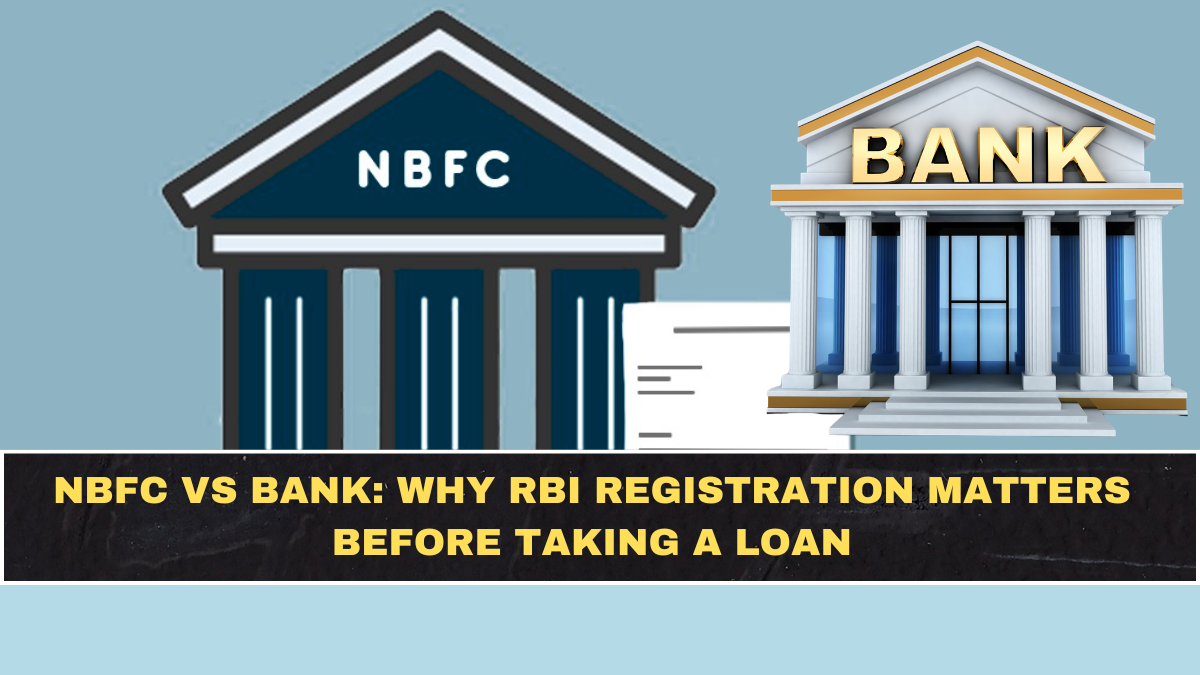
Many borrowers use the words bank, finance company and loan app as if they all mean the same thing. That is a dangerous mistake. Banks and NBFCs both give loans, but they are not identical institutions, and the difference matters when you are trusting someone with money, EMIs, documents and recovery terms.
The Reserve Bank of India’s recent action against 150 NBFCs has made this topic even more important. Reports said RBI cancelled registrations of 150 Non-Banking Financial Companies, barring them from carrying out NBFC business. That does not mean every NBFC is unsafe, but it proves one thing clearly: registration status is not a formality borrowers can ignore.
What Is An NBFC?
An NBFC, or Non-Banking Financial Company, is a company that can carry out financial activities such as lending, investment, hire purchase, leasing or other credit-related services. Many people take personal loans, vehicle loans, business loans or consumer loans from NBFCs because they may offer faster approval and more flexible eligibility than banks.
However, an NBFC is not the same as a bank. RBI explains that NBFCs perform activities similar to banks, but they are different entities with different statutory and regulatory requirements. This means borrowers should not assume that every rule, protection and facility available in a bank will automatically apply to an NBFC.
| Point | Bank | NBFC |
|---|---|---|
| Main role | Accepts deposits and gives loans | Mainly gives loans and financial services |
| Demand deposits | Allowed | Not allowed |
| Cheque facility | Can issue cheques drawn on itself | Cannot issue cheques drawn on itself |
| Payment system | Part of payment and settlement system | Not part of payment and settlement system |
| Deposit insurance | Bank depositors may get DICGC cover | NBFC depositors do not get DICGC deposit insurance |
How Is An NBFC Different From A Bank?
The biggest difference is that NBFCs cannot accept demand deposits. Demand deposits are funds that customers can withdraw whenever they want, such as savings account balances. RBI also states that NBFCs do not form part of the payment and settlement system and cannot issue cheques drawn on themselves.
Another major difference is deposit protection. Bank depositors are covered under deposit insurance within applicable limits, but RBI’s NBFC FAQ says NBFC depositors do not have the deposit insurance facility of the Deposit Insurance and Credit Guarantee Corporation. That is why blindly treating an NBFC like a bank is weak financial thinking.
Why Does RBI Registration Matter?
RBI registration matters because an NBFC needs a valid Certificate of Registration to carry out NBFC business. If registration is cancelled, the company cannot legally continue such business. This is exactly why borrowers must verify the lender’s legal name before taking a loan, especially from lesser-known finance companies or loan apps.
The recent cancellation of 150 NBFC registrations shows that RBI can take action when companies fail to meet required conditions or regulatory expectations. Borrowers should not panic, but they should become more alert. A lender’s flashy app, fast approval message or low EMI offer is not proof that the company is safe.
What Should Borrowers Check Before Taking A Loan?
Most borrowers focus only on interest rate and EMI amount. That is not enough. A loan is a legal obligation, and the lender’s identity matters as much as the repayment amount. If you do not know who the real lender is, you are already taking unnecessary risk.
Check these points before signing:
- Verify the exact registered company name, not only the app or brand name.
- Check whether the lender is RBI-registered as an NBFC, where applicable.
- Read processing fees, foreclosure charges, late fees and recovery terms.
- Avoid lenders asking for upfront payment before disbursal.
- Keep loan agreement, sanction letter and EMI receipts safely.
Are NBFC Loans Bad?
No, NBFC loans are not automatically bad. Many reputed NBFCs serve borrowers who may not get quick or easy credit from banks. They are important for vehicle finance, consumer loans, business credit and last-mile lending. The problem is not NBFCs as a category; the problem is careless borrowing.
If an RBI-registered NBFC is transparent about charges, repayment terms and grievance redressal, it can be a valid borrowing option. But if a lender hides its legal name, pressures you to sign quickly or demands unnecessary app permissions, walk away. Fast money from a weak lender can become expensive later.
Conclusion: What Should Borrowers Remember?
The difference between a bank and an NBFC is not just technical. It affects deposits, payment services, cheque facilities, regulation and customer protection. Borrowers who ignore this difference may end up trusting the wrong type of institution without understanding the risk.
RBI registration should be one of the first things you check before taking a loan from any finance company. Do not borrow just because the app looks professional or the approval is quick. In personal finance, convenience is useful, but verification is survival.
FAQs
Is An NBFC The Same As A Bank?
No, an NBFC is not the same as a bank. NBFCs can provide loans and financial services, but they cannot accept demand deposits, cannot issue cheques drawn on themselves and are not part of the payment and settlement system like banks.
Can NBFCs Give Loans?
Yes, NBFCs can give loans and provide financial services depending on their registration and permitted activities. Many people use NBFCs for personal loans, vehicle loans, consumer finance and business credit.
Why Should I Check RBI Registration Before Taking A Loan?
You should check RBI registration because a valid registration shows that the company is authorised to operate as an NBFC. If registration is cancelled or missing, the company may not be legally allowed to conduct NBFC business.
Are NBFC Deposits Covered By Deposit Insurance?
No, RBI states that NBFC depositors do not get the deposit insurance facility of the Deposit Insurance and Credit Guarantee Corporation. This is one of the key differences between banks and NBFCs.