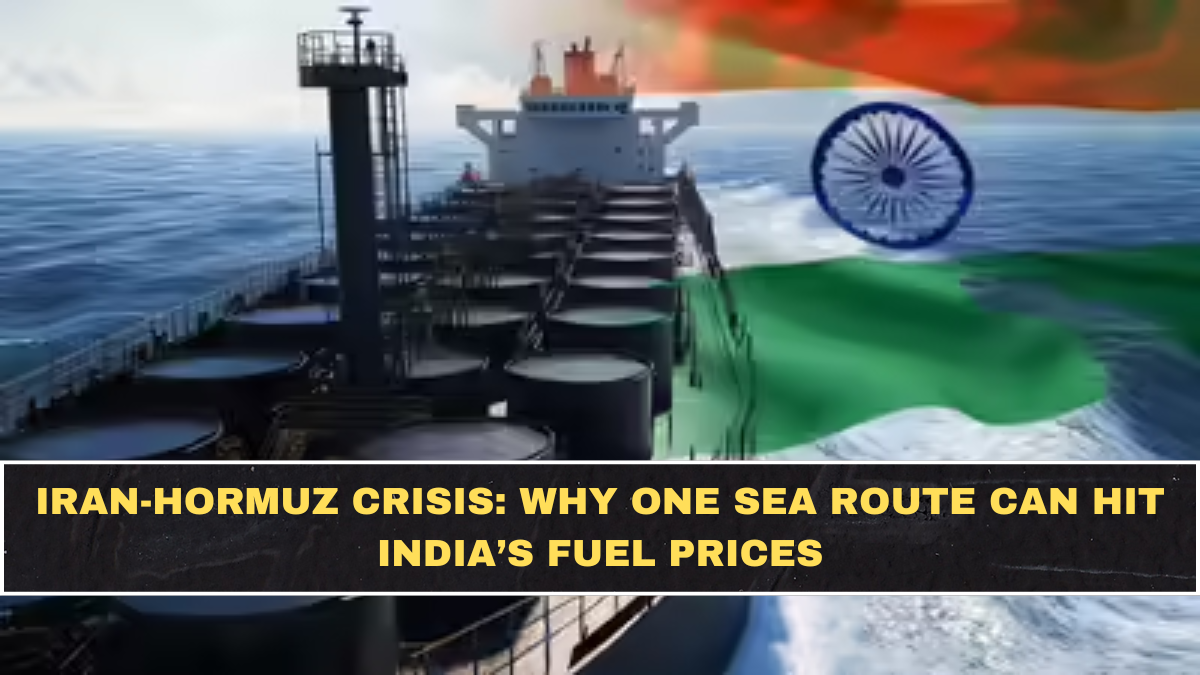
The Iran-Hormuz crisis matters for India because the Strait of Hormuz is not an ordinary sea route. It is one of the world’s most important energy chokepoints, sitting between Iran and Oman and connecting the Persian Gulf with the Arabian Sea. In 2024, around 20 million barrels per day of oil moved through it, equal to about 20% of global petroleum liquids consumption, according to the U.S. Energy Information Administration.
For India, the danger is simple: when this route becomes unsafe, oil, LPG, shipping, insurance and currency pressure can all rise together. Reuters reported on May 5, 2026, that Brent crude had surged nearly 6% after renewed Middle East tensions, with traders worried about safe passage through Hormuz. That kind of move does not stay inside trading screens; it can hit India’s import bill, rupee and household budgets.
Why Is Hormuz So Dangerous?
The Strait of Hormuz is dangerous because too much energy trade depends on a very narrow route. The International Energy Agency says nearly 15 million barrels per day of crude oil, around 34% of global crude trade, passed through Hormuz in 2025. It also noted that China and India together received 44% of those crude exports, showing how heavily Asian economies depend on this route.
There are alternative routes, but they are limited. The IEA says only Saudi Arabia and the UAE have operational crude pipelines that can bypass Hormuz, with an estimated 3.5 to 5.5 million barrels per day of available alternative capacity. That means if Hormuz remains restricted, the world cannot simply reroute all oil overnight like changing a road on Google Maps.
What Could India Face?
| Impact Area | What Can Happen? | Why Indians Should Care? |
|---|---|---|
| Crude oil | Import costs rise | Petrol, diesel and refinery costs may face pressure |
| LPG | Supply stress increases | Cooking gas availability and subsidy burden may be affected |
| Rupee | Dollar demand rises | Imports become costlier for India |
| Inflation | Transport and fuel costs rise | Food and daily goods may become expensive |
| Markets | Sentiment weakens | Stocks, airlines and logistics firms may react sharply |
The most immediate pressure is on crude oil and the rupee. Reuters reported that the rupee was at risk of hitting an all-time low because higher oil prices increase dollar demand from Indian oil importers and worsen the trade balance. For a country that imports a large share of its crude, this becomes a double hit: expensive oil plus a weaker currency.
Is India’s Oil Supply Safe?
India has tried to reduce the risk, and this is where the story becomes more balanced. The Petroleum Ministry said in March 2026 that India now imports crude from around 40 countries and that about 70% of crude imports are coming through routes outside the Strait of Hormuz, compared with about 55% earlier. It also said India’s crude supply remained secure because diversified procurement had increased.
But do not misunderstand this as “no problem.” The same government update said India imports about 60% of its LPG consumption, and about 90% of those LPG imports come through the Strait of Hormuz. That means crude may be better protected than before, but cooking gas is still a serious weak point if the crisis continues.
Why Can LPG Hurt Faster?
LPG can hurt faster because it directly affects households, restaurants, small food businesses and commercial kitchens. Reuters reported on May 4, 2026, that India’s April LPG consumption fell 16.2% year-on-year to 2.2 million metric tons, with the drop linked to disrupted supplies after the closure of the Strait of Hormuz. That is not a small signal; it shows supply stress is already visible in consumption data.
Reuters also reported that Reliance reduced alkylates exports and boosted LPG output to respond to a nationwide fuel shortage triggered by the Iran war. The report said India relies on the Middle East for about 90% of LPG imports and is facing its worst gas crisis in decades, with authorities restricting industrial supplies to protect household consumption.
Will Petrol And Diesel Rise?
Petrol and diesel prices do not always rise immediately because governments can use taxes, oil company pricing decisions and supply management to soften the shock. But the pressure is real. When crude jumps sharply, refiners pay more, the import bill rises, the rupee weakens, and the government has less room to keep pump prices stable without taking a fiscal hit.
The bigger risk is inflation through transport and logistics. Diesel affects trucks, buses, tractors and supply chains, so even if pump prices are controlled for a while, higher energy costs can quietly move into food, groceries, airline tickets and manufactured goods. This is why the Hormuz crisis is not just foreign news; it can enter Indian homes through monthly expenses.
What Should India Watch?
- Brent crude price: A move above key levels can quickly change inflation expectations.
- Rupee movement: A weaker rupee makes oil imports even more expensive.
- LPG supply: Cooking gas is India’s more vulnerable energy pressure point.
- Shipping insurance: War-risk premiums can raise delivery costs even without full closure.
- Government response: Tax cuts, stock releases and import diversification can reduce pain.
These indicators matter more than dramatic headlines. A missile strike may create one-day panic, but the real economic damage comes if shipping remains unsafe for weeks. India’s best defence is not one emergency statement; it is diversified imports, domestic LPG production, strategic reserves and careful pricing policy.
What Is The Final Takeaway?
The Iran-Hormuz crisis is dangerous for India because it attacks the country’s energy system at multiple points: crude imports, LPG supplies, shipping costs, rupee stability and inflation. India has reduced some crude risk by buying from more countries and routing more oil outside Hormuz, but LPG remains a major vulnerability. That is the part many casual readers miss.
The blunt reality is this: India is safer than it would have been a few years ago, but not safe enough to ignore the crisis. If Hormuz stays unstable, Indian households may feel it through cooking gas stress, higher import costs, weaker currency pressure and possible inflation. One narrow sea route can still disturb a very large economy.
Frequently Asked Questions
Why is the Strait of Hormuz important for India?
The Strait of Hormuz is important because a large share of Gulf energy exports passes through it, and India is a major energy importer. Even though India has diversified crude imports, LPG remains highly exposed to this route. Any disruption can raise supply risk, shipping costs and pressure on India’s fuel economy.
Will the Iran-Hormuz crisis increase petrol prices in India?
Petrol prices may not rise immediately because the government and oil companies can manage pricing for some time. However, if crude oil stays expensive and the rupee weakens, pressure on petrol and diesel prices increases. The bigger risk is that higher fuel costs can also push up transport, food and inflation.
Why is LPG more vulnerable than crude oil?
LPG is more vulnerable because India imports about 60% of its LPG consumption, and around 90% of those imports come through the Strait of Hormuz. Crude imports have been diversified more aggressively, but cooking gas supplies are still heavily linked to the Gulf route. That makes LPG a direct household risk during the crisis.
What can India do to reduce the impact?
India can reduce the impact by buying more crude from non-Hormuz routes, increasing domestic LPG production, using strategic reserves and managing fuel taxes carefully. The government has already said India imports crude from around 40 countries and has increased the share of crude routed outside Hormuz. But if the crisis continues, stronger emergency planning may still be needed.