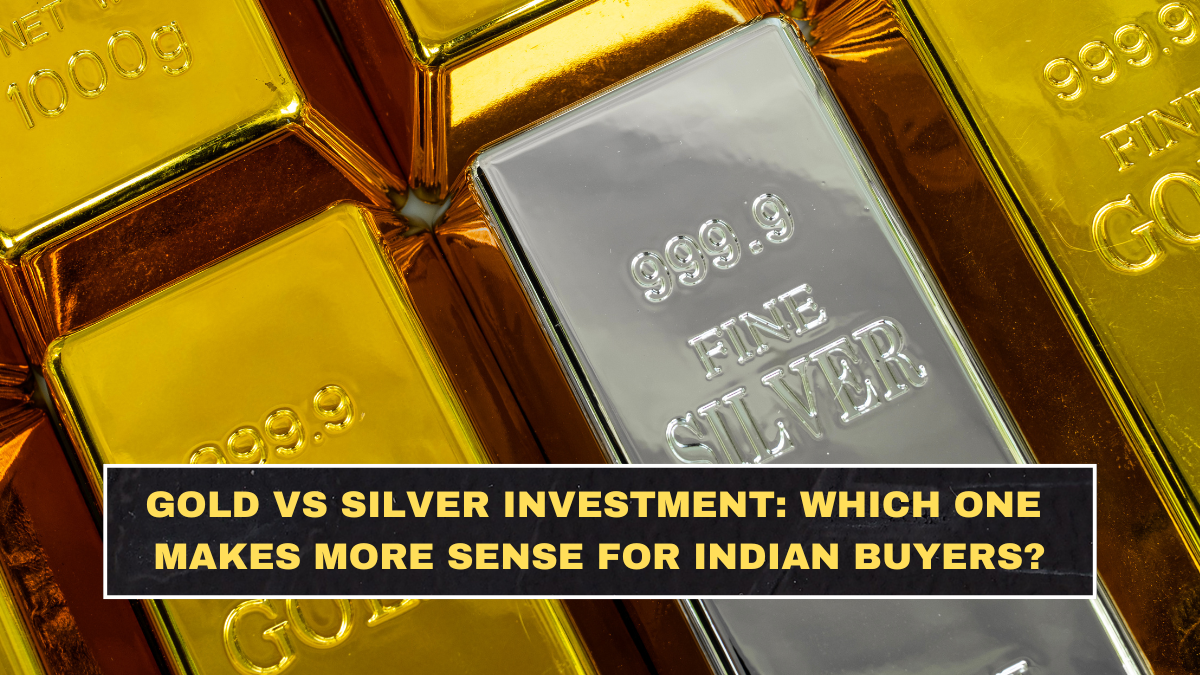
Indian buyers are comparing gold and silver more seriously in 2026 because both metals have become expensive, volatile and heavily searched. Gold remains the emotional and traditional choice for jewellery, weddings and long-term wealth protection, while silver is getting more attention because of industrial demand and sharper price movement. The choice is no longer as simple as “gold is safe, silver is cheap.”
On April 25, 2026, retail gold prices in India were around ₹1.50 lakh per 10 grams for 24K gold after easing from levels above ₹1.52 lakh earlier in the week. Silver was also trading at elevated levels, with national retail references around ₹2.60 lakh per kg. That price gap still makes silver look more accessible, but accessibility does not mean lower risk.
What Is The Basic Difference Between Gold And Silver?
Gold is mainly valued as jewellery, investment, central-bank reserve asset and safe-haven metal. It usually attracts investors during inflation worries, geopolitical tension, currency uncertainty or equity market stress. In India, it also has cultural demand from weddings, festivals and family gifting.
Silver has two identities. It is a precious metal used in coins, bars, jewellery and utensils, but it is also an industrial metal used in electronics, solar power, electrical components and manufacturing. That makes silver more sensitive to industrial cycles. So, silver can rise faster than gold, but it can also fall harder when risk appetite changes.
| Factor | Gold | Silver |
|---|---|---|
| Main Indian use | Jewellery, coins, bars, investment | Jewellery, utensils, coins, investment |
| Market identity | Safe-haven precious metal | Precious + industrial metal |
| Price level | Much costlier per gram | More affordable per gram |
| Volatility | Usually lower than silver | Usually higher than gold |
| Storage | Easier for high value | Bulkier for same value |
| Best suited for | Wealth protection | Higher-risk tactical allocation |
| Buyer mistake | Buying without checking making charges | Assuming cheap means safe |
Which Metal Has Stronger Demand Support In 2026?
Gold has strong demand support because global gold demand crossed 5,000 tonnes in 2025 including OTC demand, according to the World Gold Council. The same report said gold’s record price run helped push total demand value to a record US$555 billion, up 45% year-on-year. That shows gold is not only an Indian jewellery story; it is a global investment and reserve asset story.
Silver’s demand support is different. J.P. Morgan’s 2026 silver outlook points to silver’s strong industrial role and expects silver prices to average around $81 per ounce in 2026. Silver demand is linked to areas like solar technology, electronics and investment demand, which gives it growth potential but also makes it more exposed to industrial slowdowns.
Which One Is Better For Jewellery Buyers?
For jewellery buyers, gold usually makes more sense if the goal is wedding jewellery, long-term family wealth or resale value. In India, 22K gold jewellery has deeper acceptance, wider resale familiarity and stronger cultural value. Even when prices are high, gold remains the first choice for bridal jewellery and major family purchases.
Silver makes sense for smaller purchases, gifting, puja items, anklets, utensils and lower-budget ornaments. But buyers should not assume silver jewellery is always a better deal. Making charges, purity and resale deductions can reduce the benefit. For jewellery, gold is still the cleaner long-term choice, while silver is more practical for budget-based or decorative buying.
Which One Is Better For Investors?
For conservative investors, gold is usually the better fit because it has stronger safe-haven behaviour and lower volatility compared with silver. J.P. Morgan’s gold outlook has projected gold to average $5,055 per ounce by the final quarter of 2026 and rise toward $5,400 by year-end, supported by macro uncertainty and investment demand.
Silver may suit investors who can handle sharper price swings and want exposure to industrial demand. Some analysts argue silver could outperform gold because of valuation and industrial demand dynamics, but that also comes with higher volatility. Anyone buying silver expecting smooth returns is fooling themselves. Silver can reward patience, but it can punish overconfidence brutally.
| Investor Type | Better Fit | Reason |
|---|---|---|
| Low-risk investor | Gold | More stable safe-haven profile |
| Wedding buyer | Gold | Stronger cultural and resale value |
| Small-budget buyer | Silver | Lower entry cost |
| High-risk investor | Silver | Higher upside and higher volatility |
| Portfolio diversifier | Both | Different demand drivers |
| Short-term trader | Neither blindly | Timing risk is high |
| Physical buyer | Gold | Easier storage for high value |
Why Is Silver More Volatile Than Gold?
Silver is more volatile because its market is smaller and its demand is split between investment and industry. When industrial demand looks strong, silver can move sharply higher. But when global growth concerns rise, silver can also correct fast. That makes silver exciting for traders but uncomfortable for people who panic during price drops.
A 2026 India-focused comparison by Business Standard also framed gold as steadier while silver may remain more volatile. This is the key distinction buyers should remember. Gold is not risk-free, but silver needs stronger nerves. If a 10% to 20% correction will scare you, silver should not be your main precious metal holding.
How Should Indian Buyers Split Between Gold And Silver?
A practical split depends on purpose. If the goal is family jewellery or wealth preservation, gold should take priority. If the goal is diversification and higher-risk upside, silver can be added in smaller amounts. For most normal households, silver should support the precious metal allocation, not replace gold completely.
For example, a conservative buyer may keep most precious-metal exposure in gold and a smaller part in silver. A risk-friendly investor may increase silver allocation, but only after accepting price swings. The worst strategy is emotional buying after a rally. That is how people enter late and complain when prices correct.
What Should Buyers Check Before Buying Either Metal?
Buyers should check purity, hallmarking, final invoice value, GST, making charges and resale policy. For gold jewellery, making charges can become a major hidden cost. For silver, purity and buyback terms matter because resale treatment may differ more widely between sellers.
For investment, physical buying is not the only route. Gold ETFs, sovereign gold bonds if available in future issuances, digital platforms and silver ETFs can offer alternatives, but each has its own liquidity, tax and platform risks. Do not buy any product just because someone online says “safe investment.” Read the cost, exit rule and risk first.
Conclusion?
Gold and silver both matter in 2026, but they do not serve the same purpose. Gold is still the stronger choice for Indian families who want jewellery, cultural value and long-term wealth protection. Silver is attractive because of affordability and industrial demand, but it carries higher volatility and needs more discipline.
The honest answer is simple: gold is better for stability, silver is better for higher-risk opportunity. Indian buyers should not blindly choose one because of headlines. Match the metal with the purpose. For jewellery and preservation, choose gold. For tactical diversification, add silver carefully.
FAQs
Is Gold Better Than Silver In 2026?
Gold is better for buyers who want stability, jewellery value and long-term wealth protection. Silver may offer stronger upside in some phases, but it is usually more volatile and riskier than gold.
Is Silver A Good Investment In 2026?
Silver can be a good investment for people who understand volatility and want exposure to industrial demand. It should not be treated as a guaranteed return product or a replacement for emergency savings.
Why Is Silver Cheaper Than Gold?
Silver is cheaper because it is more abundant and has different demand-supply dynamics. Its lower price per gram makes it more accessible, but that does not automatically make it safer.
Which Metal Is Better For Wedding Jewellery?
Gold is usually better for wedding jewellery because it has stronger cultural value, better resale familiarity and wider acceptance in India. Silver is better suited for smaller ornaments, gifts and decorative purchases.
Should Investors Buy Both Gold And Silver?
Investors can hold both if they understand the different roles. Gold can provide stability, while silver can add higher-risk growth potential. The split should depend on risk tolerance, time horizon and purpose.