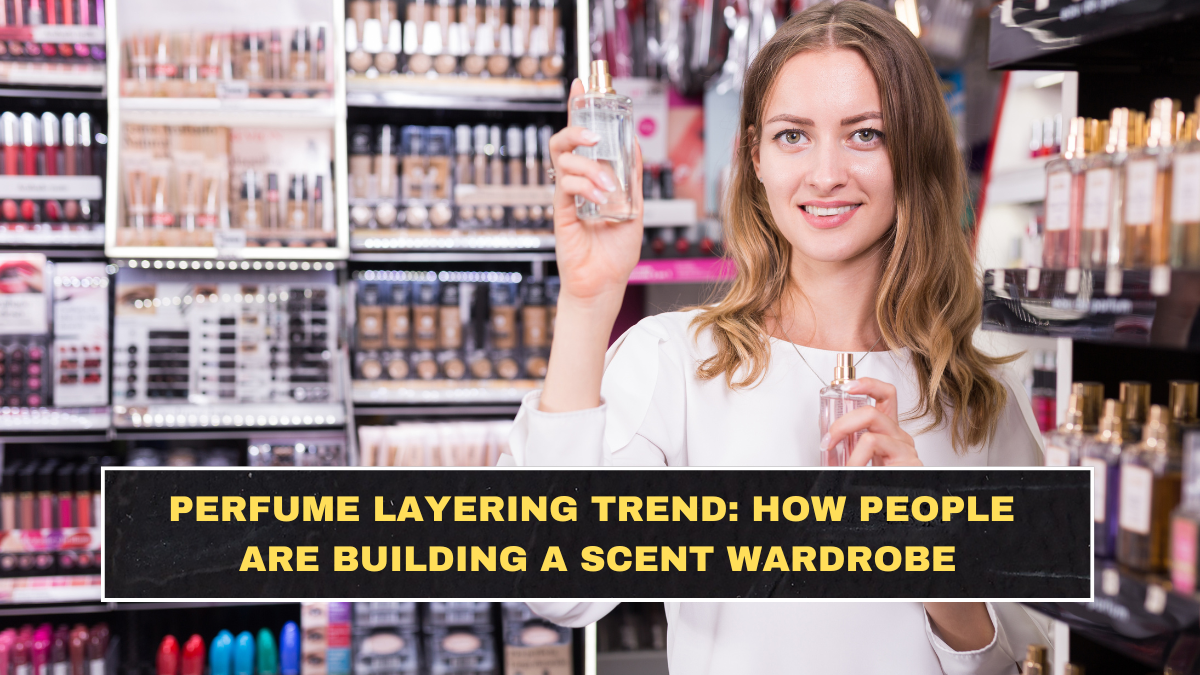
Perfume layering is getting more mainstream because fragrance buyers are no longer satisfied with owning one “signature scent” and calling it a personality. They want flexibility, mood control, and something that feels more personal than spraying the same bottle every day. Vogue India’s March 2026 fragrance-trend roundup said layering is one of the defining fragrance movements of 2026, while Vogue’s April 2026 guide described layering as a way to create a scent that feels truly individual.
This trend is also being pushed by the market, not just by consumers. Allure’s 2026 fragrance trends report says “scent-stacking” has been everywhere lately, helped by Pinterest’s 2026 trend predictions, social video culture, and brands encouraging people to buy multiple products across body, hair, and fragrance categories. In other words, yes, layering is creative, but it is also commercially convenient for beauty brands that would love to sell you a full scented ecosystem instead of one bottle.
Why is perfume layering becoming so popular now?
Because fragrance has shifted from being a finishing touch to being part of identity. Vogue India says 2026 fragrance trends are about layering and reinventing old favorites, while Vogue’s layering guide frames the practice as “the ultimate freedom” because it lets wearers build a scent based on mood and self-expression. That language matters because it shows the trend is not being sold as technical perfume knowledge. It is being sold as personalization.
There is also a cultural reason. Allure says scent-stacking has roots in Middle Eastern fragrance culture and has gone global through PerfumeTok and other social platforms. That is important because many Western beauty articles talk about layering like it was invented last week, when in reality it has a much older cultural history. The current trend is really a mass-market version of a practice that already existed.
What does a scent wardrobe actually mean?
A scent wardrobe means owning fragrances for different moods, settings, seasons, or layering roles instead of relying on one bottle to do everything. That can mean one fresh skin scent, one warm gourmand, one floral, one woody base, or one light body mist that works as a foundation under stronger perfume. Vogue’s April 2026 guide says layering can involve scented moisturizers, body oils, hair perfumes, perfume oils, and eau de parfum rather than only mixing two sprays of perfume together.
That is why the idea of a scent wardrobe is growing. It feels more flexible and more realistic than forcing one fragrance to work for the office, a wedding, summer heat, and a late-night dinner. Elle’s 2026 perfume-trend coverage also frames the year’s fragrance movement around building a more covetable fragrance wardrobe, which supports the idea that consumers are thinking in collections, not just single purchases.
How are people layering fragrance without making it smell chaotic?
Usually by combining one dominant scent with one supporting scent rather than smashing together two loud perfumes and hoping for magic. Vogue’s layering guide emphasizes experimentation across formats, but the practical lesson is simpler: start with a soft base and add one stronger note family on top. Fresh musk under florals, vanilla under woods, or citrus over a warm skin scent tends to be easier than pairing two intense gourmands or two heavy oud-based perfumes.
This is also why body products matter. A scented lotion or oil can act as a quieter base than another full perfume. That gives wearers more control and lowers the risk of turning into a walking argument between twelve fragrance notes. Brands love this because it turns layering into a multi-product routine, but from a user perspective, it genuinely can make the final scent smoother.
Which scent combinations usually work best?
People often overcomplicate this. Most wearable combinations are built around contrast with some overlap. A creamy vanilla can soften a woody scent. A clean musk can make a floral feel skin-like instead of sharp. A light citrus can brighten an amber or gourmand. Allure’s 2026 fragrance-trend reporting notes that 2026 is leaning toward comforting gourmands and nuanced fruity scents, which helps explain why layering is thriving: these categories are easier to blend into other fragrance families than rigid old-school perfumes were.
Here is the practical breakdown:
| Layering combination | Why it works | Best for | Main risk |
|---|---|---|---|
| Musk + floral | Softens floral sharpness | Daily wear, office, spring | Can disappear too fast |
| Vanilla + woods | Adds warmth and depth | Evening, cooler weather | Can get heavy if both are sweet |
| Citrus + amber | Bright top with rich base | Day-to-night wear | May feel mismatched in high heat |
| Fruity + skin scent | Feels modern and easy | Casual wear, younger audience | Can smell too simple or flat |
| Rose + oud or spice | Rich and more dramatic | Events, night wear | Easy to overspray |
That table matters because most bad layering comes from ego. People think more complexity means better taste. Usually it just means less restraint.
What mistakes do people make when they try layering?
The first mistake is using two loud perfumes with no clear base. The second is overspraying because they are afraid the blend will not show up. The third is chasing internet combinations that sound interesting in theory but make no sense on their own skin. Vogue’s guide makes it clear there are no hard rules, but that does not mean every combination is good. “No rules” is not the same as “no judgment.”
Another mistake is ignoring climate and occasion. A dense gourmand layered with amber and oud might smell rich in cool weather and suffocating in Indian summer heat. That is why the scent-wardrobe idea matters more than blindly copying pairings. Good layering is situational. Bad layering is usually somebody trying to force one fantasy onto every day of the year. This is also consistent with BeautyMatter’s 2026 fragrance forecasting, which points to varied fragrance behaviors such as “off-season scenting” and more individualized fragrance demand.
Is perfume layering a real consumer habit or mostly social media theater?
It is both. Allure clearly ties scent-stacking to Pinterest forecasts, creators, and brand strategy, which means the visibility is definitely amplified by social media and commerce. But Vogue India and Vogue are also treating layering as a serious mainstream fragrance behavior rather than a gimmick, which suggests the practice has moved beyond niche perfume communities.
The better way to say it is this: layering is real, but the obsession around it is being commercialized hard. A scent wardrobe can be useful if it helps someone get more out of a few fragrances they already own. It becomes stupid when it turns into endless buying under the excuse of “personal expression.”
Why are brands so invested in the layering trend?
Because layering increases category breadth. Instead of selling one perfume, a brand can sell the matching body wash, lotion, mist, hair perfume, oil, and a second fragrance meant to pair with the first. Vogue’s layering guide directly discusses multiple product formats, and Allure explicitly notes that brands are happy to encourage stacking routines. That is not cynical speculation. That is the business logic of the trend.
This is also why fragrance wardrobes are replacing the old signature-scent ideal in trend coverage. A wardrobe encourages repeat purchases and more experimentation. It suits today’s beauty economy perfectly because it transforms fragrance from a single-item purchase into an ongoing collectible behavior.
Conclusion
Perfume layering is growing because people want more control over how they smell and more freedom than one signature scent allows. The useful version of the trend helps people build a scent wardrobe that fits mood, season, and occasion. The manipulative version tells them they need twelve products to smell interesting. The smart middle ground is obvious: learn a few combinations that actually work, keep the base simple, and stop treating every fragrance routine like a content strategy.
FAQs
What is perfume layering?
Perfume layering is the practice of combining fragrance products or scents to create a more personalized result. That can include perfume with body lotion, oil, hair mist, or another fragrance.
Why is perfume layering trending in 2026?
Major beauty coverage in 2026 points to layering as a defining fragrance trend, driven by personalization, social media, and brands expanding scent routines across multiple product types.
What is a scent wardrobe?
A scent wardrobe means owning different fragrances or scented products for different moods, seasons, and combinations rather than relying on one signature scent.
How can beginners avoid bad perfume combinations?
Start with one soft base and one stronger supporting scent, keep the spray count low, and avoid mixing two intense perfumes with no common character. Vogue’s layering guide also suggests using body products as easier layering foundations.
Click here to know more