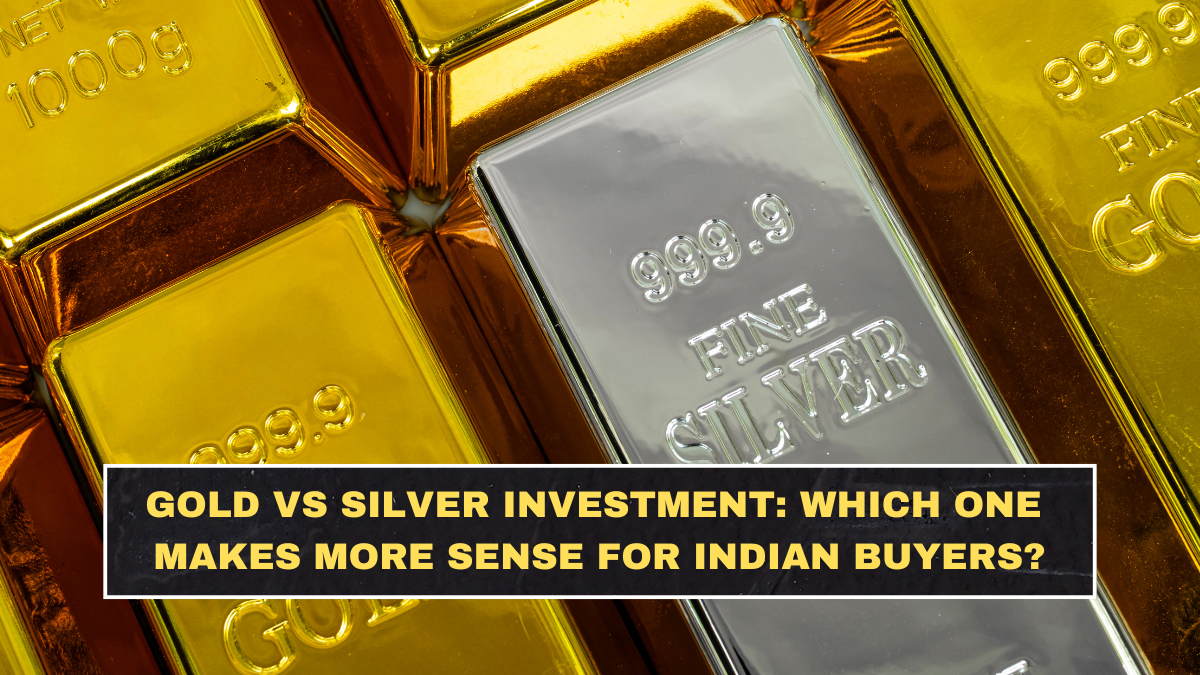
Indian buyers are comparing gold and silver because both metals have become expensive, but they behave very differently. Gold is mainly seen as a safe-haven and wealth-preservation asset, while silver works as both a precious metal and an industrial metal. That difference matters because gold usually protects money better during uncertainty, while silver can rise faster but also fall harder.
On April 24, 2026, Reuters reported domestic gold around ₹1,51,200 per 10 grams in India, with local premiums rising due to tight supply. Silver also stayed in focus after sharp movement, with reports saying silver dipped around ₹2,300 per kg while trading near the ₹2.39 lakh to ₹2.40 lakh per kg zone. These high prices have made buyers ask a practical question: should they buy gold, silver, or both?

What Is The Basic Difference Between Gold And Silver?
The basic difference is purpose. Gold is mostly used for jewellery, investment, central-bank reserves and wealth protection. Silver is used for jewellery and investment too, but it also has large industrial demand in solar panels, electronics, electric vehicles and manufacturing. That makes silver more sensitive to economic growth and industrial demand cycles.
This is where many buyers think badly. They see silver as “cheaper gold,” but that is not accurate. Silver is not just a lower-priced version of gold. It has a different risk profile, different demand drivers and different price behaviour. If you buy silver expecting it to behave like gold, you are already making a poor investment decision.
| Factor | Gold | Silver |
|---|---|---|
| Main role | Wealth protection and safe-haven asset | Industrial growth plus investment asset |
| Volatility | Usually lower | Usually higher |
| Liquidity | Stronger in India | Good, but weaker than gold |
| Storage | Easier for high value | Bulkier for same investment value |
| Jewellery resale | Better acceptance | Lower resale strength in many cases |
| Best for | Conservative investors | Aggressive investors |
| Main risk | Buying at high prices | Sharp price swings and lower liquidity |
| Better format | ETF, coin, bar, SGB, jewellery | ETF, bar, coin, selected digital options |
Which Metal Is Less Risky For Normal Investors?
Gold is less risky for normal investors because it has deeper liquidity, wider acceptance and stronger cultural demand in India. During uncertain periods, investors often move toward gold because it is treated as a defensive asset. In 2026, gold has stayed supported by inflation fears, oil-price pressure, geopolitical uncertainty and tight domestic supply.
Silver is riskier because its price swings are sharper. Groww’s explainer notes that silver can be 2–3 times more volatile than gold due to its smaller market, lower liquidity and dual demand from both investors and industries. That means silver can outperform during rallies, but it can also punish buyers badly during corrections.
Which Metal Can Give Better Returns?
Silver can give better returns during strong commodity rallies because it has industrial demand and a smaller market size. Analysts have recently argued that silver could outperform gold over the next 6–12 months because of industrial demand, macro shifts and relative valuation. But “could outperform” does not mean “will definitely outperform.” That is the part retail investors often ignore.
Gold usually gives steadier returns and works better as portfolio insurance. Reuters reported that India’s jewellery demand weakened when prices rose sharply, but investment demand increased, showing that buyers still use gold as a financial asset during high-price periods. That behaviour supports gold’s role as a long-term store of value rather than a quick-profit instrument.
Which Is Better For Jewellery Buyers?
Gold is clearly better for jewellery buyers because it has stronger resale acceptance, easier purity recognition and deeper cultural demand. In India, 22K gold jewellery has an established market, and buyers can compare rates, making charges, hallmarking and buyback terms more easily. Even then, jewellery is not the cleanest investment because making charges and GST reduce effective returns.
Silver jewellery should be treated more as lifestyle buying than serious investment. Silver ornaments often have design charges, purity variation and weaker resale terms. If your goal is wealth building, heavy silver jewellery is not the smartest format. Buy silver bars, coins or ETFs if you want investment exposure. Do not confuse decorative buying with investing.
Which Is Easier To Store And Sell?
Gold is easier to store because a large amount of value fits into a small quantity. For example, ₹5 lakh worth of gold takes far less physical space than ₹5 lakh worth of silver. This matters for locker cost, safety and resale convenience. Gold also has more jewellers, banks and platforms willing to buy or value it.
Silver is bulkier, which becomes a real issue for large investments. A small silver purchase is easy to manage, but bigger amounts create storage and purity concerns. If you are serious about silver exposure, ETFs can reduce storage problems. However, ETFs still carry market risk, tracking error and demat-related costs.
Should Investors Buy ETFs Instead Of Physical Metal?
For many investors, ETFs are cleaner than physical metal because they avoid purity doubts, storage issues and making charges. Gold ETFs and silver ETFs trade on stock exchanges and represent metal exposure without taking physical delivery. Paytm Money’s 2026 guide notes that both gold and silver ETFs are held in demat accounts and remove concerns around storage and purity, though tracking error can still exist.
Physical metal makes sense for cultural use, gifting or emergency comfort. But if the goal is investment, ETFs, sovereign gold bonds where available, and regulated digital options may be more practical. The mistake is buying jewellery and calling it investment. Jewellery is partly consumption. Investment should be judged by liquidity, cost and exit value.
What Is The Best Portfolio Approach?
For conservative Indian buyers, gold should usually have a bigger role than silver. A simple allocation could be 70–80% gold and 20–30% silver within the precious-metals portion of a portfolio. Aggressive investors who understand volatility may increase silver exposure, but only if they can handle sharp price drops without panic selling.
Do not put all savings into precious metals. That is fear-based investing. Gold and silver can protect and diversify wealth, but they do not replace emergency funds, health insurance, fixed income, equity mutual funds or retirement planning. Precious metals should be one part of the portfolio, not the whole plan.
Conclusion?
Gold vs silver investment is not about finding one universal winner. Gold makes more sense for stability, liquidity and long-term wealth protection. Silver makes more sense for investors who want higher growth potential and can tolerate bigger price swings. Both can fit in a portfolio, but they should not be bought for the same reason.
The blunt answer is this: if you are a normal buyer with low risk tolerance, gold is the safer choice. If you understand volatility and want industrial-demand exposure, silver can be added in smaller proportion. Do not buy silver just because gold looks expensive. That is not strategy; that is emotional pricing.
FAQs
Is Gold Better Than Silver For Indian Investors?
Gold is better for conservative Indian investors because it has stronger liquidity, lower volatility and better resale acceptance. Silver can offer higher upside, but it also carries sharper price swings and storage issues.
Is Silver More Volatile Than Gold?
Yes, silver is generally more volatile than gold. Its smaller market size, lower liquidity and industrial-demand link make its price move faster in both directions.
Should I Buy Gold Or Silver Jewellery For Investment?
Gold jewellery is better than silver jewellery for resale, but jewellery is still not the cleanest investment because of making charges and GST. For investment, coins, bars, ETFs or other regulated products are usually better.
Can I Invest In Both Gold And Silver?
Yes, many investors can use both. Gold can act as the stable part of precious-metal allocation, while silver can be a smaller high-risk, high-upside addition.