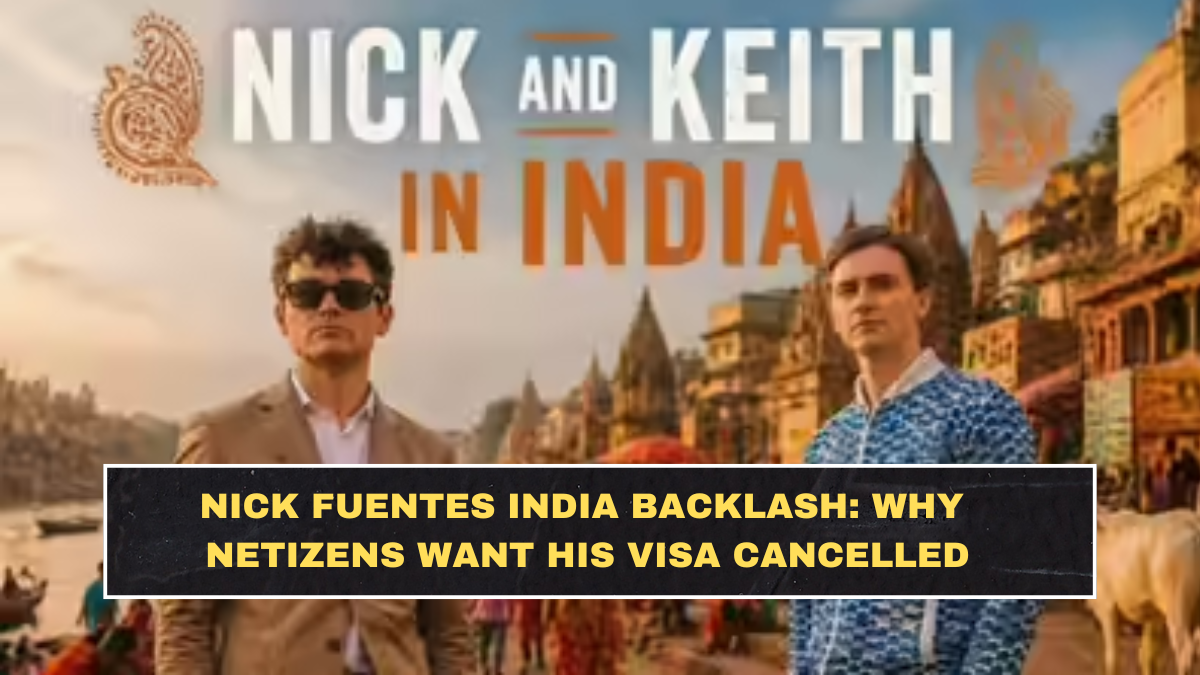
Nick Fuentes is facing backlash in India after reports claimed that the far-right American influencer may be planning a visit to the country. The controversy exploded because many Indian social media users accused him of having a history of racist, anti-India and dehumanising remarks, making his reported India trip look hypocritical and offensive to critics.
The anger is not only about one planned visit. It is about the larger pattern people associate with Fuentes’ politics and online commentary. Reports have described him as a far-right MAGA-linked influencer, and past coverage has connected him with inflammatory remarks about Indians, Indian culture and Indian-origin public figures such as Vivek Ramaswamy and Usha Vance.
What Exactly Are Netizens Demanding?
Many users online are demanding that Indian authorities cancel or deny Nick Fuentes’ visa if he is actually planning to visit India. The argument is simple: someone who has allegedly mocked or dehumanised Indians should not be welcomed into India for clout, content or political theatre. This is why the phrase “cancel his visa” began appearing in discussions around the controversy.
This demand is emotional, but it is not random. Indians are asking why a foreign influencer with a record of hostile remarks toward Indians should be allowed to use India as a backdrop for content. The blunt point is this: people do not want India to become a stage where controversial foreign figures gain attention after insulting the same country and its people.
| Issue | Why It Matters |
|---|---|
| Reported India visit | Turned old remarks into a fresh controversy |
| Main criticism | Alleged anti-India and racist comments |
| Public demand | Calls to cancel or deny visa |
| People targeted earlier | Indian-origin figures and Indian culture |
| Bigger concern | Foreign influencers using India for clout |
| Political angle | Linked to far-right online movements |
| Social media mood | Anger, mockery and calls for official action |
Why Are His Past Remarks Being Discussed Again?
Fuentes’ past remarks are being discussed again because a reported India visit changes the context. If someone criticises or mocks India from abroad, it may remain a foreign online controversy. But if that person then plans to visit India, users naturally revisit the old comments and ask whether the visit should be allowed.
Reports have highlighted previous anti-India slurs, including mocking Indian practices and telling Indian-origin American politician Vivek Ramaswamy to “go back to India.” Times of India also reported that US Congressman Ro Khanna criticised Fuentes’ anti-India rhetoric involving Vivek Ramaswamy and Usha Vance, showing that the issue had already gone beyond Indian social media circles.
Why Is This Becoming A Bigger Political Debate?
The backlash is bigger because Fuentes is not seen as a normal travel creator or tourist. He is associated with far-right online politics, MAGA-adjacent influence circles and extremist-style culture-war commentary. That makes his reported India visit politically sensitive, especially when critics say he has previously used racist language against Indians.
India’s social media ecosystem is also very alert to foreign commentary about the country. Any perceived insult from Western influencers, politicians or media figures can quickly become a national pride issue. In this case, the anger is sharper because critics see a contradiction: insulting Indians first, then allegedly wanting to visit India later.
Can India Cancel Or Deny A Visa Over Such Backlash?
In general, countries have broad powers to issue, deny or revoke visas based on their national rules, public order concerns or diplomatic discretion. However, the public does not automatically know whether Fuentes has applied for a visa, received one, or confirmed any official travel plan. That part matters because outrage can move faster than verified paperwork.
So the demand to cancel his visa is politically loud, but the factual situation needs caution. If there is no confirmed visa, there is nothing visible to cancel. If there is a visa, authorities may still review whether the visit violates any rules. The public pressure is real, but official action depends on facts that may not be fully public yet.
Why Are Indians Angry Beyond The Visa Issue?
The anger goes beyond paperwork because many users see this as a dignity issue. They believe India should not reward people who allegedly insult Indian culture, Indian-origin people and Indian communities abroad. For them, this is not about being oversensitive; it is about basic respect.
There is also a wider frustration with foreigners using India as content material while carrying negative stereotypes about Indians. That is the uncomfortable part many people are reacting to. They do not want India reduced to a prop for outrage content, political branding or online attention farming.
Is Social Media Outrage Enough To Decide Such Cases?
No, social media outrage alone should not decide visa decisions. That would be a messy and dangerous standard. But social media can surface public concerns, past statements and reputational risks that authorities may choose to examine. The correct standard should be evidence, legal rules and national interest, not just viral anger.
At the same time, ignoring public concerns completely would also be foolish. If a foreign figure has a documented pattern of demeaning a country’s people, authorities have every reason to ask why that person is coming, what they plan to do, and whether the visit could create public-order issues or unnecessary provocation.
What Is The Bigger Lesson From This Controversy?
The bigger lesson is that online speech has consequences across borders. Influencers cannot build careers on insulting communities and then expect those same communities to quietly welcome them later. The internet remembers, screenshots travel, and old clips become fresh problems when real-world movement is involved.
For Indian users, the challenge is to stay sharp without becoming careless. Criticise bigotry strongly, but do not spread unverified claims. Demand accountability, but separate confirmed facts from rumours. That is how backlash becomes credible instead of looking like another online mob cycle.
Conclusion?
The Nick Fuentes India backlash is not just about a reported trip. It is about whether a foreign influencer accused of anti-India and racist rhetoric should be allowed to use India for attention after repeatedly offending Indians and Indian-origin figures. That is why calls for visa cancellation have gained traction online.
The honest position is this: the anger is understandable, but the facts around any visa or official travel plan must be verified. If authorities find that his visit creates legal, public-order or reputational concerns, they can act through proper channels. But Indians also need to be careful not to turn every viral claim into confirmed fact before evidence is clear.
FAQs
Why Is Nick Fuentes Trending In India?
Nick Fuentes is trending in India because reports claimed he may be planning a visit to the country, which triggered backlash over his past alleged anti-India and racist remarks. Many users are demanding that Indian authorities cancel or deny his visa.
What Did Nick Fuentes Say About Indians?
Reports have linked Nick Fuentes to derogatory remarks about Indians, Indian culture and Indian-origin public figures. Past coverage said he targeted Vivek Ramaswamy with racist comments and mocked Indian cultural practices.
Are People Asking India To Cancel His Visa?
Yes, many social media users are calling for his visa to be cancelled or denied if he is planning to visit India. The demand is based on anger over his alleged history of anti-India rhetoric and concerns that he may use India for publicity.
Has India Officially Cancelled Nick Fuentes’ Visa?
There is no confirmed public information in the reviewed reports showing that India has officially cancelled a visa. The backlash is currently focused on demands from netizens and the controversy around his reported India visit.