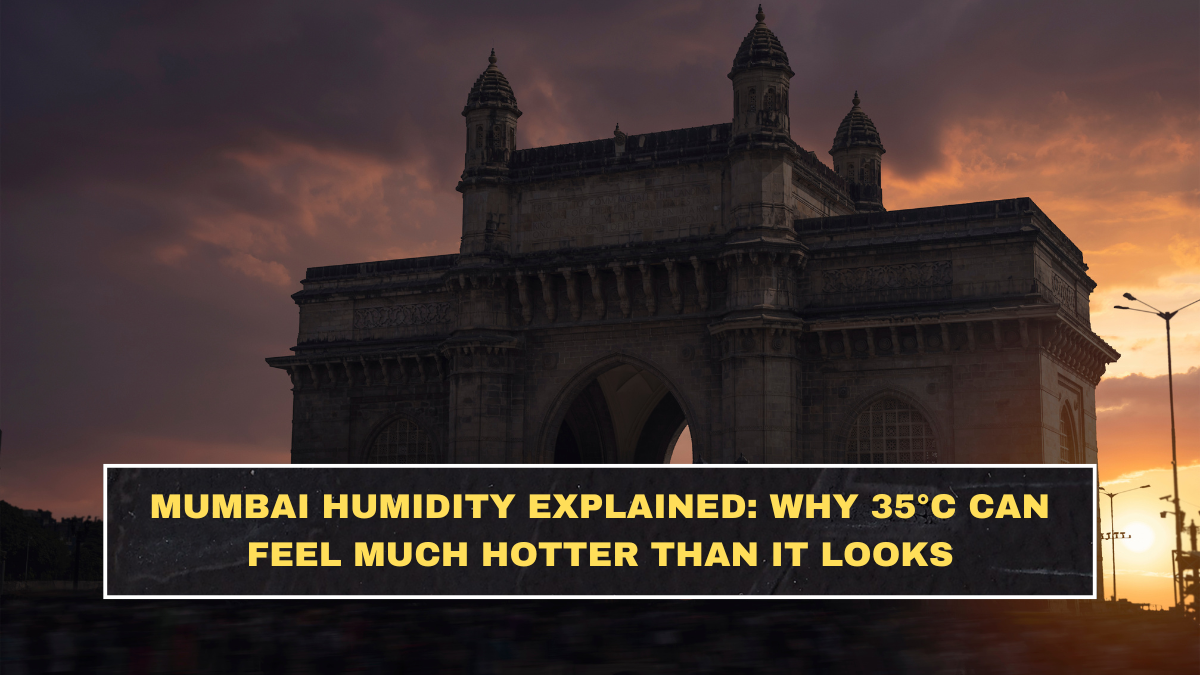
Mumbai feels hotter than the actual temperature because humidity makes it harder for the body to cool itself. The city may show temperatures around 33°C to 35°C, but high moisture in the air can make the heat feel heavier, stickier, and more exhausting than dry heat at the same temperature.
Current weather data for Mumbai on April 27, 2026, showed hazy sunshine and around 32°C in the afternoon. That number may not look extreme compared with places in Vidarbha or interior Maharashtra, but the discomfort level is different because coastal humidity reduces sweat evaporation.
Times of India reported that Mumbai’s eastern suburbs were facing oppressive heat due to a rise in humidity, even though temperatures remained between 33°C and 35°C. The report noted that inland eastern suburbs, unlike western coastal areas, were getting less relief from sea breeze, making conditions feel more uncomfortable.
What Role Does Humidity Play In Heat Discomfort?
Humidity makes heat more uncomfortable because sweat does not evaporate easily when the air is already full of moisture. Sweating is the body’s natural cooling system. When evaporation slows down, body heat remains trapped for longer, and people feel sticky, tired, dizzy, or drained even without extreme temperatures.
This is why Mumbai’s April heat can feel worse than the thermometer suggests. A dry 38°C day may feel harsh, but a humid 35°C day can feel suffocating because the body keeps sweating without cooling efficiently. That is the difference many people ignore when they compare Mumbai with hotter inland cities.
The India Meteorological Department’s Mumbai district forecast warned about hot and humid conditions and advised people to take precautions while going outside during peak hours. It also mentioned expected impacts such as heat cramps and heat rash during the hottest parts of the day.
Why Are Mumbai’s Eastern Suburbs Feeling Worse?
Mumbai’s eastern suburbs are feeling worse because they are farther from the coast and may not receive the same cooling effect from sea breeze as western coastal areas. When warm winds, concrete heat, traffic, and humidity combine, the result is a sweat-trap feeling even when the official temperature does not appear alarming.
According to the Times of India report, parts of Mumbai’s eastern suburbs are more than 10 km from the coast, which reduces direct sea-breeze relief. The report also quoted meteorologist Abhijit Modak saying April and May are more humidity-driven than heat-driven in Mumbai.
| Area Factor | Why It Makes Heat Feel Worse | Simple Explanation |
|---|---|---|
| High humidity | Sweat evaporates slowly | Body cooling becomes weaker |
| Less sea breeze | Inland suburbs get less relief | Air feels still and heavy |
| Concrete surfaces | Roads and buildings hold heat | Nights also feel warmer |
| Traffic and pollution | Heat gets trapped near roads | Outdoor movement feels tiring |
| Peak afternoon sun | Direct exposure raises body stress | Heat cramps and fatigue risk rise |
Why Can 35°C Feel Like A Heat Warning In Mumbai?
A 35°C day can feel like a heat warning in Mumbai because human comfort depends on both temperature and humidity. If the humidity is high, the body’s cooling system becomes inefficient. That can increase the risk of heat exhaustion, cramps, rashes, dehydration, and fatigue, especially during afternoon travel or outdoor work.
This is why “only 35°C” is a bad way to judge Mumbai weather. The number alone does not show how much moisture is in the air, how strong the breeze is, how much direct sun exposure a person faces, or how long they stay outdoors. A delivery worker, construction worker, traffic police officer, or commuter standing at a bus stop will experience the weather very differently from someone sitting indoors.
IMD’s recent Maharashtra bulletin also flagged hot and humid conditions in isolated pockets over Konkan, including Mumbai, Thane, Raigad, and Ratnagiri around April 25 and 26. That confirms this is not just people “complaining too much”; the weather setup is genuinely uncomfortable.
How Is Mumbai Different From Vidarbha Or Pune Heat?
Mumbai’s heat is different because it is humidity-heavy, while parts of Vidarbha and interior Maharashtra are facing more direct high-temperature heat. For example, Times of India reported that Akola reached 46.9°C, while Amravati, Wardha, Yavatmal, and Nagpur also recorded extreme temperatures above 45°C.
Pune has also seen high temperatures, with Koregaon Park near 43°C and Lohegaon at 42.7°C, according to the same day’s regional heat report. Mumbai may not be touching those numbers, but its discomfort comes from moisture, sea-breeze timing, and urban humidity.
The comparison should be clear: Vidarbha’s risk is extreme dry heat and heatwave-like conditions, while Mumbai’s risk is humid heat stress. Both are dangerous in different ways. Dismissing Mumbai heat because another city is hotter is lazy thinking.
What Should People Do During Humid Heat?
People should reduce outdoor exposure during peak afternoon hours, drink water regularly, wear light cotton clothes, avoid heavy meals before travel, and take shaded breaks if they work outside. The goal is not just to avoid sunburn; it is to prevent dehydration and heat exhaustion.
People who travel by local train, bus, two-wheeler, or on foot should carry water and avoid unnecessary direct sun exposure between late morning and afternoon. Office workers should not assume they are safe either, because commuting in humid heat can still trigger exhaustion, headache, and dizziness.
Children, elderly people, pregnant women, outdoor workers, and people with heart or kidney conditions need extra caution. If someone feels faint, confused, unusually weak, or stops sweating despite heat exposure, that is not a normal summer complaint. Medical attention may be needed quickly.
Conclusion?
Mumbai’s current heat problem is not just about the temperature shown on weather apps. The real discomfort comes from humidity, weak evaporation of sweat, delayed or uneven sea-breeze relief, concrete heat, and outdoor exposure during peak hours.
A 35°C humid day in Mumbai can feel far worse than it looks on paper. The smart response is not panic, but practical caution: hydrate, avoid long afternoon exposure, wear breathable clothes, and take heat symptoms seriously. Mumbai’s summer may not always look extreme on the thermometer, but the body feels the full story.
FAQs
Why Does Mumbai Feel Hotter Than 35°C?
Mumbai feels hotter than 35°C because high humidity slows sweat evaporation. When sweat does not evaporate properly, the body cannot cool itself efficiently, making the air feel sticky, heavy, and more exhausting.
Why Are Mumbai’s Eastern Suburbs More Uncomfortable?
Eastern suburbs can feel more uncomfortable because they are farther from the coast and may get less direct sea-breeze relief. Concrete surfaces, traffic, humidity, and warm winds can make these areas feel hotter than the official temperature suggests.
Is Humid Heat Dangerous?
Yes, humid heat can be dangerous because it increases the risk of dehydration, heat cramps, heat rash, fatigue, and heat exhaustion. The risk is higher for children, elderly people, outdoor workers, and people with health conditions.
What Should People Do During Hot And Humid Weather?
People should drink enough water, avoid long outdoor exposure during peak afternoon hours, wear light breathable clothes, rest in shade, and watch for warning signs like dizziness, weakness, confusion, or repeated cramps.