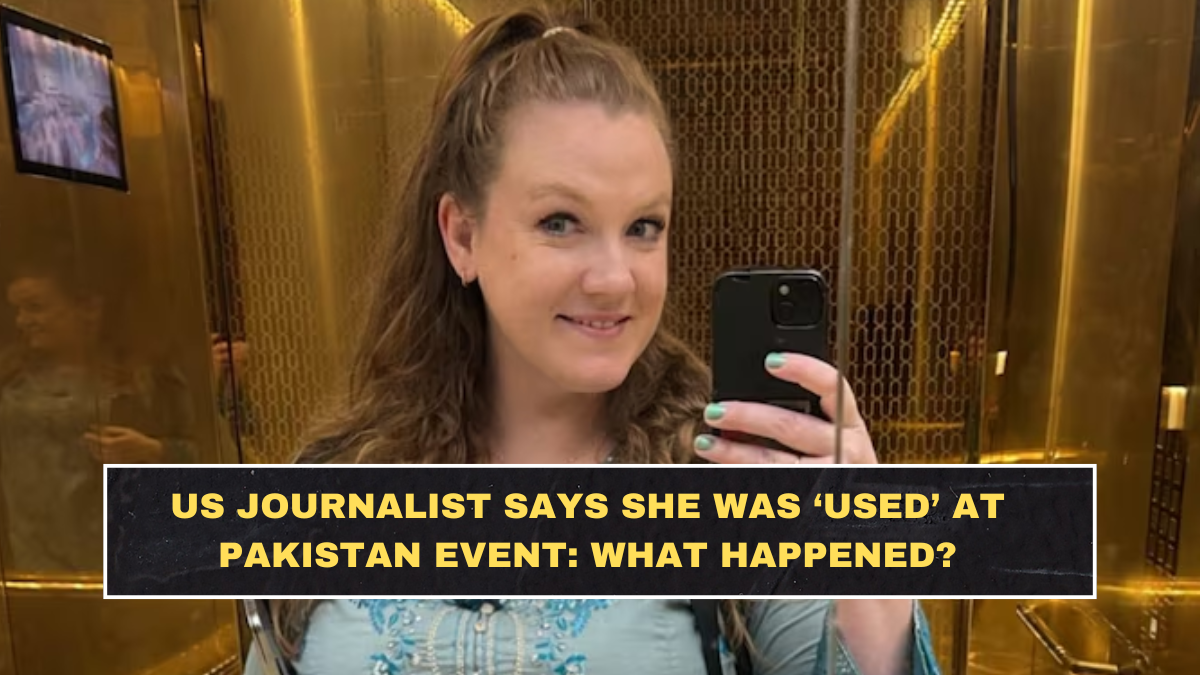
US journalist Caitlin Doornbos is in the news after saying she felt “deceived” and “used” following a media event in Pakistan that allegedly turned political. Doornbos, a New York Post correspondent, was reportedly in Pakistan to cover anticipated US-Iran talks when she attended a gathering at the Islamabad Press Club with other foreign journalists.
India Today reported that the event was presented as a chance to understand Pakistan’s media landscape, but later became controversial after photos of foreign journalists were circulated in a way that made some attendees feel their presence was being used for political messaging. Doornbos responded publicly on X, saying she would have preferred to learn about the media landscape privately instead of having images connected with a larger political narrative.
What Happened At The Islamabad Press Club Event?
The gathering reportedly included foreign journalists from outlets such as the New York Post, CNN and Al Jazeera, along with Pakistani media figures. According to India Today and ThePrint, the meeting turned political when Pakistani journalists Matiullah Jan and Asad Ali Toor spoke about press freedom, alleged harassment of journalists, government policies and extra-judicial killings.
The controversy grew after photos from the event were posted online and linked with political commentary. Doornbos then questioned whether the foreign journalists whose images were being used had been asked how they felt about it. Her reaction made the story bigger because it suggested that at least one visiting journalist did not believe the event was framed transparently.
| Key Detail | What Happened |
|---|---|
| Journalist involved | Caitlin Doornbos, New York Post correspondent |
| Location | Islamabad Press Club, Pakistan |
| Event type | Informal media gathering with foreign journalists |
| Main controversy | Photos allegedly used for political messaging |
| Doornbos’ reaction | Said she felt “deceived” and “used” |
| Other topics raised | Press freedom, harassment claims and political criticism |
| Why it matters | Raises questions about media access, PR framing and consent |
Why Did She Say She Felt Deceived?
Doornbos’ main issue appears to be consent and framing. Based on her public response, she did not object to learning about Pakistan’s media environment. Her objection was that foreign journalists’ images were later associated with a political message in a way she did not expect. That is an important difference.
This is where the optics became damaging. A journalist attending a background-style or informational meeting is one thing. The same journalist’s image later appearing in political promotion is another thing entirely. If the purpose of an event is not made clear, visiting journalists can feel they were used to add foreign credibility to a domestic narrative.
Why Is Pakistan’s Media Landscape Part Of The Story?
Pakistan’s media environment is central to the controversy because the event reportedly included discussion about press freedom and pressure on journalists. India Today noted that two Pakistani journalists used the gathering to speak about what they described as a disturbing state of press freedom in the country. This turned the event into something much more politically sensitive than a normal meet-and-greet.
This is not a small matter. Press freedom is a serious issue in any country, and Pakistan’s internal politics are often shaped by tensions between civilian government, the military establishment, courts, opposition voices and journalists. When foreign reporters are present at such a discussion, the framing of their attendance becomes even more important.
Where Does Asim Munir Fit Into This Controversy?
Asim Munir’s name appears in the wider media environment around the story because Doornbos had been reporting from Pakistan amid attention on US-Iran talks and Pakistan’s regional diplomacy. Social media posts and Pakistani outlets had also highlighted comments involving Pakistan’s military leadership and its perceived role in international diplomacy.
However, readers need to be precise here. The Islamabad Press Club controversy is mainly about a media event, photos, political messaging and Doornbos’ claim that she felt used. Dragging Asim Munir into every sentence just for drama would be weak journalism. His relevance is part of the broader Pakistan power-and-PR context, not proof that he personally organised this controversy.
Why Is The Story Getting Attention In India?
The story is getting attention in India because any Pakistan-related media controversy involving foreign journalists, military influence or political messaging attracts strong interest. Indian audiences often watch Pakistan’s internal media and establishment politics closely, especially when foreign journalists are involved and the story touches international perception-building.
There is also a regional rivalry angle. Many Indian readers see such episodes as examples of Pakistan trying to manage global optics while facing internal criticism. But that reading needs discipline. It is fair to question PR framing, but it is sloppy to treat every Pakistan event as a confirmed state propaganda operation unless evidence clearly supports that claim.
What Is The Bigger Media Ethics Issue?
The bigger issue is whether journalists were clearly told how their presence, photos or comments would be used. In journalism and public relations, consent is not a small technicality. If an attendee joins a private or semi-private discussion, organisers should not later use their image in a way that implies endorsement, alignment or support.
This applies everywhere, not only in Pakistan. Governments, think tanks, political groups and institutions often try to use foreign journalists’ presence as a credibility signal. That is exactly why journalists must be cautious about informal events. A photo can become a message even when the person in the photo never made that message.
What Should Foreign Journalists Learn From This?
Foreign journalists covering politically sensitive countries need to be extremely careful about event framing, photography rules and how their attendance may be used later. Before attending, they should ask whether the session is on record, whether photos will be released, who is organising it and whether their names or images will appear in promotional material.
This may sound paranoid, but it is basic professional protection. In high-stakes political environments, neutral attendance can be converted into implied approval. Journalists should not assume goodwill when governments, political actors or pressure groups are trying to influence international narratives. That assumption is naive.
Conclusion?
The Caitlin Doornbos Pakistan event controversy is not just about one journalist feeling uncomfortable. It raises a serious question about how foreign journalists are invited, photographed and publicly framed in politically sensitive settings. Doornbos said she felt “deceived” and “used,” and that reaction is enough to make organisers’ handling of the event look careless at best.
The larger lesson is simple: transparency matters. If an event is informational, keep it informational. If it is political, say so clearly. Using foreign journalists’ presence to strengthen a narrative without clear consent damages trust and makes the organisers look desperate for international validation.
FAQs
Who Is Caitlin Doornbos?
Caitlin Doornbos is a US journalist and New York Post correspondent. She was reportedly in Pakistan while covering anticipated US-Iran talks and later became part of a controversy after attending a media gathering at the Islamabad Press Club.
Why Did Caitlin Doornbos Say She Felt Used?
She said she felt “deceived” and “used” after photos of foreign journalists from the event were circulated in a way that she felt associated them with a political message. Her objection appeared to be about how the event and images were framed publicly.
What Happened At The Pakistan Press Event?
The event reportedly involved foreign journalists and Pakistani media figures. It became controversial after discussion around press freedom, harassment of journalists and political issues, followed by public circulation of images from the gathering.
Is This Controversy Linked To Pakistan’s Image Management?
The controversy has raised questions about Pakistan’s media optics and image management, but it should be described carefully. The confirmed issue is that at least one foreign journalist said she felt misled by how the event and photos were used publicly.