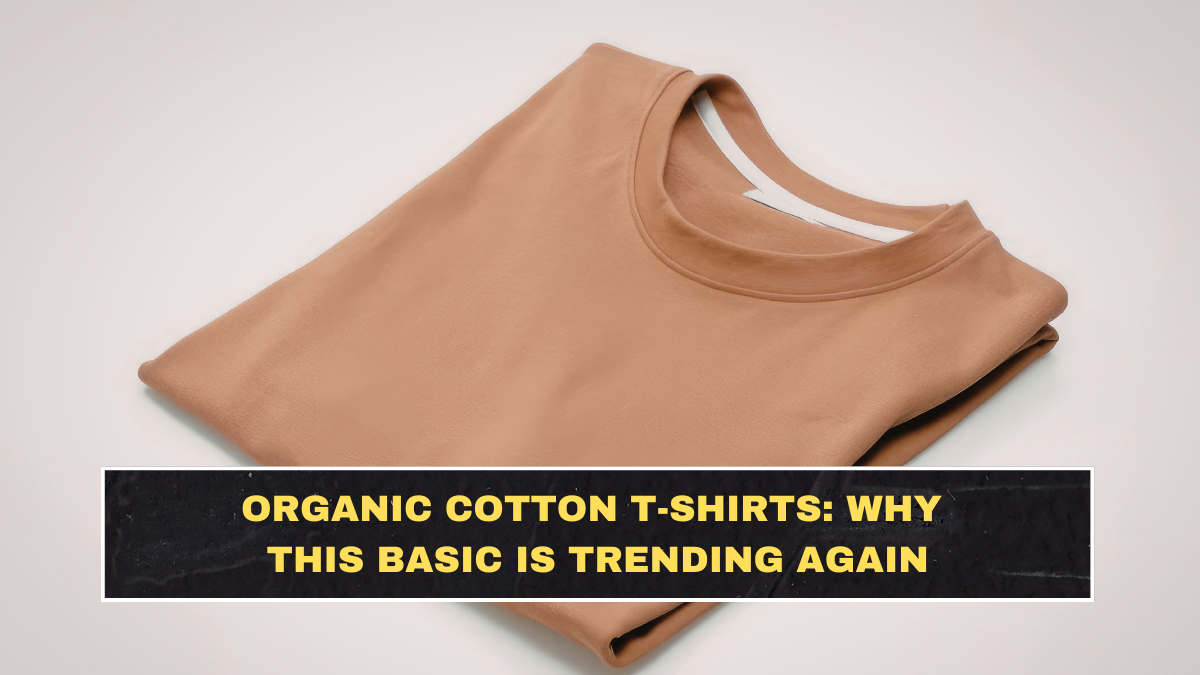
Organic cotton T-shirts are trending again because shoppers are getting more selective about basics. People still want the simple white or black tee, but now they want it to feel softer, last longer, and come with a cleaner sustainability story. That shift is showing up in the broader organic apparel market too. Forbes reported in March 2026 that the organic clothing market was valued at $18.3 billion in 2024 and is forecast to reach $45 billion by 2035, with organic cotton still one of the core materials behind that demand.
That does not mean every organic cotton T-shirt deserves the hype. This category gets oversold constantly. Brands act like adding the word “organic” automatically makes a tee better, more ethical, and worth a premium price. Realistically, the value depends on three things: how the fabric feels, how well the shirt is made, and whether the brand’s sustainability claims are actually credible. Organic cotton can be a lower-impact alternative to conventional cotton, but it is not magic and it is not automatically superior in every way.
Why Are Organic Cotton T-Shirts Trending Again?
The trend is rising because basics are back at the center of how people shop. When wardrobes get more practical, T-shirts become a daily-use product rather than a throwaway extra. At the same time, shoppers have become more skeptical of fast-fashion quality and more aware of material labels. That creates space for organic cotton tees to look more appealing, especially when brands position them as premium essentials instead of trend pieces. Forbes’ 2026 market reporting points to rising demand for organic clothing overall, which fits this renewed attention on basics.
There is also a cleaner-positioning effect. Textile Exchange says conventional cotton production can be chemically intensive, with pesticides and synthetic fertilizers contributing to soil and water contamination and significant greenhouse gas emissions. That makes “organic cotton” an easy message for brands to sell because it gives consumers a simple story: same familiar fiber, less chemical input. The story is attractive, but the smart buyer still needs to look beyond the label.
What Makes Organic Cotton Different?
Organic cotton is cotton grown under organic farming standards that restrict synthetic pesticides and fertilizers. Good On You says organic cotton can be a lower-impact alternative to conventional cotton because it aims to reduce harmful chemicals in production, though it also notes that certification systems and supply-chain claims have faced scrutiny over the years. That is the right level of honesty. Organic cotton is not fake, but it is also not a free pass that erases every environmental or labor issue in fashion.
From a wearer’s perspective, organic cotton is still cotton. That means comfort, breathability, and familiarity remain the main selling points. The difference most shoppers care about day to day is not some dramatic technical performance shift. It is usually softness, skin feel, and confidence that the product has a somewhat cleaner production story. If a brand is charging a big premium, it needs to offer more than a moral vibe.
Do Organic Cotton T-Shirts Feel Better?
Sometimes yes, but not automatically. Fabric feel depends on yarn quality, knit density, finishing, weight, and construction, not just whether the cotton is organic. A badly made organic cotton shirt can still feel thin, twist after washing, and lose shape fast. A well-made organic cotton shirt can feel soft, breathable, and substantial. This is where buyers fool themselves: they confuse fiber marketing with garment quality.
The better way to judge comfort is by fabric weight, stitching, and shape retention. A lightweight organic tee may feel airy and soft but wear out faster. A heavier one may feel more premium and durable but less breezy in hot weather. The word “organic” tells you something about the raw material standard. It does not tell you whether the shirt is well built.
Are Organic Cotton T-Shirts More Durable?
Not by default. Durability depends more on construction than on the organic label. Seams, knit tightness, fabric thickness, and washing habits matter far more in real-life wear. Organic cotton can absolutely be used in long-lasting basics, but brands still need to get the fundamentals right. If they do not, the shirt is just another over-marketed staple.
That is why durability claims need restraint. Textile Exchange’s recent cotton LCA work emphasizes that environmental assessment depends heavily on methodology and scope, which is another reminder that material-level claims are rarely simple. The smartest takeaway is not “organic cotton is always better.” It is “quality and credible sourcing both matter, and one does not cancel out the need for the other.”
What Should You Check Before Buying?
The smartest buyer checks the whole garment, not just the fabric buzzword. Look for certification language, but also look at weight, stitching, transparency, and price relative to quality. If the brand uses organic cotton as the entire sales pitch while hiding basic product details, that is a warning sign.
| What to Check | Why It Matters | Better Sign |
|---|---|---|
| Fabric weight | Affects feel, opacity, and longevity | Midweight or clearly stated GSM/weight |
| Construction | Weak stitching ruins basics fast | Clean seams and shape-retaining collar |
| Claim credibility | “Organic” can be overused in marketing | Clear certification or sourcing disclosure |
| Price vs quality | Premium pricing is common in this category | Noticeable quality, not just branding |
| Intended use | Daily layering and heavy wear need durability | Choose lighter or heavier fabric based on routine |
This is the kind of table most shoppers should use before buying. Otherwise they end up paying premium-basic prices for a shirt that behaves like a discount tee after three washes.
Is Organic Cotton Actually Worth the Extra Money?
It can be worth it if the shirt is genuinely well made and the price difference is reasonable. Organic cotton as a material can make sense for shoppers trying to reduce support for more chemically intensive conventional cotton systems, and Textile Exchange continues to position cotton sourcing as an important climate-and-nature issue for fashion. But the shirt still has to perform as a shirt. If the fit is bad, the fabric is flimsy, or the collar collapses, the sustainability pitch does not rescue the product.
For many people, the best value is not the cheapest organic T-shirt or the most expensive one. It is the one that survives repeated wear, washing, and styling without turning into a misshapen rag. That is the boring truth behind basics shopping. Longevity matters more than feeling virtuous for ten minutes at checkout.
Conclusion?
Organic cotton T-shirts are trending again because they sit right where modern shoppers are looking: comfort, cleaner positioning, and wardrobe basics that feel more intentional. The upside is real. Organic cotton can be a lower-impact alternative to conventional cotton, and demand for organic clothing is clearly growing. The catch is that the label alone proves very little about comfort, durability, or value. Buy the shirt, not the slogan. If the fabric, fit, and construction are strong, an organic cotton tee can be worth it. If not, it is just expensive marketing stitched into a basic.
FAQs
Are organic cotton T-shirts really more sustainable?
They can be lower impact than conventional cotton because organic systems avoid many synthetic pesticides and fertilizers, but the full sustainability picture still depends on sourcing, certification, processing, and overall production practices.
Do organic cotton T-shirts feel softer?
Sometimes, but softness depends heavily on fabric quality and finishing. Organic cotton does not guarantee a better feel on its own.
Are organic cotton tees worth the higher price?
Only when the construction and fabric quality justify it. Paying more for the word “organic” alone is weak buying logic.
What is the biggest mistake buyers make?
They treat the material label as proof of quality. In reality, weight, stitching, fit, and brand transparency matter just as much as the fiber claim.