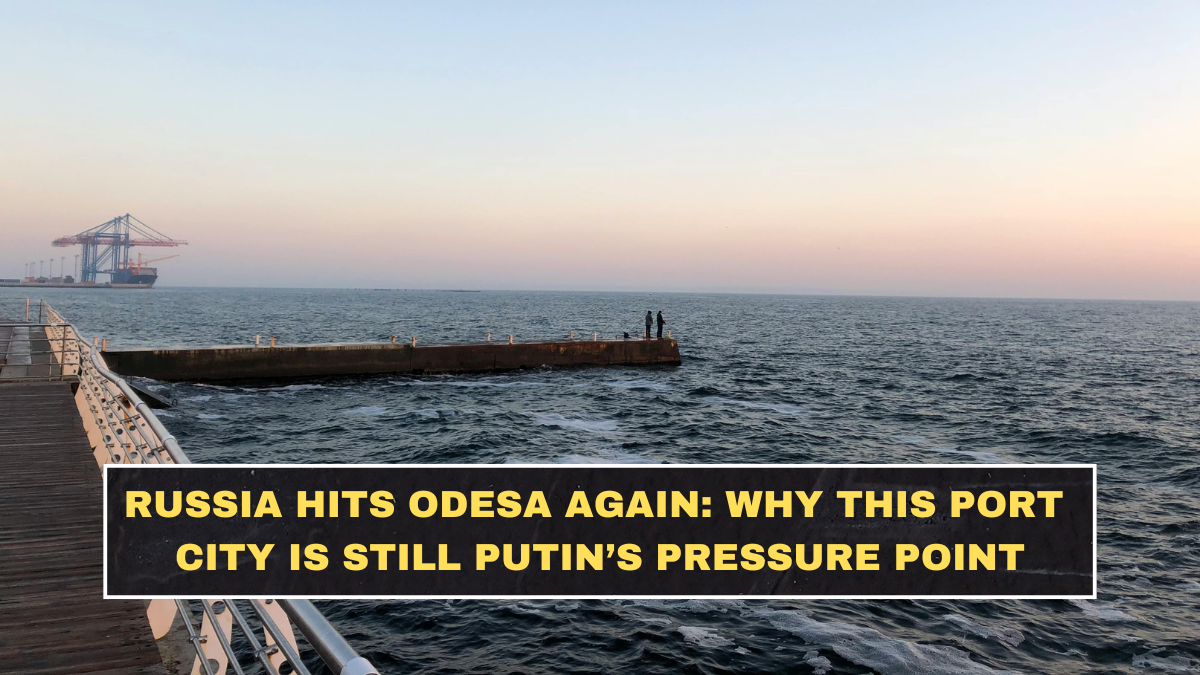
Odesa has again been targeted by Russian drone and missile attacks, showing why the southern Ukrainian port city remains one of Moscow’s most important pressure points. Ukrainian officials said a Russian drone attack before dawn wounded 14 people, including two children, in the latest wave of strikes on civilian and urban areas. The attack came as Russia continues using drones and missiles to stretch Ukraine’s air defences and damage key infrastructure.
This is not an isolated incident. Reuters reported earlier in April that a Russian drone attack on Odesa killed three civilians, including a 30-year-old woman and her two-year-old daughter, and injured 16 others. That strike damaged residential buildings, a kindergarten, and critical energy infrastructure, leaving around 16,700 households without electricity. The pattern is clear: Odesa is being hit not only as a military target, but as a city whose civilian resilience Moscow wants to wear down.
Why Is Odesa So Important To Ukraine?
Odesa is not just another Ukrainian city. It is Ukraine’s main Black Sea port hub and a lifeline for exports, especially grain and other goods that connect Ukraine to global markets. If Russia can keep Odesa under threat, it can pressure Ukraine’s economy, disrupt shipping confidence, and remind global buyers that the Black Sea remains risky.
The city also carries symbolic weight. Odesa is historically, economically, and culturally important, and Russia has repeatedly tried to frame the Black Sea region as part of its strategic sphere. By attacking Odesa, Moscow is not only damaging infrastructure. It is sending a message that Ukraine’s access to the sea will remain vulnerable as long as the war continues.
| Why Odesa Matters? | Simple Explanation |
|---|---|
| Black Sea access | Odesa keeps Ukraine connected to maritime trade |
| Grain exports | The port region helps move food to global markets |
| Economic pressure | Attacks can weaken Ukraine’s export income |
| Civilian morale | Repeated strikes create fear and exhaustion |
| Air defence demand | Odesa shows why Ukraine wants stronger systems |
What Kind Of Damage Are Russian Strikes Causing?
Russian attacks on Odesa have damaged homes, energy infrastructure, port facilities, and civilian buildings. In one major April strike, Reuters reported that residential buildings, a kindergarten, and energy infrastructure were hit, causing deaths, injuries, and power outages for thousands of households. These are not abstract battlefield losses. They affect electricity, housing, children’s safety, and basic city life.
Other reports show that port-linked infrastructure has also remained under threat. Al Jazeera reported that Russian attacks across Ukraine killed civilians and damaged a ship in the port of Odesa, while Moscow claimed it had intercepted more than 200 Ukrainian drones. That shows the war is increasingly being fought through long-range strikes, drone swarms, and attacks on logistics rather than only front-line battles.
Why Is Ukraine Asking For More Air Defence?
Ukraine is asking for more air defence because Russian attacks are now frequent, layered, and exhausting. Drones are cheaper than many air-defence missiles, which creates a difficult imbalance for Kyiv. Russia can launch waves of drones and missiles to force Ukraine to spend expensive interceptors, expose weak points, and overwhelm local protection around cities like Odesa.
Reuters reported that Russia launched 324 drones and three ballistic missiles in one overnight and daytime attack wave in April. Ukraine’s air defence units shot down or neutralised 309 drones, but missiles and some drones still hit nine locations. Those figures show both Ukraine’s strength and vulnerability: it can stop many attacks, but even a small number of successful strikes can kill civilians and damage critical infrastructure.
Why Does Russia Keep Targeting Port Cities?
Russia targets port cities because ports are economic weapons in this war. If Ukraine cannot move goods safely, it loses revenue, global trade confidence, and strategic flexibility. Odesa is especially important because it connects Ukraine to the Black Sea and supports grain flows that matter far beyond Ukraine’s borders.
There is also a psychological aim. Constant attacks make normal life harder, push people into shelters, damage confidence, and create pressure on Ukraine’s government. Moscow may not need to capture Odesa to hurt it. It can keep attacking enough to make the city expensive to defend and difficult to operate.
How Does The Odesa Attack Affect Global Food And Trade?
Odesa matters globally because Ukraine is a major agricultural exporter. When the port city is threatened, grain routes become riskier, shipping insurance can rise, and buyers may worry about supply reliability. Even when exports continue, repeated attacks increase uncertainty and cost.
This is why Odesa is watched by governments far beyond Europe. Countries dependent on grain imports care about Black Sea stability because disruption can affect food prices. The port city sits at the intersection of war, shipping, food security, and global inflation. That makes every major strike bigger than a local attack.
What Does This Say About Russia’s War Strategy?
Russia’s strategy appears to be built around pressure and exhaustion. It is attacking Ukrainian cities, energy systems, ports, and civilian infrastructure to weaken Ukraine’s ability to function while forcing Kyiv to demand more Western support. The goal is not always immediate battlefield victory. Sometimes the goal is slow damage that makes the war harder to sustain.
The uncomfortable truth is that Russia has adapted. It is using drones, missiles, and repeated night attacks to keep Ukraine’s air defences under pressure. Ukraine is also adapting with drones and strikes on Russian oil infrastructure, including attacks on facilities such as Tuapse. This back-and-forth shows the war is moving deeper into infrastructure warfare.
Can Odesa Be Protected Better?
Yes, but not perfectly. More air-defence systems, radar coverage, interceptors, electronic warfare tools, and drone-detection networks would reduce damage. But no air-defence shield is flawless, especially against repeated drone and missile waves. Ukraine needs both more equipment and a steady supply of ammunition to keep cities like Odesa protected over time.
That is why Kyiv keeps pushing allies for stronger air defence. The issue is not only whether Ukraine has good systems. It is whether it has enough of them, in the right places, with enough interceptors, for a long war. Odesa is one of the clearest examples of that problem.
Conclusion
Odesa remains a pressure point because it is more than a city. It is Ukraine’s Black Sea lifeline, an export hub, a symbol of resistance, and a constant target for Russian pressure. Recent attacks have wounded civilians, damaged infrastructure, and again exposed the limits of Ukraine’s air defence capacity.
The blunt reality is that Russia does not need to capture Odesa to hurt Ukraine. It only needs to keep the city under threat. That is why Ukraine’s demand for stronger air defence is not political theatre. It is a survival requirement for a port city that still matters to Ukraine’s economy, global food flows, and the wider war.
FAQs
Why is Odesa important in the Ukraine war?
Odesa is important because it is Ukraine’s key Black Sea port city and a major route for exports, including grain. If Russia keeps Odesa under threat, it can damage Ukraine’s economy and disrupt confidence in Black Sea shipping.
What happened in the latest Odesa attack?
A recent Russian drone attack on Odesa wounded 14 people, including two children, according to Ukrainian officials. Earlier in April, another Russian drone attack killed three civilians and injured 16 others.
Why does Ukraine need more air defence?
Ukraine needs more air defence because Russia is launching repeated drone and missile attacks against cities, ports, and energy systems. Even when Ukraine intercepts many drones, a few successful strikes can cause deaths and major damage.
How does Odesa affect global food security?
Odesa affects global food security because Ukraine exports grain and other agricultural products through Black Sea routes. Attacks on the port region can raise shipping risk, increase costs, and create uncertainty in global food markets.