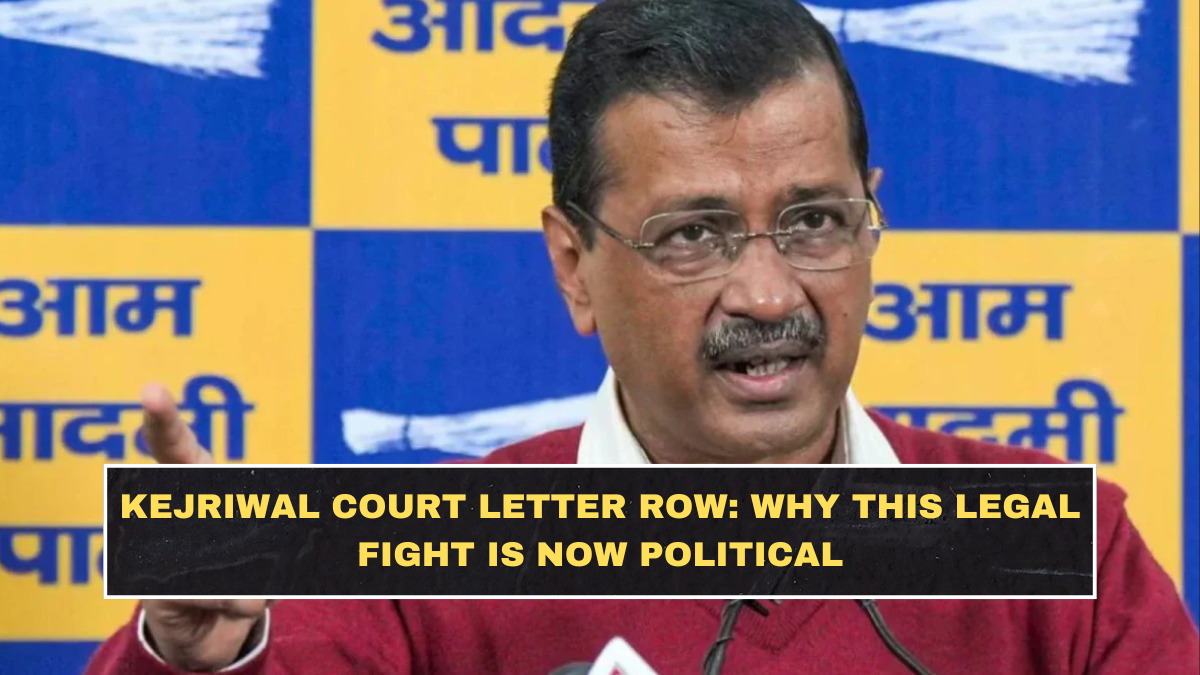
The Kejriwal court letter row began after former Delhi Chief Minister Arvind Kejriwal wrote to Justice Swarana Kanta Sharma of the Delhi High Court, saying he would not appear before her court either personally or through lawyers. According to Times of India, Kejriwal said his “hope of getting justice” had been shattered after his request for the judge’s recusal was rejected.
The case is linked to the Delhi excise policy matter, where the Central Bureau of Investigation had challenged a discharge order. Kejriwal had sought the judge’s recusal, arguing apprehension of bias. The court rejected that plea, and the issue then moved from a technical legal dispute into a public political fight.
This is why the controversy is trending. A former chief minister refusing to participate in proceedings before a judge is not routine. It raises questions about judicial confidence, political messaging, contempt concerns, and how far a litigant can go while criticising the court process.
Why Did Kejriwal Seek The Judge’s Recusal?
Kejriwal sought Justice Swarana Kanta Sharma’s recusal from hearing the matter by raising concerns about bias and conflict of interest. LiveLaw reported that his side relied on an earlier Delhi High Court order in the Satyendar Jain case, where the Enforcement Directorate’s plea to change the trial judge had been accepted.
The basic argument was that if a judge has already dealt with connected issues or taken certain views, a party may fear the case will not be heard with a fully open mind. That does not automatically prove bias, but it creates a debate over “reasonable apprehension” and whether justice must not only be done but also appear to be done.
But here is the hard legal reality: recusal cannot become a tool for choosing a preferred judge. If every losing side starts demanding a different bench, the system will collapse into judge-shopping. So the court must balance genuine concern with the need to prevent tactical recusal requests.
What Did The Court Say On Recusal?
Justice Swarana Kanta Sharma refused to recuse herself. The Delhi High Court judgment in the case was pronounced on April 20, 2026, and runs into a detailed order dealing with the recusal request and related issues.
A legal commentary on the judgment noted that the court treated the allegations as an attack on judicial dignity and institutional integrity, while holding that the judge would not recuse. This is where the matter became sharper, because the recusal request was no longer only about case allocation; it became a question of whether the allegations crossed a line.
| Issue | Kejriwal’s Side | Court/System Concern |
|---|---|---|
| Recusal request | Apprehension of bias | Prevent judge-shopping |
| Prior judicial view | Fear of prejudgment | Judges often hear connected legal issues |
| Letter to judge | Loss of faith in process | Refusal to participate can disrupt proceedings |
| Public clips/comments | Transparency argument | Risk of undermining court authority |
| Political reaction | Claim of unfairness | Judiciary must not be dragged into party battles |
Why Has A Contempt Angle Entered The Case?
The contempt angle entered after the Delhi High Court ordered the takedown of video clips related to the recusal hearing and issued notice to Kejriwal on a contempt plea. Economic Times reported that the court’s concern involved unauthorised circulation of hearing clips on social media and their possible impact on judicial integrity.
Contempt of court is serious because courts protect their authority not for personal ego, but to preserve public confidence in the justice system. At the same time, criticism of courts is not automatically contempt. The line becomes sensitive when public statements, edited clips, or political messaging appear to pressure or scandalise the court.
This is exactly why the case has become noisy. Supporters may call it free speech and transparency. Critics may call it intimidation of the judiciary. The truth depends on the exact content, intent, and legal findings, not on party slogans.
Why Is AAP Supporting Kejriwal’s Stand?
AAP leaders have backed Kejriwal’s decision and framed it as a question of fairness. Times of India reported that Atishi supported his decision not to appear before the Delhi High Court, asking what options were left after the recusal plea was rejected.
Politically, this helps AAP present the issue as a fight against unfair treatment. That is familiar territory for the party, which has often argued that investigative agencies and legal processes are being used against opposition leaders. Whether voters accept that argument depends heavily on their existing political trust.
But AAP also has a risk here. If the party appears to challenge the court itself rather than a specific legal order, it may alienate neutral voters. Attacking political rivals is one thing. Creating the impression of disrespecting judicial process is much more dangerous.
Why Is This Legal Fight Now Political?
This legal fight is now political because the people involved are political, the case is politically sensitive, and every procedural development is being used for public messaging. The excise policy case has already been one of the biggest legal-political battles involving AAP and Kejriwal.
The court process is supposed to run on evidence, law, procedure, and judicial reasoning. Politics runs on emotion, perception, loyalty, and narrative. When the two mix, each side tries to win both in court and in public opinion. That is what is happening here.
The uncomfortable truth is that both sides benefit from polarisation. AAP can project victimhood and resistance. Opponents can project disrespect for institutions. The public then gets a loud political fight instead of a calm understanding of the legal issue.
What Should Readers Understand Without Legal Jargon?
Readers should understand that a recusal plea asks a judge to step away from a case because a party fears bias or conflict. A court can accept or reject that request. If rejected, the normal route is legal challenge or continued participation, not turning the case into a public loyalty test.
Kejriwal’s letter is significant because it says he will not participate before that bench. That is a strong step, and it can carry legal consequences. Courts generally do not look lightly at conduct that appears to delay proceedings, undermine confidence, or avoid adjudication.
At the same time, litigants do have the right to raise concerns about fairness. The problem is how those concerns are raised, whether they are backed by legal grounds, and whether public campaigning crosses into contempt territory. That is the real issue beneath the political shouting.
Conclusion?
The Kejriwal court letter row matters because it has turned a recusal dispute into a larger battle over judicial trust, political messaging, and contempt concerns. Kejriwal says he has lost hope of justice before the bench. The court has rejected the recusal request and is also dealing with related contempt issues.
The blunt truth is that this story cannot be understood through party loyalty alone. AAP’s allegations need legal substance, not just emotional framing. The court’s authority also matters, because if every high-profile litigant refuses participation after an unfavourable order, the justice system becomes impossible to run.
FAQs
What Is The Kejriwal Court Letter Row?
The row is about Arvind Kejriwal writing to Justice Swarana Kanta Sharma and saying he would not appear before her court personally or through lawyers after his recusal plea was rejected.
Why Did Kejriwal Want The Judge To Recuse?
Kejriwal’s side raised apprehension of bias and cited concerns connected to earlier legal proceedings. The court rejected the recusal request and continued with the matter.
What Is The Contempt Issue In This Case?
The contempt issue relates to concerns over hearing clips and public commentary around the court process. The Delhi High Court ordered takedown of certain clips and issued notice on a contempt plea.
Why Has This Become A Political Controversy?
It has become political because Kejriwal is a major opposition leader, the excise policy case is politically sensitive, and both AAP and its opponents are using the legal developments to build public narratives.