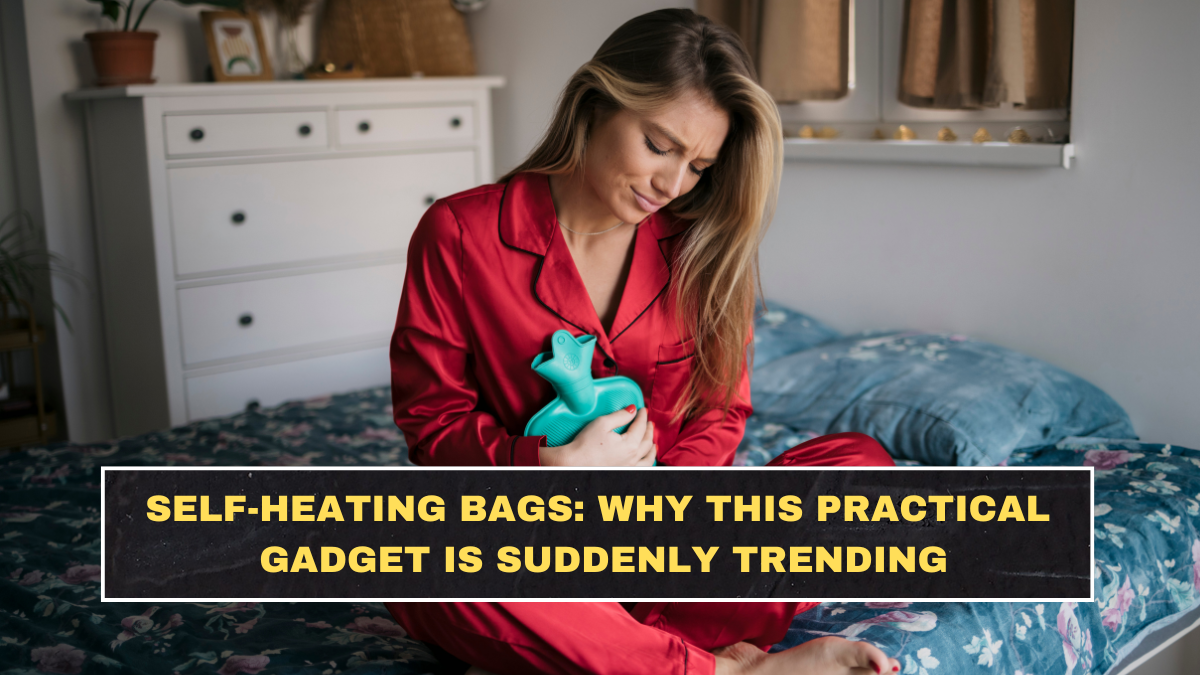
Self-heating bags are trending because they promise a very simple benefit: hot food without needing a microwave. That makes them attractive for commuters, drivers, office workers, construction crews, travelers, and parents carrying meals on the go. Current retail listings show the category expanding fast, with cordless heated lunch boxes and warming bags now commonly sold with battery packs ranging from about 9,000mAh to 24,000mAh and capacities around 1.2L to 1.6L.
The catch is obvious, and most trend articles dodge it: heating food is not the same as holding food safely. USDA food-safety guidance says bacteria grow rapidly in the “danger zone” between 40°F and 140°F, hot foods should be kept at 140°F or above, and hot holding for many settings is expected at 135°F or above. That means a self-heating bag can be useful, but only if you understand whether it is reheating food properly or just keeping lukewarm food sitting in the danger zone longer.
What Is a Self-Heating Bag?
A self-heating bag is usually a portable lunch bag or lunch box with built-in electric heating, powered either by a rechargeable battery, USB connection, car adapter, or wall plug. In practice, many products sold under this trend are really heated lunch boxes or thermal lunch totes rather than soft-sided “bags” in the strict sense. Current listings describe cordless heating, stainless-steel food containers, removable trays, and use cases such as office lunches, road trips, job sites, and outdoor eating.
That matters because the trend sounds more futuristic than it really is. Most of these products are not magically generating heat on their own. They are compact electric food warmers in bag or lunch-box form. If you expect restaurant-grade reheating speed, you are already thinking badly.
Why Are Self-Heating Bags Suddenly Trending?
They are trending because they solve an annoying everyday problem in a low-effort way. Microwaves are not always available, shared office kitchens are inconvenient, and plenty of people work or travel in places where reheating lunch is awkward. A device that lets you carry food and warm it later feels practical, especially when marketed as cordless. Retail listings now heavily emphasize “work,” “travel,” “car,” “construction,” and “outdoor” use, which tells you exactly where the consumer demand is coming from.
There is also a psychological reason. People like gadgets that make meal prep feel more manageable. A self-heating bag turns a basic lunch into something that feels upgraded. But that does not automatically make it a smart buy. Convenience products only stay useful when the boring details work.
How Do Self-Heating Bags Actually Work?
Most use a heated base, heating plate, or surrounding heat chamber powered by a battery or cable. Product listings commonly describe heating cycles of around one to two hours, rechargeable battery systems, and removable stainless-steel food containers for easier cleaning. Some even market scheduled heating or all-around heating designs, but the real pattern is consistent: these are slow, portable reheaters, not instant high-power appliances.
That slow-heating reality is the key thing buyers ignore. If a product takes a long time to warm food, you need to think about when the food was cooked, how it was stored, and whether it is being reheated from refrigerated-safe conditions or just left hanging in a risky temperature range. USDA guidance is very clear that hot food must stay hot and cold food must stay cold.
Who Are These Products Best For?
They make the most sense for people with predictable lunch routines and limited microwave access. That includes commuters, truck drivers, job-site workers, field staff, travelers, and office workers who bring pre-cooked meals from home. The products also make more sense when the user already has a fridge, cooler, or insulated cold-storage routine before reheating. That is the sane use case.
They make much less sense for people who are disorganized about food storage, expect instant heating, or want a one-device solution for both long-term storage and safe reheating. That is where buyers fool themselves. A warming gadget does not erase food-safety rules.
What Should You Check Before Buying?
Do not buy based on “hot meals anywhere” marketing alone. Check capacity, battery size, cleaning setup, removable container design, and whether the heating base itself can be washed. Current listings show useful differences here: some offer 1.2L containers, some 1.5L or 1.6L, some use 9,000mAh batteries, while others advertise 12,000mAh, 16,000mAh, or even 24,000mAh. Several also note that the stainless-steel parts are removable and washable but the powered base is not.
| What to Check | Better Sign | Why It Matters |
|---|---|---|
| Capacity | 1.2L to 1.6L with removable container | More practical for real meals |
| Power setup | Clear battery size and heating time | Helps judge whether it fits your routine |
| Cleaning | Removable stainless container, wipe-clean base | Easier everyday ownership |
| Use case | Office, car, travel, outdoor | Shows whether the design matches your life |
| Safety logic | Used with properly stored food | Prevents dumb food-handling mistakes |
This is the real buying test. If the product cannot tell you how much food it holds, how long it heats, and what parts are washable, it is probably junk.
What Should Buyers Be Careful About?
Food safety first. USDA says cooked foods should not sit out for more than two hours, and hot foods should be kept at 140°F or above while cold foods stay at 40°F or below. USDA and related guidance also repeatedly point to 135°F or above as a hot-holding target in food-service contexts.
That means the worst way to use a self-heating bag is to put food in it early, let it drift through unsafe temperatures, and assume the gadget makes that okay. It does not. These products are smartest when used to reheat properly chilled food close to mealtime, not to babysit food carelessly for hours.
Are Self-Heating Bags Worth It?
They can be worth it for the right person. If you regularly bring lunch, lack microwave access, and want a more comfortable meal routine, a decent heated lunch bag or lunch box can solve a real problem. The category is trending because that convenience is real, not imagined.
But they are not magic. They do not replace safe storage, they do not guarantee fast reheating, and they are not automatically a better buy than an insulated lunch bag plus microwave access. If your schedule is inconsistent or you rarely bring meals from home, this trend may be solving a problem you barely have.
Conclusion?
Self-heating bags are trending because they offer a practical promise people instantly understand: portable hot food without depending on a microwave. That makes them genuinely useful for some workers, commuters, and travelers. But the product only makes sense when buyers think beyond the hype. Check the battery, container size, cleaning setup, and heating expectations, and most importantly, do not ignore food-safety rules just because the gadget sounds convenient. Used correctly, this trend is practical. Used lazily, it is just a slower way to mishandle lunch.
FAQs
Are self-heating bags the same as heated lunch boxes?
Often yes, or very close. Many products sold under this trend are essentially portable electric heated lunch boxes or thermal lunch bags with built-in warming.
How long do they usually take to heat food?
Many current product listings describe roughly one to two hours of cordless heating time, depending on battery size and model.
Can a self-heating bag keep food safe all day?
Not by itself. USDA says hot foods should stay at 140°F or above and cold foods at 40°F or below, so safe storage still matters before reheating.
What is the biggest mistake buyers make?
They assume “warming” equals “safe.” It does not. If food spends too long in the danger zone between 40°F and 140°F, the gadget will not fix bad handling.