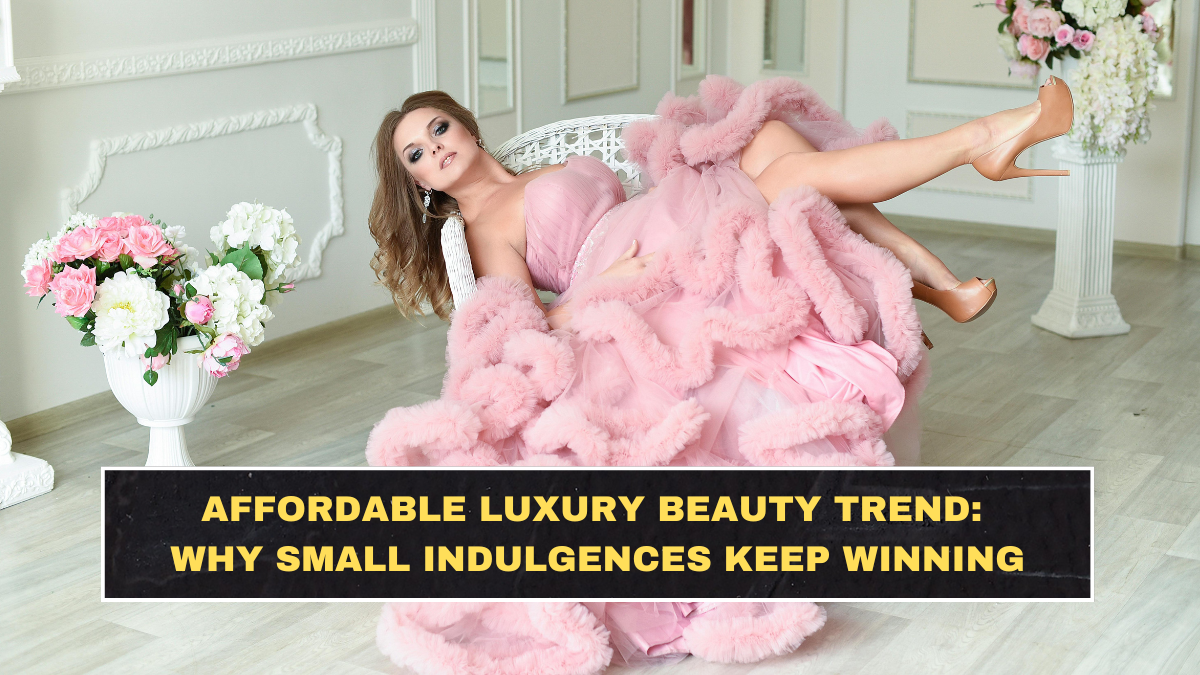
The affordable luxury beauty trend keeps winning because beauty is one of the easiest ways people can still feel upgraded without blowing up their budget. When consumers cut back on bigger discretionary purchases, many do not stop spending altogether. They just become more selective. McKinsey’s 2025 State of Beauty report says consumers still view beauty as an affordable discretionary category, but they are increasingly selective about where they splurge and where they save. It explicitly warns brands not to take the old “lipstick effect” for granted, because shoppers are scrutinizing value more closely now.
That distinction matters. The trend is real, but the lazy version of the story is wrong. This is not simply “people are broke, so they buy lipstick.” It is more like this: people still want moments of pleasure, confidence, and self-maintenance, but they want those purchases to feel justified. McKinsey says consumers are selectively splurging not just across discretionary spending generally, but within beauty itself, with some categories feeling more worth the money than others.
Why does beauty keep surviving when other spending slows down?
Because beauty often feels like a controllable reward. A serum, lipstick, fragrance mist, or salon-style hair product is far cheaper than a luxury bag, high-end trip, or major wardrobe refresh, but it can still give the buyer a sense of novelty and status. McKinsey’s 2024 beauty-industry outlook linked this directly to the lipstick effect, especially in markets facing economic pressure, and noted that modest luxuries can keep attracting spend even when broader confidence weakens.
But the more honest explanation is emotional, not just economic. Beauty products are used repeatedly, seen closely, and tied to identity. That gives them a stronger psychological payoff than many other small purchases. At the same time, shoppers are getting harder to fool. McKinsey’s 2025 beauty report says consumers are paying closer attention to whether products actually deliver, which means affordable luxury now works best when it combines emotional reward with believable performance.
What does affordable luxury beauty actually look like in 2026?
It usually looks like selective premium buying rather than full routine premiumization. People may skip a luxury cleanser but spend more on a serum, fragrance, lipstick, or hair treatment that feels more transformative. McKinsey’s 2025 report says shoppers assign value differently by product type and are more willing to splurge on categories they see as meaningfully effective or differentiated, such as facial serums, than on basics like cleansers or lip balm.
This is also showing up in channel performance. Vogue Business reported that Ulta Beauty’s first-quarter 2025 sales rose 4.5% and comparable store sales rose 2.9%, with skincare and wellness up 25% and fragrance up 11%, even while cosmetics and haircare slipped slightly. That suggests consumers were still spending, but not evenly. They were moving toward categories that felt either more rewarding or more worth the premium.
Which beauty products benefit most from this trend?
Products with visible payoff, emotional appeal, or status value tend to benefit most. That usually includes prestige skincare, premium haircare, fragrance, and selected makeup items. McKinsey says splurge behavior in beauty depends heavily on perceived performance and differentiation, which is why treatment-oriented products often do better than plain maintenance products.
Fragrance also fits especially well because it delivers a luxury feeling at multiple price points. But even there, the market is getting more tiered. Vogue Business reported in 2025 that Coty was leaning into more accessible formats such as body mists and pen sprays as younger consumers looked for lower-cost entry points into fragrance. That is classic affordable luxury behavior: the desire stays premium, but the format becomes more reachable.
How are shoppers deciding where to splurge and where to save?
Mostly by asking one brutal question: does this feel worth it? McKinsey’s 2025 research says beauty consumers are increasingly scrutinizing value and making selective trade-offs inside their routines. They may pay more for a hero product that feels effective or indulgent, while cutting back on items they see as interchangeable.
Here is the practical breakdown:
| Beauty category | Why shoppers may splurge | Why they may save | Trend fit |
|---|---|---|---|
| Serums and treatments | Feels high-performance and results-driven | Expensive if benefits are unclear | Strong |
| Fragrance | Emotional payoff and status feel | Can switch to mists or travel sizes | Strong |
| Lipstick and makeup accents | Fast mood boost and visible change | Easy to trade down to mass brands | Moderate to strong |
| Hair repair products | “Salon at home” logic | Basic shampoo feels less splurge-worthy | Strong |
| Cleansers and basics | Seen as functional, not exciting | Easy to substitute with cheaper options | Weak |
That table is the real pattern most brands do not want to say too clearly. Shoppers are not becoming uniformly premium. They are becoming selectively demanding.
Is the lipstick effect still real, or is it overused?
It is real, but people abuse the phrase. McKinsey still uses the concept in both its 2024 and 2025 beauty reporting, but its 2025 analysis is more careful: beauty remains an affordable discretionary category, yet brands cannot assume consumers will buy blindly just because the category historically held up in downturns. Selective splurging matters more than the old cliché.
That is the smarter way to frame it. The lipstick effect is not a law. It is a pattern that works when the product offers enough emotional or functional value to survive tighter budgets. If it does not, the consumer simply trades down, delays the purchase, or skips it entirely. Vogue Business’s 2025 reporting on Ulta and Coty supports that nuance by showing category winners and losers even within beauty.
Why does affordable luxury beauty still appeal so much?
Because it lets people feel upgraded without making a reckless financial move. That sounds obvious, but it is the core of the trend. A premium serum, mist, or lipstick can create a small ritual of control and self-expression at a price point that still feels manageable. Euromonitor’s country beauty reporting also points to affordable indulgence as an important driver in colour cosmetics, especially where consumers still want self-presentation and novelty even under economic pressure.
At the same time, not every beauty company wins from this logic. Vogue Business reported that Estée Lauder’s fiscal 2025 sales fell 8%, with declines across skincare, makeup, and haircare, showing that prestige positioning alone is not enough when consumer sentiment weakens and value feels less convincing.
Conclusion
Affordable luxury beauty keeps winning because it fits how people actually behave under pressure. They do not stop wanting pleasure, confidence, or self-maintenance. They just become stricter about what deserves their money. The strongest products in this trend are not merely pretty or premium-looking. They offer a believable mix of performance, emotion, and manageable cost. That is why small indulgences keep surviving. Not because shoppers are irrational, but because they are trying to be selective without giving up every nice thing.
FAQs
What is the affordable luxury beauty trend?
It is the pattern where consumers keep spending on selected beauty products as small indulgences even when they cut back elsewhere, especially on items that feel premium but still reachable.
Is the lipstick effect still relevant in 2026?
Yes, but in a more selective form. Recent beauty-industry reporting says consumers still treat beauty as an affordable discretionary category, but they are much more value-conscious about where they splurge.
Which beauty products benefit most from affordable luxury spending?
Prestige skincare, fragrance, hair treatments, and selective makeup products tend to benefit most because they offer either stronger emotional payoff or more believable performance.
Are shoppers spending more across all beauty categories?
No. Recent reporting shows uneven spending, with some categories like skincare and fragrance proving more resilient than others.