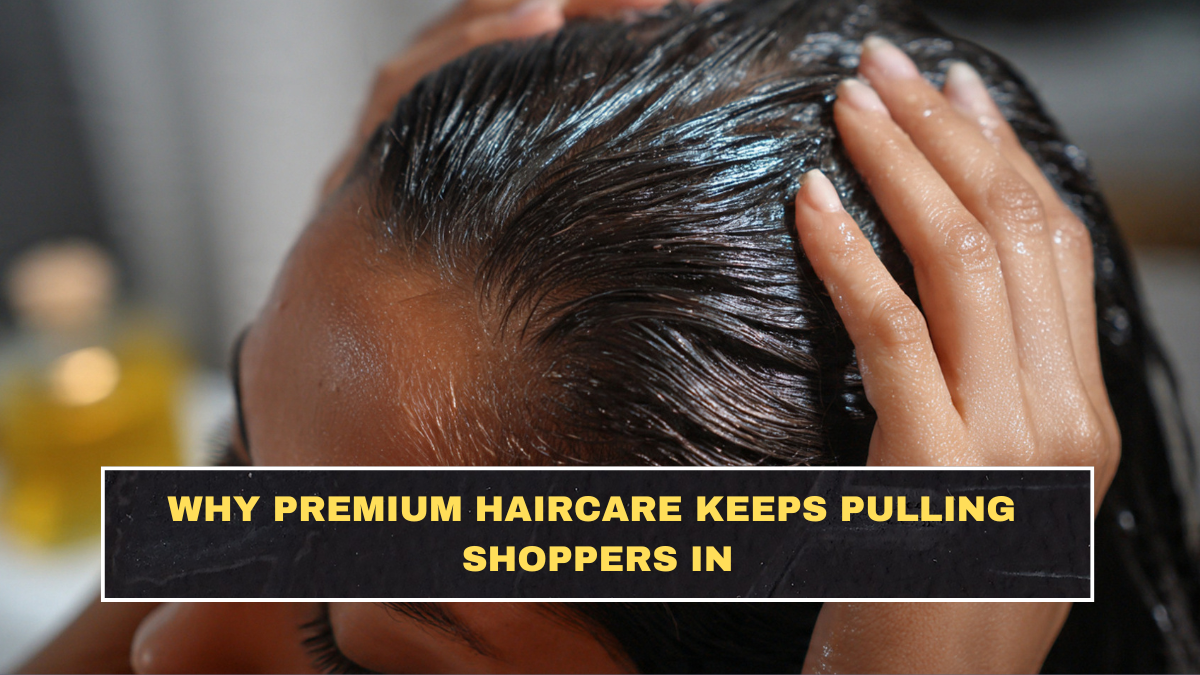
Premium haircare keeps pulling shoppers in because hair is one of the few beauty categories where people can see damage, dryness, thinning, frizz, and breakage almost immediately. That makes the spending feel easier to justify. Reuters reported this week that L’Oréal’s Q1 2026 sales were helped by strong demand for premium products including Kérastase haircare, while Vogue noted that L’Oréal’s Professional Products division grew 15.5% in the same quarter, its fastest-growing division.
This is not just random luxury spending. McKinsey’s 2025 State of Beauty report says consumers are selectively splurging within beauty categories, which means they are not upgrading everything. They are spending more where the payoff feels visible or emotionally worth it. Haircare fits that logic perfectly because it sits between maintenance and transformation. A premium serum may feel abstract to some buyers. Better hair is harder to ignore.
Why are shoppers willing to spend more on haircare now?
Because basic shampoo is no longer the full category story. Vogue’s 2026 haircare trends coverage says products are increasingly designed to extend, maintain, and improve hair health rather than just help with styling. Allure’s 2026 hair-trend reporting says scalp care, hair-loss solutions, color-preserving products, and more targeted repair are among the biggest directions this year. In plain English, the market is no longer selling “clean hair.” It is selling stronger, fuller, shinier, longer-lasting hair.
There is also a “salon at home” effect. People still want the look of professional treatment even when they are not sitting in a salon chair every week. That is why premium masks, bond-builders, scalp treatments, leave-ins, and repair systems keep getting attention. Reuters’ reporting on L’Oréal specifically singled out Kérastase as a premium line helping drive growth, which is a good signal that shoppers are still willing to pay for products associated with expert or salon-grade results.
What is driving the premium haircare trend in 2026?
The trend is being driven by problem-solving, not just status. Allure says 2026 haircare trends are centering on scalp care, hair-loss solutions, and color-preserving products, while Vogue points to bond-building treatments, scalp-focused growth formulas, and globally influenced repair products as major momentum areas. That tells you buyers are looking for targeted outcomes, not just prettier bottles.
The beauty market is also rewarding performance language more than vague luxury language. McKinsey says consumers are now more careful about value even when they do splurge, which means premium products need to feel effective, not merely expensive. That is probably why haircare is performing better when it leans into repair, growth, scalp health, and protection rather than generic “nourishing” claims.
Which premium haircare products are winning the most attention?
Repair and treatment products are leading because damaged hair is common and emotionally annoying. Heat styling, coloring, stress, and environmental exposure make hair damage easy to notice and expensive to fix. Vogue’s 2026 trends article puts bond-building treatments among the top growth areas, and Allure’s 2026 trends piece says pros expect more shelf space to go toward scalp and loss-focused formulas.
Hair masks are also benefiting from this shift. Vogue’s recent coverage of Korean hair masks frames them as “skincare-level” repair and hydration, emphasizing ingredients such as peptides, ceramides, proteins, and fermentation technology. That matters because it shows premium haircare is increasingly borrowing skincare logic: layered treatment, targeted actives, and longer-term maintenance rather than just one wash-and-go promise.
How does the “salon at home” idea show up in buying behavior?
It shows up when shoppers skip broad routine upgrades but pay more for hero products. That usually means a treatment mask, a bond repair product, a scalp serum, or a professional-style finishing product rather than a whole premium routine from shampoo to hairspray. McKinsey’s selective-splurge logic explains this well: people are not uniformly trading up, they are choosing the products that feel hardest to replace cheaply.
Industry reporting also supports that professional positioning still matters. An Olaplex conference transcript from 2025 cited roughly $19 billion in prestige hair retail spending and said 88% of surveyed premium haircare consumers were more likely to buy a product if they liked the result when a stylist used it. That does not prove every premium product works, but it does show how strongly salon trust still influences the category.
What are shoppers really paying for in premium haircare?
Usually one of four things: visible repair, better sensory experience, professional credibility, or a more targeted solution. Here is the practical breakdown:
| Product type | Why people pay more | What they expect | Main risk |
|---|---|---|---|
| Bond-building treatments | Damage repair and stronger feel | Less breakage, smoother texture | Results may be oversold |
| Scalp serums | Growth and scalp-health promise | Less shedding, healthier scalp feel | Slow results frustrate buyers |
| Hair masks | “Salon at home” softness and repair | Shine, slip, manageability | Can feel heavy on fine hair |
| Premium shampoos | Better cleansing plus brand trust | Better feel and gentler wash | Often weakest value upgrade |
| Color-care products | Protect expensive salon color | Longer-lasting tone and shine | Benefits vary by hair type |
That table is the part many shoppers avoid admitting. Premium haircare works best when the product solves an expensive or visible problem. It works worst when buyers pay luxury prices for a slightly nicer wash experience.
Is premium haircare actually worth it?
Sometimes yes, often selectively. Reuters and Vogue’s fresh L’Oréal reporting suggests there is still real consumer appetite for premium haircare, and McKinsey’s work explains why: consumers are still willing to spend in beauty when the value feels tangible. But that does not mean every premium shampoo or serum deserves the markup.
The better question is whether the product addresses a real hair problem you can actually notice. If the answer is yes, premium haircare can feel worth it faster than many other beauty splurges. If the answer is no, then the buyer is often paying for scent, texture, branding, and hope.
Conclusion
Premium haircare keeps pulling shoppers in because it sells something people can see: healthier-looking hair, less damage, more control, and a little salon confidence at home. The category is winning not because every expensive product is brilliant, but because hair problems feel immediate and personal. The smart buyer splurges where the result is visible and saves where the upgrade is mostly cosmetic. That is the real premium haircare trend, not blind luxury.
FAQs
Why is premium haircare growing in 2026?
Because shoppers are still spending on beauty selectively, and haircare offers visible, problem-solving results that feel easier to justify than many other upgrades.
What products are driving the premium haircare trend?
Bond-building treatments, scalp serums, growth-focused products, masks, and color-protecting formulas are among the biggest drivers right now.
Does premium haircare mean people are upgrading their whole routine?
Not usually. Many shoppers are buying one or two hero products that promise visible repair or salon-like results rather than premiumizing every step.
Is premium shampoo worth buying?
Sometimes, but it is often a weaker value upgrade than a treatment or repair product. Premium haircare tends to make more sense when it targets a clear problem like damage, color fading, or scalp issues.